


What is Planetary Defence?
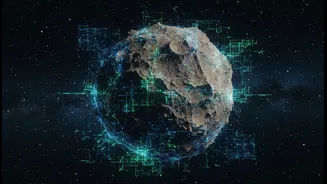
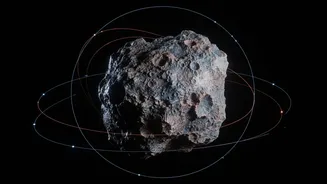
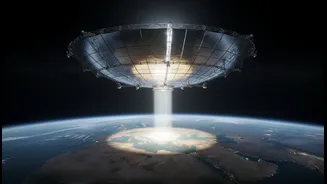
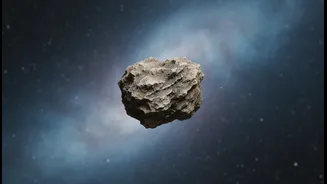
Planetary defence is the global effort to detect and track near-Earth objects (NEOs)—asteroids and comets whose orbits bring them close to our planet—and to mitigate any potential impact threat. While a catastrophic impact from a large asteroid is rare,
smaller but still dangerous events are more common. The 2013 Chelyabinsk event in Russia, where an approximately 20-metre asteroid exploded in the atmosphere, caused widespread damage and injuries from its shockwave. This incident served as a stark reminder that even smaller objects pose a significant risk. For decades, the work of finding these objects has been the domain of professional astronomers and space agencies, who use powerful telescopes to scan the skies. ESA's Planetary Defence Office coordinates these efforts in Europe, monitoring thousands of NEOs and maintaining a risk list for objects that require close observation.
A Shift from Closed Circles to Open Collaboration
Traditionally, the complex data gathered on asteroids, from their orbits to their physical properties, was analysed by a small, specialised group of experts. This approach, while effective, created a bottleneck. The sheer volume of data from ever-improving telescopes and sky surveys has grown exponentially, making it impossible for a handful of teams to analyse everything. Recognizing this limitation, space agencies are increasingly embracing a philosophy of open science. The logic is simple but powerful: the more eyes you have on the data, the faster you can make discoveries, verify threats, and develop solutions. This shift mirrors a broader trend in fields like astrophysics, where open access to data and code has been shown to accelerate scientific progress. Publicly funded data, the argument goes, should be publicly available to harness the collective intelligence of the global scientific community.
ESA’s New Generation of Open Tools
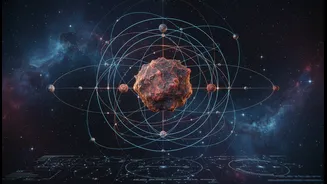
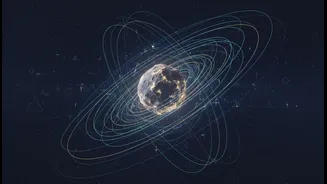
At the heart of ESA's new strategy is a suite of web-based tools developed by its Near-Earth Object Coordination Centre (NEOCC). These tools are freely available to professional and amateur astronomers, researchers, and the public. The NEO Toolkit includes an Orbit Visualisation Tool, a Flyby Visualisation Tool for objects making close approaches, and planning tools for observations. These interfaces make complex orbital mechanics accessible, allowing anyone to visualise an asteroid's path through the solar system. Beyond visualisation, ESA is involved in developing advanced software for mission analysis and navigation. Tools like MANTRA are used for optimizing spacecraft trajectories, which is crucial for missions like Hera, ESA’s probe designed to study an asteroid up close. By making certain tools and data more accessible, ESA is lowering the barrier to entry for planetary defence research.
The Power of the Crowd
Opening up data democratizes planetary defence. It allows university students, amateur astronomers with powerful backyard telescopes, and data scientists to contribute. A fresh perspective might spot something missed by established models. This approach is complemented by initiatives like the Asteroid Discovery, Analysis, and Mapping (ADAM) platform. Developed by the B612 Foundation's Asteroid Institute, ADAM is an open-source, cloud-based platform that provides astrodynamics as a service. It allows researchers to run complex algorithms on huge datasets, effectively crowdsourcing the immense computational work required to find and track new asteroids from archival or new survey images. This open, collaborative environment fosters innovation and transparency, ensuring that calculations and findings can be independently verified and built upon by a global community.
A Safer Future Through Global Cooperation
This move towards open research is not happening in a vacuum. It is part of a larger international framework of cooperation that includes NASA in the United States and JAXA in Japan. Joint missions and data sharing are becoming the norm. For example, ESA's Hera mission will follow up on the impact created by NASA's DART spacecraft to turn asteroid deflection into a well-understood technique. Similarly, the upcoming close flyby of the asteroid Apophis in 2029 is a major focus for international collaboration, with ESA and JAXA teaming up on the RAMSES mission to study it. By combining open data with international partnerships, the global community is building a more resilient and comprehensive planetary defence system. The principle is clear: protecting Earth is a shared responsibility, and our best defence is shared knowledge.