

A Taste of Home in Zero Gravity
For astronauts on long-duration missions, food is more than just fuel; it's a crucial psychological comfort. The familiar taste of home can combat the isolation and stress of space travel. Recognizing this, India's space program is heavily invested in creating
a menu that is both nutritious and nostalgic. Hyderabad's ICMR-National Institute of Nutrition (NIN) has taken a leading role in this effort, developing space-friendly versions of dishes for India's upcoming human spaceflight programs. The goal is to move beyond generic space food and provide Indian astronauts with meals that connect them to their cultural roots, millions of kilometres away from Earth. This involves a menu featuring a mix of Indian and continental dishes tailored to the unique challenges of space.
The Science of Space-Age Cuisine
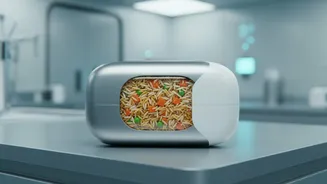
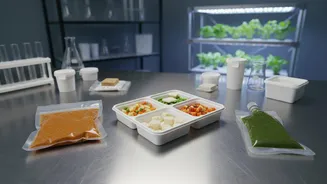
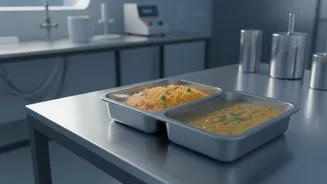
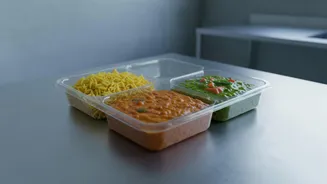
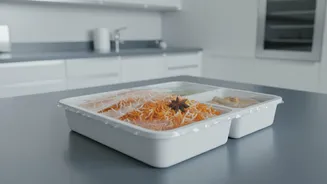
Adapting Indian food for space is a monumental scientific task. Meals must have a long shelf life without refrigeration, be lightweight, and produce minimal crumbs, as floating particles can damage sensitive equipment in microgravity. Scientists at labs like the Defence Food Research Laboratory (DFRL) in Mysuru, a key player in this national effort, use techniques like freeze-drying and retort processing. These methods preserve the food while making it easy to reconstitute with a small amount of water. The nutritional profile is meticulously planned, with controlled levels of sodium and fibre, and fortified with essential micronutrients to counteract the physiological effects of spaceflight. The diet is prepared in semi-solid, ready-to-eat, and dehydrated forms for easy consumption.
What's on the Gaganyaan Menu?
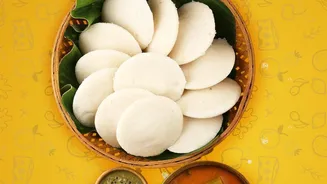
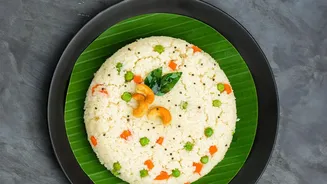
The prospective menu for India's astronauts is a culinary tour of the subcontinent, adapted for the cosmos. It includes comfort foods like khichdi, dal, and aloo paratha alongside richer dishes like vegetable biryani and chicken korma. Snacks and desserts are also part of the plan, with moong dal halwa and fruit purées making the list. Hyderabad's NIN has been working on items like mutton rolls and chicken nuggets. The DFRL in Mysuru has a long history with space food, having supplied meals for Rakesh Sharma's 1984 mission, and has developed around 60 ready-to-eat items for modern missions. However, getting these dishes certified for space is incredibly difficult. For a recent mission, only three items—gajar ka halwa, moong dal ka halwa, and amras—cleared the rigorous testing in time, highlighting the immense challenge.
Overcoming Cosmic Challenges
Eating in space is unlike dining on Earth. Without gravity, liquids don't pour and crumbs don't fall. Food must be designed to be cohesive and stay put. Furthermore, astronauts often experience a diminished sense of taste and smell due to fluid shifts in their bodies, similar to having a constant head cold. This makes flavourful, aromatic food particularly important. Indian cuisine, known for its complex spices, presents a unique challenge: the meals must be flavourful enough to be appealing but not overly spicy or oily, which can cause issues in a closed environment. Scientists conduct extensive testing, including microgravity simulation studies where participants stay in a head-down position for days to mimic space conditions and test the food's behaviour and impact on the body.