


For years, we've been told to fear heat styling. But what if the conventional wisdom—that letting hair air-dry is the ultimate act of kindness—isn't the whole story? It turns out there's a healthier, more effective way to dry your strands.
The Problem with High-Heat Irons
Straighteners,
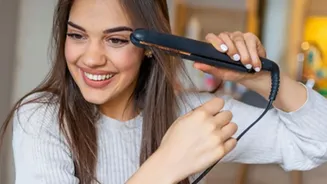
curling wands, and other hot tools often reach scorching temperatures, some over 200°C. When applied directly to hair, this intense heat can cause significant damage. It essentially boils the water within the hair shaft, causing it to steam and form damaging bubbles. This process can degrade the hair's natural protein structure, called keratin, leading to weakened strands, split ends, and increased breakage. High heat strips moisture from the hair, leaving the protective outer layer, or cuticle, cracked and lifted. This results in hair that looks dull, feels rough, and is prone to frizz.
The Surprising Downside of Air-Drying
Avoiding high heat seems like the obvious solution, and for a long time, air-drying was hailed as the healthiest alternative. However, recent science suggests this method has its own drawbacks. When hair is wet, it can absorb up to 30% of its own weight in water, causing the strand to swell. This swollen state is a fragile one. Leaving hair wet for extended periods (often hours when air-drying) puts prolonged stress on the proteins and the cell membrane complex that holds the hair structure together. This phenomenon, known as 'hygral fatigue', can weaken the hair from the inside out, leading to a loss of elasticity and more breakage over time. Furthermore, a perpetually damp scalp can become a breeding ground for bacteria and fungus, potentially causing irritation, itchiness, and dandruff.
The 'Goldilocks' Solution: Low-Heat Drying
If extreme heat is bad and prolonged wetness is also problematic, what's the answer? The solution lies in a balanced approach: using a hairdryer on a low-heat and low-speed setting. This method is considered the 'Goldilocks' of hair drying—it's just right. A 2011 study found that using a hairdryer at a distance of 15cm with continuous motion caused less overall damage than letting hair air-dry naturally. Low, indirect heat helps to quickly evaporate excess surface moisture, reducing the time your hair spends in its weakened, swollen state. This minimises the risk of internal damage from hygral fatigue, while also avoiding the surface-level damage caused by high-heat tools.
How to Master Low-Heat Drying
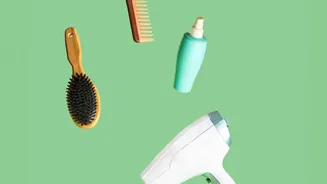
Adopting this technique is simple and effective. Follow these steps for healthier, happier hair. First, gently squeeze excess water from your hair using a microfibre towel or an old cotton t-shirt; never rub, as this creates frizz and breakage. Next, apply a heat protectant spray or serum. This is non-negotiable, as it creates a buffer between your hair and the heat. Set your hairdryer to the lowest heat and speed setting. If you have wavy or curly hair, use a diffuser attachment to disperse the airflow, which helps enhance your natural texture and reduce frizz. Hold the dryer about 15-20cm away from your hair and keep it moving continuously to prevent any one spot from getting too hot. Aim the nozzle down the hair shaft to help the cuticle lie flat, which increases shine. Stop when your hair is about 80-90% dry and let the rest air-dry. Finish with a blast of cool air from the 'cool shot' button to seal the cuticle and lock in your style.