


Meet Our New Mini-Moon
In August 2026, Hungarian astronomer Krisztián Sárneczky spotted a faint object moving through our cosmic neighbourhood. Initially, observers wondered if it was a piece of space junk—a discarded rocket booster or a defunct satellite. But follow-up observations
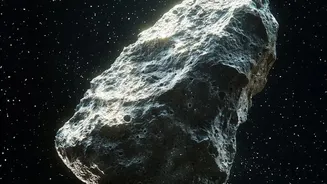
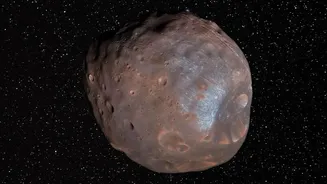
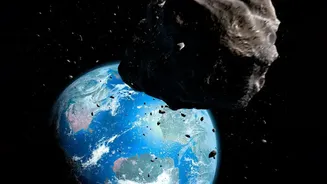
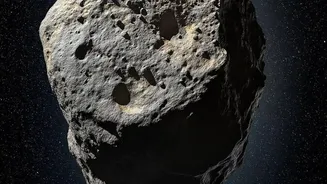
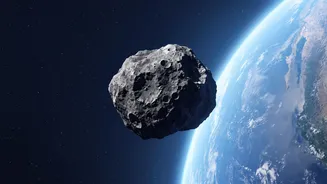
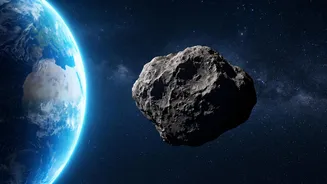
confirmed it was a natural object: a small asteroid, estimated to be just one to two metres in diameter, about the size of a large appliance. The Minor Planet Center officially designated it 2026 QQ8 in late October. While 'mini-moon' isn't an official scientific term, it perfectly describes these small asteroids that our planet temporarily snags. This isn't Earth's first time hosting such a guest; astronomers have catalogued others, like 2006 RH120 and 2020 CD3, that performed a similar cosmic dance.
The Delicate Gravitational Dance
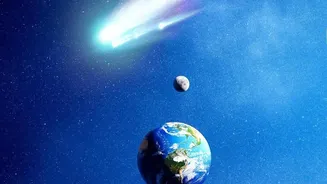
So, how did Earth capture a moon of its own? It's a matter of celestial mechanics, perfect timing, and a bit of luck. Every planet has a region around it called a 'Hill sphere', where its own gravity is the dominant force, overpowering the gravitational pull of the Sun. Asteroid 2026 QQ8 has an orbit around the Sun that brings it relatively close to Earth about once a decade. During previous passes, it stayed outside our Hill sphere. But in April 2026, it approached at just the right speed and angle to cross that boundary, allowing Earth's gravity to pull it into a temporary orbit. It didn't just start circling us in a neat loop like our permanent Moon. Its path is chaotic and loopy, influenced by the complex gravitational interplay between the Earth, the Sun, and the Moon itself.
An Unstable, Fleeting Orbit
The very factors that allowed for 2026 QQ8's capture are also why it cannot stay. Its orbit is highly unstable. While our large Moon is held in a stable, long-term orbit, this tiny visitor is barely hanging on. The gravitational pulls from the Sun and our own Moon constantly tug at the mini-moon, perturbing its already wobbly path. Think of it like a spinning top that's losing momentum; eventually, it will wobble out of its rotation. Similarly, 2026 QQ8 is on an escape trajectory. It was captured in April 2026 and is expected to complete about one and a half orbits before being flung back out into its own independent path around the Sun.
A Cosmic Goodbye in The New Year
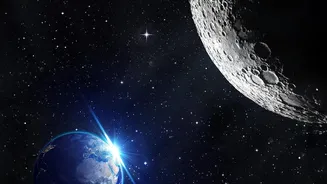
Astronomers predict that 2026 QQ8 will leave Earth's gravitational influence sometime between December 2026 and January 2027. At that point, it will cease to be our mini-moon and will continue its own journey as a near-Earth asteroid. There's no need to worry about its departure or its presence; at its closest, the asteroid remains about 1.5 times farther away than our main Moon. And given its tiny size, even if it were on a collision course, it would simply burn up harmlessly as a bright meteor in our atmosphere. Its visit won't be forgotten, as it provides a valuable, real-time opportunity for scientists to study how planets capture and lose satellites.
Are There Other Mini-Moons?
Yes, almost certainly. Scientists believe that at any given moment, Earth is likely hosting at least one mini-moon of about a metre in size. Some models suggest there could be several at once. These objects are just incredibly small, faint, and fast-moving, making them extremely difficult to detect with current survey telescopes. We are only now getting good at spotting them. The capture of 2026 QQ8 is a reminder that our solar system is not a static, clockwork mechanism, but a dynamic place filled with wandering objects on fascinating journeys. While this particular visitor won't be back in our orbit anytime soon—its next close, but not-captured, approach is expected in 2058—the search for our next temporary moon is always on.