





The Secret to the Intricate Weave
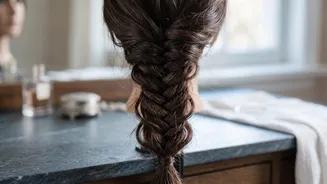
The fundamental difference between a fishtail braid and a traditional plait lies in the number of strands used. A standard braid relies on three thick sections of hair woven over one another. In contrast, a fishtail braid uses only two main sections.
The pattern is formed by taking a very small piece of hair from the outside of one section and crossing it over to the inside of the opposite section. This is repeated back and forth down the length of the hair. This technique of using thin strands from alternating sides is what creates the signature, tightly woven herringbone pattern that looks far more detailed and complex than a standard three-strand braid.
Step-by-Step: Your Guide to the Classic Fishtail
Ready to try it yourself? While it might look intimidating, many find the fishtail easier to master than a French braid because you're only managing two sections. Start by brushing your hair to remove any tangles. For beginners, it often helps to secure your hair in a low ponytail with an elastic you can cut out later. Next, divide your hair into two large, equal sections. Hold one section in each hand. Now, the key movement: take a thin strand, about a half-inch wide, from the outer edge of the left section. Cross this small piece over the top of the entire left section and tuck it under the right section, effectively joining it. Now, repeat the exact same motion on the other side. Take a small strand from the outside of the right section, cross it over, and add it to the left section.
Finding Your Rhythm
Continue this pattern, alternating sides all the way down. Always take the new piece from the outermost edge and bring it over to the opposite side. The key to that fine, detailed look is consistency. Try to take strands of the same thickness each time. The thinner the strands you use, the more intricate and 'fish-like' your braid will appear, though it will take a bit longer to complete. Don't worry if it feels a little awkward at first. Once you find a rhythm, the repetitive motion becomes second nature. Braid until you have a few inches of hair left at the bottom, then secure it with a hair tie.
Tips for a Flawless Fishtail
For a better grip, especially on clean, silky hair, start with second-day hair or apply a texturizing spray or dry shampoo before you begin. This adds a bit of grit and prevents the strands from slipping. Once your braid is secured, you can customize the finish. For a sleek, polished look, keep the tension tight as you braid. For a more relaxed, bohemian vibe, gently tug on the edges of the braid from the bottom up. This technique, often called 'pancaking', loosens the weave and makes the braid appear fuller and more voluminous. If you have layers, a light mist of hairspray can help tame any flyaways.
Beyond the Basics: Fishtail Variations
Once you've mastered the basic side fishtail, a world of styling possibilities opens up. The 'French fishtail' incorporates new hair from the sides as you braid down from the crown, similar to a classic French braid. A 'Dutch fishtail' involves crossing the strands underneath instead of over, making the braid pop for a 3D effect. You can also create elegant updos, half-up styles, or even a fishtail crown for special occasions. The technique's versatility makes it perfect for everything from a casual day out to a formal event like a wedding.