






The Ultimate Challenge: A 14-Day Deep Freeze
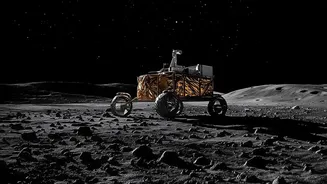
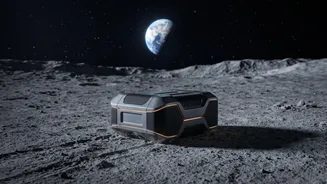
Imagine a night that lasts for 14 Earth days, where temperatures can drop below minus 170 degrees Celsius. This is the brutal reality rovers face on the Moon. Without an atmosphere to trap and circulate heat, the lunar surface becomes one of the most
unforgiving environments in the solar system once the Sun sets. For a solar-powered machine, this means no energy generation for two straight weeks. For its delicate electronics and batteries, the extreme cold is a death sentence, as chemical processes slow down and components can freeze and crack. This challenge is why early lunar missions, like India's successful Chandrayaan-3, were designed primarily for a single lunar day. Surviving the night was a bonus, not a guarantee. To establish a long-term presence and get a better return on investment, rovers must be able to endure multiple day-night cycles.
The Classic Solution: A Nuclear Hand Warmer
For decades, the most reliable solution has been the Radioisotope Heater Unit, or RHU. Think of it as a tiny, long-lasting nuclear hand warmer. These small devices contain a few grams of a radioactive element, most commonly plutonium-238, which naturally decays and releases a steady, reliable stream of heat for decades. By placing these one-watt heaters near critical components, engineers can keep a rover's core systems from freezing, even without any electrical power. RHUs have been a workhorse for NASA, used on missions from the Apollo era's surface experiments to the Mars rovers Spirit and Opportunity. The European Space Agency (ESA) is also developing its own RHUs using americium-241. While highly effective, the use of radioactive materials adds cost, complexity, and regulatory hurdles to a mission.
Innovating for the Future: Smarter Systems
The next generation of lunar explorers is getting even smarter about temperature control. Instead of just generating heat, new systems focus on managing it. One promising technology is a thermal switch. During the blistering lunar day, a rover generates excess heat from its electronics that must be radiated away into space to prevent overheating. At night, you want to stop that heat from escaping. Engineers are developing advanced systems, like loop heat pipes combined with special valves or pumps, that act as a variable thermal link. During the day, these systems efficiently carry heat out to a radiator. At night, they effectively shut down, trapping the rover's internal heat inside a 'warm box' of insulation. Recent developments from a team at Nagoya University in Japan have shown a highly efficient, low-power method using an electrohydrodynamic pump to block the flow of refrigerant at night, essentially creating an 'off' switch for the cooling system.
Why Survival Is Key to Lunar Ambitions
Enabling rovers to survive the lunar night is not just a technical exercise; it is fundamental to the future of lunar exploration and commerce. NASA has ranked surviving the lunar night as a top priority technology gap. For missions like the now-cancelled but influential VIPER rover, which was designed to search for water ice at the poles, long-duration operations are essential for mapping resources. Longer missions mean more science, more ground covered, and a better understanding of the lunar environment. For commercial companies, a rover that can operate for months or years instead of just two weeks is a much more valuable asset. As India's ISRO plans for future missions that could last up to 200 days, developing robust heating and power systems is a primary focus. These technologies pave the way for a sustained robotic and, eventually, human presence on the Moon, turning it from a place we briefly visit into a place where we can stay and work.