





The Ultimate Recycling Challenge
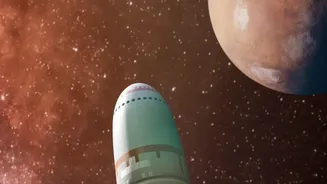
Imagine a multi-year road trip where you can't stop for air, water, or food. That's the challenge of a Mars mission. Early spaceflights used 'open-loop' systems, carrying all necessary supplies from Earth. This is not feasible for a three-year round trip to Mars.
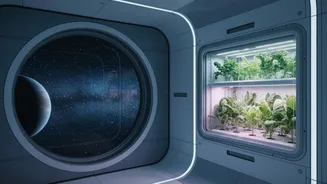
The solution is a 'closed-loop' life support system, a miniature, self-sustaining ecosystem that recycles virtually everything. These advanced Environmental Control and Life Support Systems (ECLSS) are designed to purify water from sweat, humidity, and even urine; scrub carbon dioxide from the air and generate fresh oxygen; and eventually, process waste and grow food. Think of it as creating a small bubble of Earth that can sustain astronauts indefinitely, a critical step toward Earth-independent operations.
Why Mars is Not Just a Bigger Moon Trip
The Moon is, on average, a three-day journey away. Mars is a seven-month voyage, one way. This vast distance changes everything. Resupply missions are impossible, and a quick return in an emergency is not an option. Furthermore, communication delays of up to 24 minutes each way mean astronauts cannot rely on real-time help from Mission Control. They would have to handle any life-support failures on their own, with only the tools and knowledge they brought with them. A Mars mission requires near-perfect reliability and autonomy, as astronauts must survive for years on a spacecraft and on the Martian surface, which has a thin atmosphere and no magnetic field to protect from radiation. This is why simply scaling up Apollo-era technology won't work.
Artemis: A High-Fidelity Dress Rehearsal
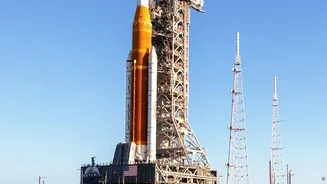
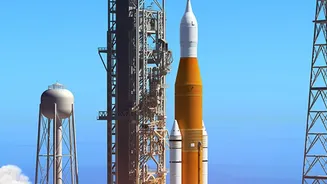
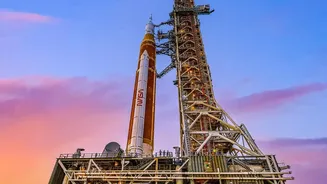
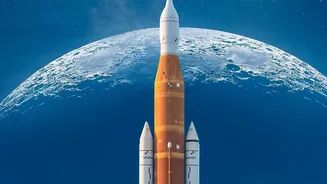
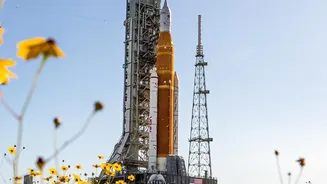
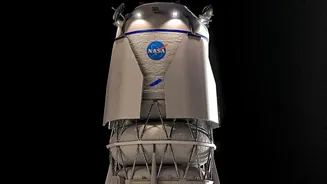
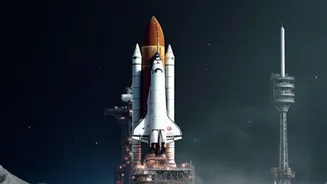
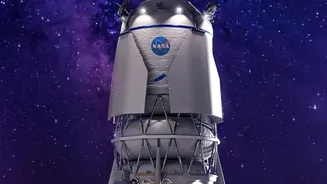
This is where the Artemis program comes in. Returning humans to the Moon and establishing a sustained presence there provides the perfect proving ground for Mars-bound technologies. It's a true deep-space environment, but it's close enough to manage risk. The Orion spacecraft's ECLSS, which will keep astronauts alive on their journey, is a key piece of this puzzle. The planned Gateway lunar space station will be a crucial testbed for even more advanced components. International partners are developing key life support systems for the Gateway's I-Hab module, which will provide living quarters for astronauts and test technologies needed for long stays far from Earth.
Testing Systems Under Real Pressure
The International Space Station (ISS) has already provided invaluable lessons on life support. Its systems recycle a significant amount of water and air, but are still only partially closed and require regular resupply. The Artemis missions will test the next generation of these systems. Astronauts will evaluate everything from the reliability of hardware over extended periods to their own ability to perform maintenance with limited support. These lunar missions will help engineers understand how systems degrade in the harsh space environment and how to build more robust and self-sufficient replacements. They will also provide crucial data on the human element: how the deep space environment affects astronauts' health and performance, which is vital for planning a years-long Mars journey.