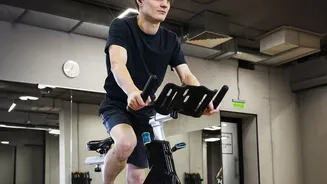








What is Zone-2 Cardio?
Imagine a workout intensity that’s more than a casual stroll but much easier than a sprint. That sweet spot is Zone 2. On a scale of five heart rate zones, where Zone 1 is very light activity and Zone 5 is an all-out effort, Zone 2 is a low-to-moderate
intensity, typically 60% to 70% of your maximum heart rate. The easiest way to know you’re in Zone 2 is the 'talk test': you should be able to hold a conversation in full sentences without gasping for air. If you can sing, you’re likely in Zone 1; if you can only get out a few words at a time, you’ve pushed into Zone 3 or higher. It’s the pace of a brisk walk, a light jog, or a steady bike ride where the effort feels comfortable and repeatable.
The Science of Sustainable Stamina
The magic of Zone 2 lies in how it trains your body's energy systems. At this intensity, your body becomes incredibly efficient at using fat as its primary fuel source instead of carbohydrates. This has profound benefits. Firstly, it strengthens your heart, allowing it to pump more blood with each beat, which can lead to a lower resting heart rate and better circulation. Secondly, it boosts your mitochondria—the 'powerhouses' of your cells—in both number and efficiency. More efficient mitochondria mean your body produces more energy and clears out metabolic byproducts like lactate more effectively, which delays the onset of fatigue. This process builds a strong aerobic base, which is the foundation of all-around fitness and makes higher-intensity efforts feel easier down the line.
Why It Prevents Burnout
Many people who start a new fitness routine jump into high-intensity interval training (HIIT), get exhausted, and quit. Zone 2 offers a powerful alternative. Because the intensity is lower, it places far less stress on your muscles, joints, and nervous system. This means you can train more frequently without needing extensive recovery time or feeling constantly sore. For a desk worker already managing mental fatigue from a demanding job, adding punishing physical stress can be counterproductive. Zone 2 workouts should leave you feeling energized, not depleted, making it a habit you can actually stick with long-term.
How to Find Your Zone
While the talk test is the most practical method, you can also use heart rate to guide your effort. A simple formula to estimate your maximum heart rate (MHR) is 220 minus your age. Your Zone 2 range would then be 60% to 70% of that number. For example, a 40-year-old has an estimated MHR of 180 beats per minute (bpm), making their Zone 2 range approximately 108 to 126 bpm. Keep in mind this is just an estimate. The talk test remains the gold standard for real-world application because it automatically adjusts for your daily fitness level, fatigue, and other factors.
Making It a Desk-Worker's Habit
The beauty of Zone 2 is its accessibility. You don’t need a special gym or complex equipment. Effective Zone 2 activities include brisk walking (especially on an incline), light jogging, cycling at a steady pace, swimming, or using an elliptical machine. For beginners, a great starting point is to aim for three sessions of 30 to 45 minutes per week. You can break this up throughout your day—a brisk walk during your lunch break, an easy bike ride after work while listening to a podcast, or even using a walking pad while on calls. The key is consistency. Don't be surprised if your initial Zone 2 pace feels surprisingly slow; for many, it involves integrating walking breaks into a jog to keep their heart rate from spiking.