




What's New: Final Preparations for Launch
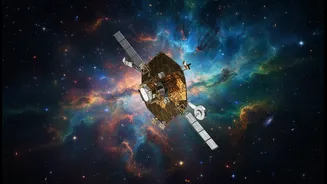
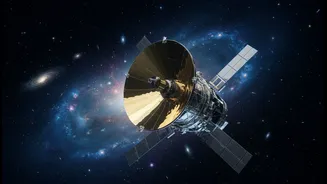
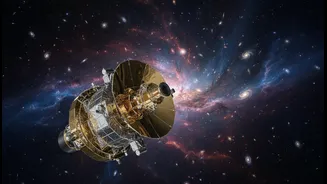
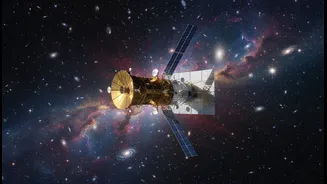
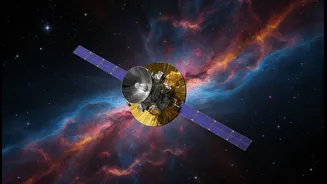
The most significant new development is that the Nancy Grace Roman Space Telescope is in the final stretch before its journey to space. The observatory has been fully assembled and, after completing extensive testing at NASA's Goddard Space Flight Center,
it was transported to the Kennedy Space Center in Florida. As of July 2026, technicians are conducting the last inspections and functional tests before the telescope is integrated with its rocket. The official launch is targeted for August 30, 2026, aboard a SpaceX Falcon Heavy rocket. This represents a major milestone, moving the telescope from a decade of design and construction into its operational phase. The mission, named after NASA's first chief of astronomy, Nancy Grace Roman, is now tangible, with its hardware ready and its launch date just around the corner.
What Matters: A Panoramic View of the Universe
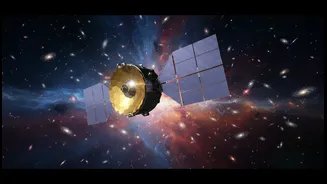
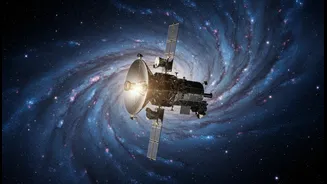
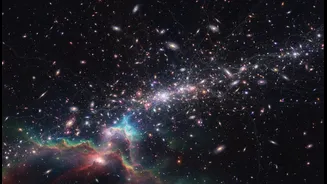
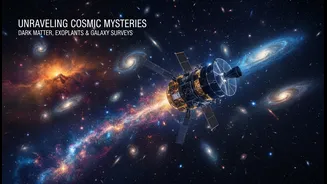
What truly sets the Roman Telescope apart is its immense field of view. While its 2.4-meter primary mirror is the same size as Hubble's, its Wide Field Instrument (WFI) can capture a patch of sky at least 100 times larger than Hubble can in a single image. This makes Roman a survey powerhouse, designed to map vast regions of the cosmos with incredible speed and Hubble-like resolution. This capability is crucial for its two primary science goals: understanding dark energy and discovering exoplanets. To tackle the mystery of dark energy, the force believed to be accelerating the universe's expansion, Roman will survey billions of galaxies to create a 3D map of the universe's structure over time. For exoplanets, it will conduct a massive census by repeatedly monitoring hundreds of millions of stars toward the Milky Way's center, using a technique called gravitational microlensing to find thousands of new worlds, including those much farther away than other telescopes can typically detect.
Game-Changing Tech: The Coronagraph Instrument
Beyond its wide-field surveys, Roman carries a groundbreaking piece of technology called the Coronagraph Instrument. This instrument is a technology demonstration designed to block the overwhelming glare of a star, allowing for the direct imaging of faint planets orbiting it. While other coronagraphs exist, Roman's is designed to be 100 to 1,000 times more effective than previous space-based versions. It uses a complex system of masks and deformable mirrors that actively correct for tiny imperfections in starlight to create an ultra-dark region where a planet's reflected light can be seen. While the main mission is the wide-field survey, the coronagraph will be a crucial test, paving the way for future missions like the Habitable Worlds Observatory, which aims to directly image Earth-like planets and search their atmospheres for signs of life.
What Remains Unclear: The Cosmic Unknowns
The most exciting aspect of the Roman mission is what remains unclear—not about the telescope itself, but about the universe it will study. The mission is designed to confront some of the biggest unanswered questions in astrophysics. At the top of the list is the nature of dark energy; scientists know it makes up about 68% of the universe, but they don't know what it is. Roman's vast surveys will test whether it's a constant force or if its strength has changed over cosmic history. Similarly, the telescope will create detailed maps of dark matter distribution by observing how its gravity bends the light from distant galaxies. On the exoplanet front, it remains unclear how common planetary systems like our own are across the galaxy. Roman's microlensing survey will provide a statistical census of planets, including rocky worlds and free-floating planets not orbiting any star, helping to answer whether the architecture of our solar system is a cosmic rarity.