






The Beginning: Baahubali's Mythic World-Building
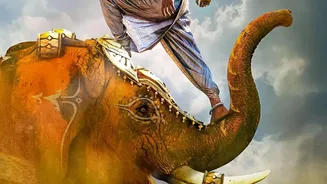
S.S. Rajamouli's two-part epic, Baahubali, was the tectonic plate that shifted the entire landscape of Indian cinema. It wasn't just a film; it was an exercise in ambitious world-building, creating the fictional kingdom of Mahishmati with a depth and grandeur
previously unseen. The story drew from Indian mythology and folklore, making its emotional core instantly relatable, while the production deployed visual effects on a scale that rivaled Hollywood. Baahubali: The Beginning (2015) and its sequel The Conclusion (2017) proved that a Telugu film, when dubbed and marketed with conviction, could captivate audiences nationwide. It established the pan-Indian model: a culturally rooted story told with universal emotion and groundbreaking spectacle, setting box office records that stood for years.
The Swagger: K.G.F.'s Stylistic Rebellion
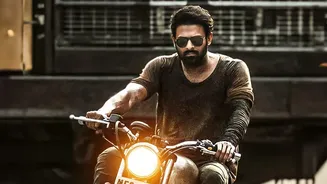
If Baahubali was about mythic grandeur, the K.G.F. franchise was a jolt of pure, stylistic adrenaline. Hailing from the Kannada film industry, K.G.F: Chapter 1 (2018) was a dark, gritty tale of one man's ascent from poverty to power. Its hero, Rocky Bhai, became an instant icon, not for his divine strength but for his unapologetic swagger and raw ambition. Director Prashanth Neel crafted a visually distinct world with a high-contrast, almost sepia-toned aesthetic, complemented by a thunderous background score and rapid-fire editing. The film's success was a powerful statement that a regional story, when told with immense style and confidence, could create a nationwide frenzy. It shattered the notion that only certain industries could produce mass entertainment, proving that attitude and aesthetics could be as universal as epic fantasy.
The Emotion: RRR's Unforgettable Action Bromance
Returning to the director's chair, S.S. Rajamouli took the pan-Indian formula he pioneered and perfected it with RRR (2022). This fictional take on two real-life freedom fighters was a masterclass in blending hyper-choreographed action with profound emotional storytelling. The film's action sequences were not just about spectacle; they were extensions of character and emotion. From the iconic piggyback fight scene to the viral 'Naatu Naatu' dance number, every moment was designed for maximum emotional impact. RRR established that the heart of a pan-Indian blockbuster lies in its ability to make audiences feel. It achieved global acclaim, demonstrating that a story rooted in Indian history could resonate with audiences worldwide by focusing on universal themes of friendship, sacrifice, and rebellion.
The Grit: Pushpa's Rise from the Underdog
While other films focused on kings and stylized gangsters, Sukumar's Pushpa: The Rise (2021) brought a rugged, rural earthiness to the pan-Indian stage. The film's protagonist, Pushpa Raj, is a brash, flawed, and charismatic smuggler with a distinct limp and an unforgettable catchphrase. The film’s appeal lay in its raw, grounded portrayal of a grassroots anti-hero. Allu Arjun's performance, complete with a unique swagger and body language, became a cultural phenomenon. Pushpa demonstrated that a pan-Indian spectacle didn't always need fantasy worlds or slick urban settings. It showed that a compelling story about an underdog's rise, packed with regional flavor and mass appeal, could find its way into the hearts of audiences everywhere.