


The Sun's Menace
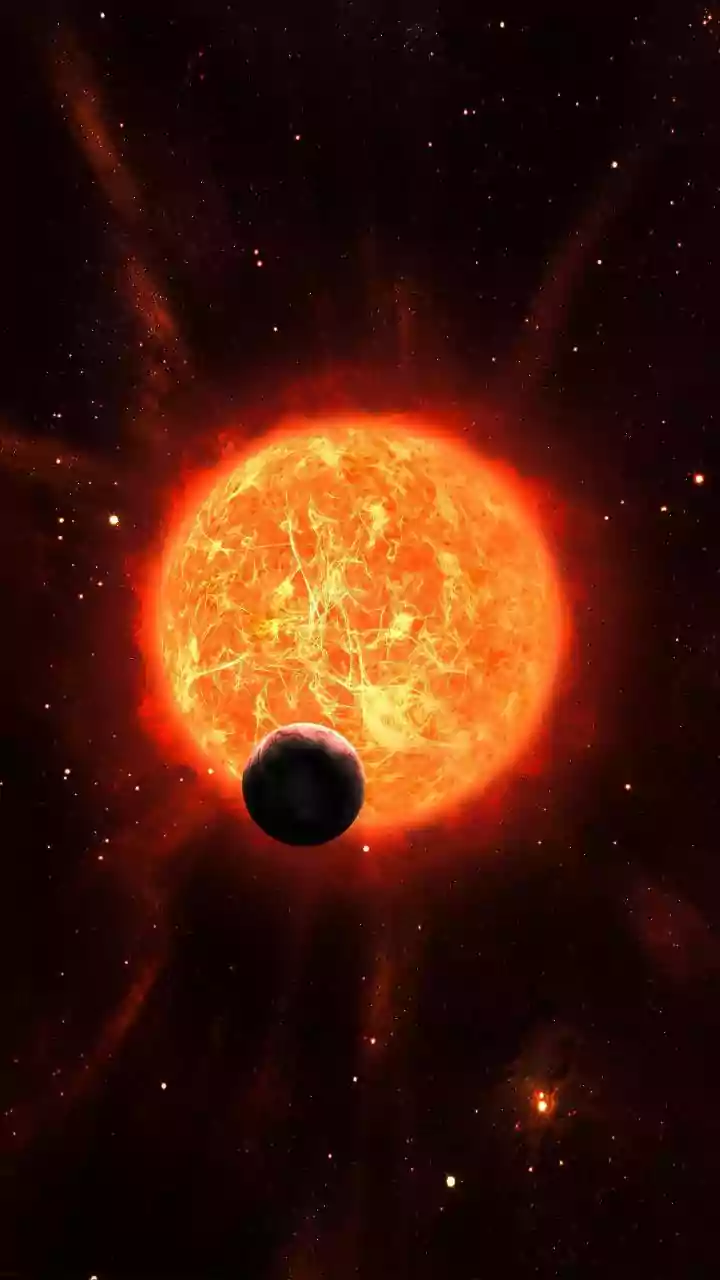
A solar storm is a massive burst of energy and particles released from the Sun. These events include solar flares, which are intense flashes of radiation, and coronal mass ejections (CMEs), which are giant clouds of solar plasma hurled into space. While
Earth's atmosphere and magnetic field protect life on the ground from direct harm, our technological infrastructure is highly vulnerable. A severe geomagnetic storm, caused by a CME hitting Earth, can induce powerful currents in power grids, potentially causing widespread blackouts. It can also disrupt and damage satellites, interfere with GPS navigation, and block high-frequency radio communications used by airlines. The energy from a flare travels at the speed of light, meaning we only see it as it arrives, giving us no time to prepare for its immediate effects on radio signals.
The Challenge of Space Weather Forecasting
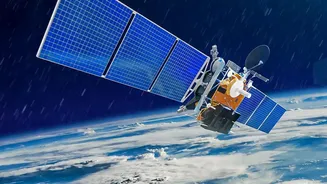
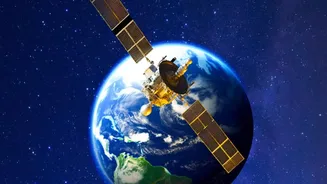
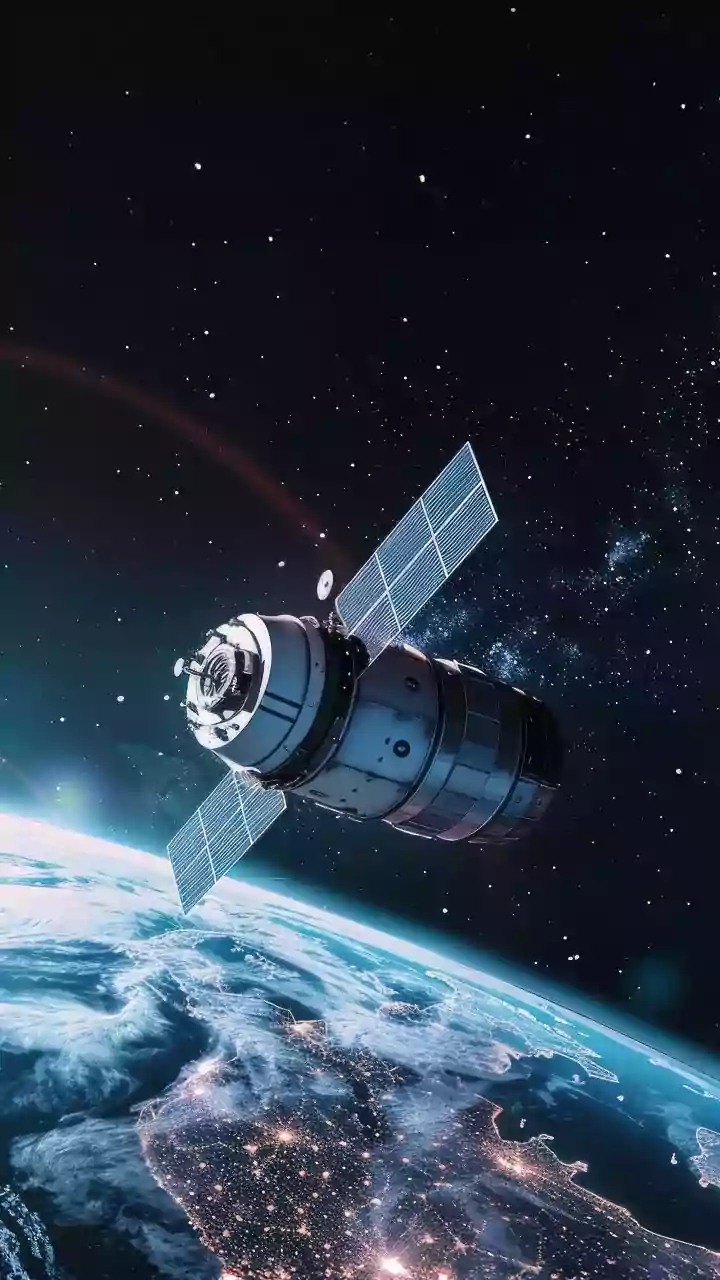
Predicting space weather is notoriously difficult. Currently, forecasters at agencies like NOAA's Space Weather Prediction Center (SWPC) monitor the Sun for active regions and sunspots, which are often precursors to flares and CMEs. Satellites stationed between the Sun and Earth, like the DSCOVR satellite, act as a cosmic tripwire, measuring the solar wind—the stream of particles flowing from the Sun. This provides our most reliable warning, but it's a short one. Depending on its speed, a CME can take one to several days to travel from the Sun to Earth, but the crucial warning for its on-the-ground impact only comes when it passes these near-Earth satellites, leaving just 30 to 60 minutes of notice before the storm hits.
Enter Artificial Intelligence
This is where artificial intelligence comes in. AI, and specifically deep learning models, can be trained on enormous datasets of solar activity collected over decades. By analyzing years of satellite imagery and solar wind measurements, these models learn to identify incredibly subtle patterns and correlations that are invisible to human analysts. Researchers are developing AI systems that can look at images of the Sun and predict where a storm might emerge, or analyze solar wind data to more accurately forecast its impact. A new AI model from NYU Abu Dhabi has shown it can forecast solar wind speeds up to four days in advance with significantly greater accuracy than previous methods by analyzing ultraviolet images of the sun.
DAGGER: A Digital Tornado Siren
One of the most promising developments is a model called DAGGER (Deep Learning Geomagnetic Perturbation). Developed with NASA support, DAGGER uses AI to analyze real-time data from spacecraft. It doesn't just predict that a storm is coming; it predicts where on Earth the storm will strike and how intense its effects on the ground will be. The model can generate a worldwide forecast of geomagnetic disturbances 30 minutes before they happen, with predictions updating every minute. This speed and precision are a game-changer. That 30-minute warning is just enough time for power grid operators to take preventative measures, for satellite operators to put spacecraft into a safe mode, and for airlines to reroute flights away from polar regions where radiation exposure is higher.
The Future of Solar Forecasting
AI is not a crystal ball. The models are only as good as the data they are trained on, and truly massive, Carrington-level events are so rare that we have limited modern data to train with. However, the progress is rapid. Recent models can now detect the precursors of active regions hours before they even become visible on the Sun's surface. Other AI systems, like one developed by NASA and IBM called Surya, can analyze vast archives of solar images to improve flare prediction. The goal is not to replace human experts, but to give them powerful new tools. By combining AI's pattern-recognition ability with human scientific knowledge, we are moving toward a future where space weather forecasts are as common and reliable as our terrestrial weather reports.