

The Foundation: Sweet Bell Peppers
Bell peppers are the dependable, everyday workhorse for countless recipes, and for good reason. With a Scoville heat score of zero, they are all about flavour, not fire. The primary difference lies in their colour, which indicates ripeness. Green bell
peppers are harvested early, giving them a more bitter, grassy flavour that holds up well in cooking. As they ripen, they turn yellow, orange, and finally red. Each stage gets progressively sweeter. Red bell peppers are the sweetest of the bunch, making them perfect for raw applications or roasting to bring out their sugars. For stuffings, their thick walls and large cavities make them ideal vessels that won't collapse in the oven. Green peppers offer a savoury counterpoint to rich fillings, while red or orange peppers add a pleasant sweetness.
The Ideal Stuffing Pepper
When choosing a pepper specifically for stuffing, structure is everything. You need a pepper with a relatively large, hollow cavity and thick walls that can withstand baking without turning to mush. Classic bell peppers are the go-to choice because their blocky shape provides a stable base. Look for peppers with four distinct lobes on the bottom, as they tend to stand up more reliably in a baking dish. Beyond bell peppers, other excellent options include mild Anaheim or Poblano peppers. Anaheims are long and spacious, perfect for slicing lengthwise, while the heart-shaped Poblano offers a mild heat and earthy flavour that beautifully complements cheese and grain fillings. Even Cubanelle peppers, often called Italian frying peppers, are great for stuffing and baking.
Building Flavour in Sauces
In sauces, peppers can play a starring role or be a subtle background note. For a fresh, bright sauce, roasted red bell peppers are unbeatable. When blended, they create a silky, sweet, and vibrant base for pastas or soups. For a gentle, warming heat and more complex flavour, turn to chillies like the Jalapeño or Poblano. Jalapeños bring a bright, grassy heat that can liven up a tomato sauce or salsa. For a deeper, smokier flavour, roasting Poblanos before blending them into a sauce is a classic technique. Even milder peppers like the Anaheim can be roasted and pureed to add body and a slight peppery taste to creamy sauces without adding significant heat.
The Magic of Dried Chillies
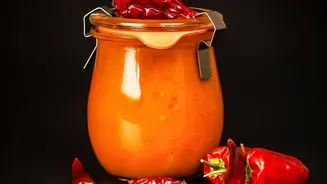
Dried chillies are a secret weapon for creating sauces with incredible depth and complexity. When peppers are dried, their flavours concentrate and transform, often becoming smoky, earthy, and raisin-like. Varieties like Ancho (a dried Poblano) and Guajillo are essential in Mexican cuisine for a reason. Anchos provide a mild, sweet, and slightly smoky flavour, while Guajillos offer a brighter, tangier heat with berry undertones. To use them, you first toast them briefly in a dry pan to awaken their aromas, then rehydrate them in hot water until they are soft and pliable. From there, they can be blended with garlic, onion, and spices to create rich adobos and sauce bases that are worlds away from anything made with fresh peppers alone.
A Note on Heat
Understanding the Scoville scale, which measures a pepper's heat in Scoville Heat Units (SHU), can save you from a fiery mistake. For reference, a Bell Pepper is 0 SHU, a Poblano is around 1,000-2,000 SHU, and a Jalapeño can range from 2,500-8,000 SHU. For most vegetarian sauces and stuffings where heat is not the main event, sticking to peppers in the mild to medium range is a safe bet. For those who enjoy more spice, chillies like the Serrano (10,000-25,000 SHU) or the tiny but potent Thai chilli (50,000-100,000 SHU) can be used. When using hotter peppers, start with a small amount, and remember that you can always add more, but you can't take it away.