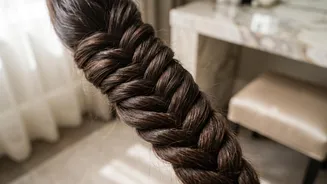




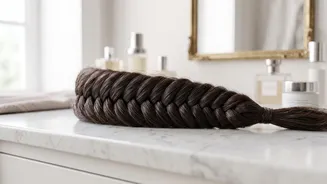

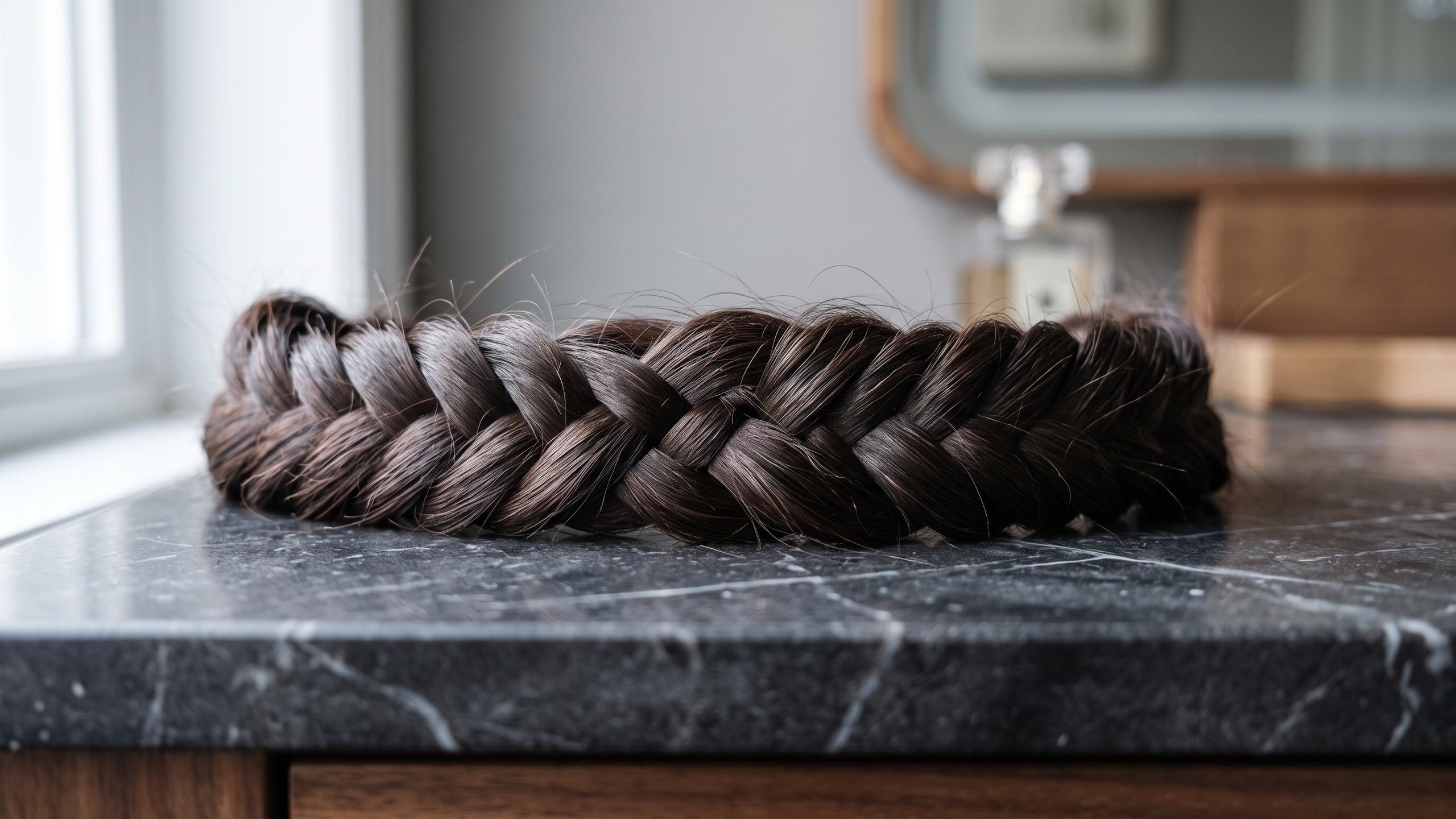
The Fishtail Braid in a Nutshell
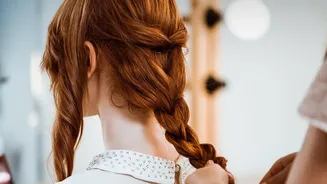
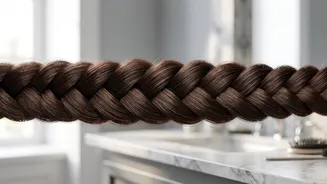
Unlike a standard three-strand braid, a fishtail uses only two main sections of hair. The signature herringbone pattern is created by repeatedly taking a small piece from the outer edge of one section and crossing it over to join the opposite section.
You simply alternate sides—taking from the outside of the left and adding to the right, then taking from the outside of the right and adding to the left—all the way down. While the concept is simple, the execution is what separates a loose, uneven braid from a sleek, professional-looking one. Many beginners find the rhythm tricky at first, but once it clicks, it becomes one of the easiest braids to master.
Why Smaller Strands Are the Secret
It may seem counterintuitive, but using smaller, thinner strands is the key to both speed and a more defined look. Grabbing large, chunky pieces feels like it should be faster, but it creates a bulky, less intricate pattern and forces a slower, more deliberate hand motion. Thin strands, about the width of a pencil, allow for a quicker, more fluid transfer between your hands. The resulting braid has that detailed, woven appearance that makes the fishtail so appealing. Consistent, even-sized strands are crucial; if you grab a thick piece on one side and a thin one on the other, the braid will look unbalanced. Getting comfortable with picking up small sections quickly is the foundation of a speedy fishtail.
Building Speed Through Muscle Memory
Speed in braiding, like any physical skill, comes from muscle memory. Instead of focusing on completing a full, perfect braid every time you practice, isolate the core movement: the strand transfer. Start with your hair in two sections, perhaps in a side ponytail where you can see what you're doing. For a few minutes each day, simply practice picking up a small strand from the outside of one section and passing it to the other. Don't worry about how the braid looks. Just focus on making the movement smooth, quick, and automatic. Your fingers and hands will start to learn the rhythm without conscious thought. This repetition trains the neural pathways, so your hands can eventually perform the task efficiently while your mind is free.
Practical Drills for Faster Fingers
To develop the necessary dexterity, try a few simple drills. Hold the two main sections of hair and practice just the pickup and pass motion with your right hand for a minute, then switch and do the same with your left. This helps identify if one hand is less coordinated than the other. Another common challenge is keeping the main sections separated and maintaining tension. If you find yourself fumbling, try using a clip to hold one section momentarily while you reset your grip on the other. The goal is to make the process of separating a small piece, crossing it over, and integrating it into the other side a single, fluid action. Braiding can be a workout for your arms, which might get tired at first, but practice builds endurance.
Tips for a Flawless Finish
Once you have the motion down, a few extra tips will elevate your fishtail braid. Start with hair that isn't freshly washed; second-day hair has more grip. If your hair is too clean and slippery, a bit of texturizing spray will add the necessary grit to hold the style. When you reach the end, secure the braid with an elastic. For a fuller, more romantic look, gently pull on the outer edges of the braid from the bottom up. This technique, often called 'pancaking', expands the braid and gives it a softer, more voluminous appearance without sacrificing the underlying structure. A light mist of hairspray can help control any flyaways and lock in your beautiful, speedy creation.