





What Are These Red Warnings?
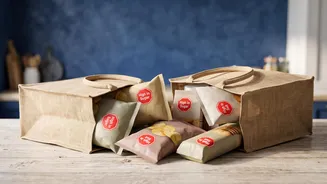
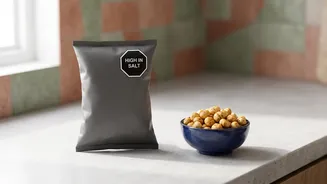
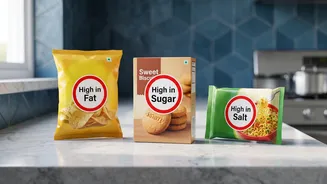
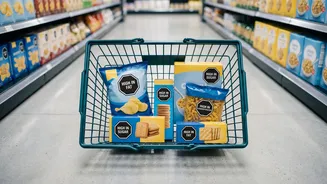
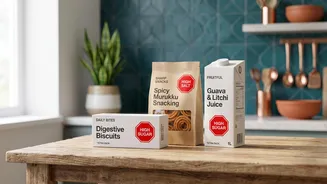
These symbols are called Front-of-Pack Labels (FoPL) and are being introduced by the Food Safety and Standards Authority of India (FSSAI). The proposed design is a prominent red hexagon displayed on the top left of the package. Inside, it will clearly
state if the product is “HIGH SUGAR,” “HIGH SALT,” or “HIGH FAT.” If a food item exceeds the limit for multiple nutrients, they will all be listed within a single hexagon. The goal is simple: to move crucial health information from the fine print on the back to a hard-to-miss warning on the front, allowing shoppers to make faster, more informed decisions.
Why Are They Being Introduced?
The push for these labels is a direct response to rising public health concerns in India. Diets high in processed foods loaded with sugar, salt, and unhealthy fats are linked to an increase in non-communicable diseases like obesity, diabetes, and heart conditions. For years, consumers had to be detectives, hunting for the nutrition panel and trying to decipher complex information. These warnings are intended to cut through the marketing claims and provide a clear, science-backed signal about nutrients that should be consumed in moderation. The matter has been debated for years and is now being expedited with oversight from the Supreme Court to prioritize public health.
Decoding the 'High In...' Thresholds
So, what does “high” actually mean? The FSSAI has proposed specific limits based on recommendations from the ICMR-National Institute of Nutrition. These thresholds are based on the nutrient content per 100 grams (for solids) or 100 millilitres (for liquids). For example, a solid food product will get a “HIGH FAT” warning if it contains more than 4.2 grams of added fat per 100g. For salt, the threshold is 625 milligrams per 100g in solid foods. For beverages, a “HIGH SUGAR” warning could be triggered by more than 2 grams of added sugar per 100ml. It's important to note that these warnings are based on added sugars and fats, not those naturally present in ingredients like fruits or milk.
How to Use This at the Supermarket
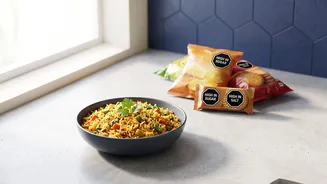
Think of these red labels not as a ban, but as a helpful flag. The warning is there to inform you, not to decide for you. You can use this information to quickly compare two brands of the same product, like breakfast cereals or biscuits, and opt for the one without a warning, or with fewer warnings. A “HIGH SALT” label on a packet of namkeen doesn’t mean it’s unsafe or adulterated; it simply indicates it crosses a defined health threshold for sodium content. This allows you to be more mindful of your choices, especially if you have health conditions like high blood pressure or are managing your sugar intake. It empowers you to balance your diet, perhaps enjoying a high-sugar treat occasionally rather than making it a daily habit.
Beyond the Red Hexagon
While the red warning is a powerful tool, it’s not the whole story. A product without a warning isn't automatically a health food, and one with a warning isn't necessarily forbidden. It's still wise to read the full ingredient list and the detailed nutrition information panel on the back of the pack. Pay attention to serving sizes, as the amount you actually eat may be more than the suggested serving. The FSSAI is also proposing a separate front-of-pack warning for products containing non-caloric sweeteners. Ultimately, these labels are one part of a bigger picture of nutritional literacy, encouraging a more conscious and holistic approach to what we eat.