






A New Era of Overnight Travel
A proposal for a Vande Bharat sleeper service with a stop in Pune could significantly upgrade overnight travel, particularly for commuters heading to southern tech hubs like Bengaluru. Recent reports suggest a Mumbai-Bengaluru Vande Bharat sleeper service is
under consideration, with a potential launch date of November 1. For Pune's commuters, the critical detail is the inclusion of a stop in the city, which would provide direct access to this high-speed service without the need to travel to Mumbai first. This proposed service aims to connect the major economic corridors of Maharashtra and Karnataka, serving the high-demand route between these bustling urban centres. While a final timetable and official confirmation from Indian Railways are still awaited, the plan represents a major step towards modernising long-distance rail travel for one of India's busiest professional populations.
What is a Vande Bharat Sleeper?
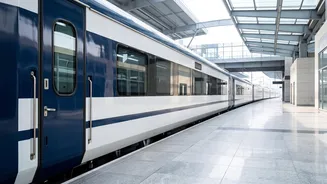
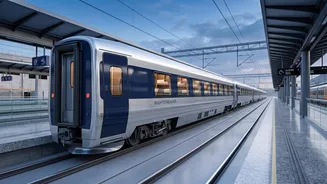
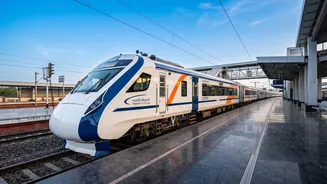
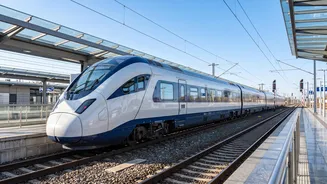
Unlike the chair-car Vande Bharat trains currently in operation, the sleeper version is designed specifically for long, overnight journeys. These trains are engineered to run at speeds up to 160 km/h, significantly faster than traditional overnight express trains. A typical Vande Bharat sleeper trainset consists of 16 fully air-conditioned coaches, with a mix of AC First, Second, and Third Tier berths, accommodating over 820 passengers. The emphasis is on enhanced passenger comfort and modern amenities, including ergonomically designed berths, automatic doors, bio-vacuum toilets, personal reading lights, and CCTV cameras for improved safety. This self-propelled trainset technology allows for faster acceleration and deceleration, contributing to the substantial reduction in travel time compared to conventional locomotive-hauled trains.
Connecting India's Silicon Valleys
The primary benefit of a Pune-Bengaluru Vande Bharat sleeper would be the drastic reduction in travel time. The current train journey between the two cities can take anywhere from 18 to over 24 hours. The proposed Vande Bharat sleeper aims to cut the Mumbai-Bengaluru journey to around 16-18 hours, a saving of nearly six hours from the current 22 hours on some services. For passengers boarding at Pune, the journey to Bengaluru could be reduced to approximately 12 to 15 hours. This time-saving is a massive advantage for business travellers, IT professionals, and students who frequently commute between these two 'Silicon Valleys' of India. Similarly, connectivity to Hyderabad, another major IT and business hub, is also improving. While current trains take between 9 to 11 hours, high-speed rail corridors are envisioned that could further slash travel times.
More Than Just Speed: The Broader Impact
The introduction of a faster, more comfortable overnight train does more than just save a few hours. It acts as an economic catalyst, fostering greater integration between business ecosystems in Pune, Bengaluru, and Hyderabad. Easier travel encourages more frequent collaboration, allows for talent mobility, and can make it feasible for professionals to attend meetings in another city and return without losing multiple workdays to travel. This improved connectivity also offers a competitive alternative to short-haul flights, which involve airport check-in times and often higher costs. For many, a comfortable overnight train journey where one can sleep and arrive fresh in the morning is a more productive and less stressful option. The proposed service, with its modern amenities, could make overnight rail travel the preferred choice for a generation of professionals.
What Happens Next?
While the prospect is exciting, it's important to note that the plan is still in its proposal stage. The Union Minister of State for Railways has indicated a possible November 1 inauguration for a Mumbai-Bengaluru service, but key details are yet to be confirmed by Indian Railways. The final route, the confirmed list of stops (including Pune), the official timetable, fare structure, and the date for opening reservations are all awaiting official announcement. A trial run was recently conducted on the Mumbai-Pune section, signalling that preparations are underway. Commuters and businesses in Pune will be watching closely for the final decision, as a confirmed halt would unlock a new level of connectivity and convenience, reshaping travel patterns across the region.