



The Rover and the Rock
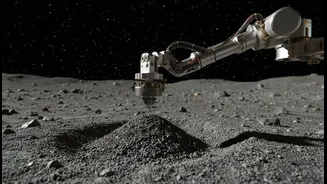
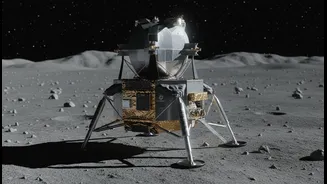
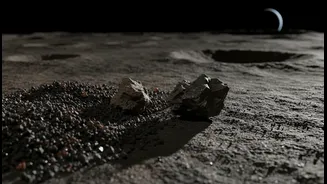
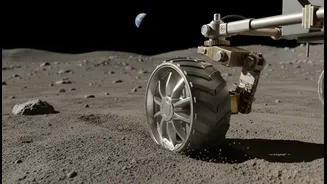
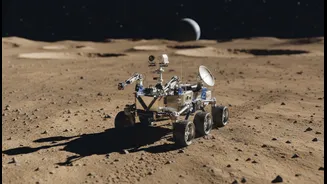
In August 2023, India's Chandrayaan-3 mission made history with a successful soft landing near the Moon's south pole. Its Pragyan rover then began analysing the elemental composition of the lunar soil at the landing site, dubbed Shiv Shakti Station. Meanwhile,
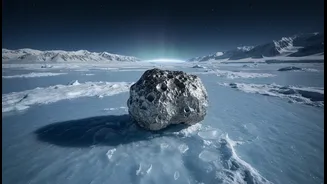
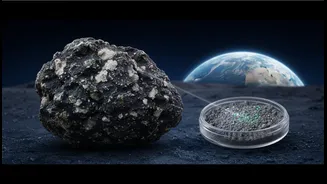
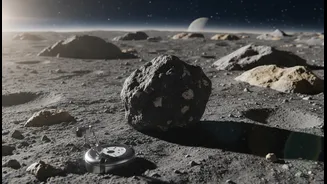
decades earlier in 1981, a scientific expedition in Antarctica discovered a unique meteorite in the Allan Hills region. This rock, named ALHA 81005, was later confirmed to be the very first meteorite found on Earth to have originated from the Moon. For over 40 years, it was a priceless piece of the Moon available for study in our labs. Now, scientists from the Physical Research Laboratory (PRL), Ahmedabad, have found that the soil readings from Chandrayaan-3 are a near-perfect geochemical match for this specific meteorite.
A Match Written in Minerals
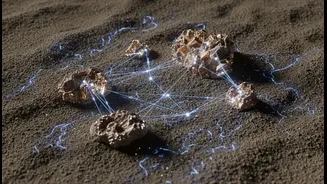
The 'aha!' moment came when scientists compared the data from Pragyan's Alpha Particle X-ray Spectrometer (APXS) with the known compositions of 66 lunar meteorites. The results were striking. The soil at Shiv Shakti Station and the meteorite ALHA 81005 both contained nearly identical amounts of key compounds. For example, the soil had about 26.1% aluminium oxide, while the meteorite had 25.8%. Both samples also showed similarly elevated levels of iron and magnesium oxides, nearly double the average found in the Moon's highland regions. According to researchers, this close match indicates that both the meteorite and the landing site represent a rare type of magnesium-rich lunar crust. It’s a crucial link that connects in-situ measurements on the Moon with physical samples studied on Earth, boosting confidence in our scientific models of the Moon.
Unlocking the Moon's Violent Past
Scientists are quick to clarify that this discovery does not mean the meteorite came from the exact spot where Chandrayaan-3 landed. Instead, it suggests that both are part of the same broad geological family. This finding provides profound insights into the Moon's chaotic history. The soil at the landing site is not from a single rock type but appears to be a complex mixture of materials from different depths of the lunar crust. Researchers believe that over billions of years, massive asteroid impacts—like the one that formed the gigantic South Pole-Aitken Basin near the landing site—excavated rocks from deep within the Moon and scattered them across the surface. This constant churning process, sometimes called 'gardening', has created a diverse geological landscape, and Chandrayaan-3 landed right on a prime example of it.
Why This Discovery Is a Game-Changer
Connecting a specific meteorite to a region on the Moon is a huge step forward. It helps scientists calibrate their instruments and verify data collected from orbit. More importantly, it strengthens the value of India's lunar program, proving that missions like Chandrayaan-3 provide long-term scientific returns far beyond the initial landing spectacle. The research, published in the journal npj Space Exploration, demonstrates how a relatively low-cost mission can produce world-class science that reshapes our understanding of planetary evolution. By confirming the composition of this magnesium-rich material, the finding has implications for future resource utilisation on the Moon, as different minerals could be sources of oxygen or metals. This validation of ISRO's data with a physical sample provides a robust foundation for future lunar science and exploration, cementing India's role as a major player in space.