




The Promise in the Plug
Every kitchen gadget begins as a promise. Marketers, influencers, and even well-meaning friends sell us on the idea of a faster, easier, or more delicious life. The spiralizer promises healthier pasta nights, the single-serve blender vows to streamline
our mornings, and the bread maker offers the scent of a rustic bakery in our own home. These purchases are often aspirational, representing the person we want to be: healthier, more efficient, or more creative. Psychologists note that these gadgets can symbolize an evolving identity or a lifestyle we're reaching for. The problem isn't the aspiration itself, but the accumulation. The dopamine hit of a new purchase fades quickly, but the clutter lingers, turning a space of creation into a museum of good intentions.
When Counter Space Vanishes
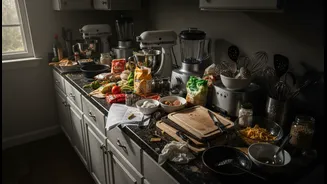
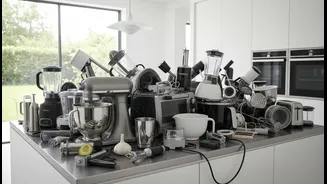
The most immediate problem is physical. A kitchen is, first and foremost, a workspace. When every square inch of the countertop is occupied, the simple act of preparing a meal becomes a frustrating game of Tetris. You have to move the coffee maker to chop vegetables or unplug the toaster to access the blender. This constant shuffling creates friction and eats away at the joy of cooking. Research has shown a direct link between a high density of household objects and elevated levels of cortisol, the stress hormone. Physical clutter competes for our visual attention, creating a sense of being overwhelmed and distracted before you’ve even preheated the oven. An organized, clutter-free kitchen, by contrast, creates a more efficient workflow and makes the entire process of cooking more enjoyable.
Analysis Paralysis at Dinnertime
The less visible, but more draining, consequence is decision fatigue. This is a real psychological phenomenon where the sheer number of choices we have to make depletes our mental energy. After a long day of making decisions at work and in life, even a simple question like “What’s for dinner?” can feel overwhelming. Add to that a dozen different appliances vying for your attention, and it’s easy to see how your brain can stall. Should you use the pressure cooker, the slow cooker, or the Dutch oven? The food processor or the immersion blender? When faced with too many options, our brains often default to the easiest path, which might mean ordering takeout instead of using any of the expensive tools at our disposal. This choice overload can lead to increased stress, anxiety, and a feeling of being mentally drained.
The Single-Use Gadget Trap
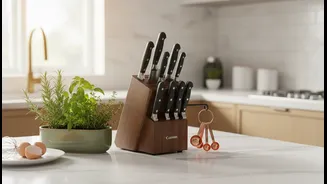
A primary culprit in modern kitchen clutter is the rise of the “unitasker”—a gadget designed for one, and only one, job. Think of the avocado slicer, the banana keeper, the egg separator, or the corn peeler. While they promise to perfect a niche task, they often spend most of their lives buried in a drawer. Before buying another specialized tool, it's wise to pause and ask if a multi-purpose item you already own—like a good chef's knife—could do the job just as well. Many experts suggest investing in versatile, high-quality tools rather than a collection of one-trick ponies. This not only saves space but also encourages skill and creativity in the kitchen. Unless a single-use gadget is something you genuinely use multiple times a week, it is likely contributing more to clutter than convenience.
How to Conduct a Kitchen Audit
Reclaiming your kitchen isn’t about ruthless minimalism, but thoughtful curation. Start by gathering all your small appliances and gadgets in one place. Then, for each item, ask yourself a few honest questions: Have I used this in the last six months to a year? Do I have another tool that can perform the same function? Does this item genuinely make my life easier or more joyful? Be honest about the aspirational purchases versus your daily reality. Group items into categories: keep, donate, or sell. The goal is to create a kitchen where the items you use most often are easily accessible, and the things you use rarely are stored out of the way, not taking up prime real estate.
Finding Joy in a Simpler Kitchen
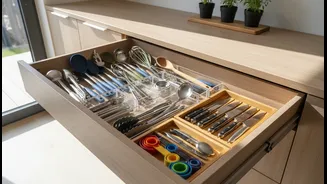
The benefits of this process extend far beyond a tidy counter. A streamlined kitchen is easier to clean and maintain, saving you time and effort. It reduces stress by eliminating visual noise and decision fatigue, allowing your mind to relax. Many people find that with fewer gadgets, they become more creative and resourceful cooks, rediscovering fundamental skills. A curated kitchen, filled only with tools you love and use, transforms the room from a source of stress into a sanctuary for nourishment and connection. It sets a culture of calm and order for the entire home, making daily routines smoother and more pleasant.