


Understanding 'Tech Neck'
Before diving into the solutions, it helps to understand the problem. When you sit upright, your head places about 10 to 12 pounds of pressure on your spine. However, tilting your head forward to look at a screen can increase that force to over 50 pounds.
This sustained pressure strains the muscles around your cervical spine, causing them to tighten. Over time, this leads to the tell-tale signs of poor phone posture: a forward head tilt, hunched or rounded shoulders, and accompanying tightness in the chest, neck, and upper back. This imbalance not only causes discomfort but can also affect spinal alignment if left unaddressed.
Marjaryasana-Bitilasana (Cat-Cow Pose)
This gentle, flowing sequence is one of the best ways to improve spinal flexibility and relieve tension. The rhythmic movement helps warm up the body, increases blood circulation, and provides a gentle massage to the spine and abdominal organs. To begin, come onto your hands and knees in a tabletop position, with your wrists directly under your shoulders and your knees under your hips. As you inhale (Cow Pose), drop your belly towards the mat, lift your chest and chin, and gaze forward. As you exhale (Cat Pose), round your spine towards the ceiling, tucking your chin to your chest. Continue flowing between these two poses for 8-10 breaths, synchronizing your movement with your breath to gently awaken the entire spine.
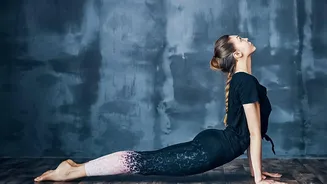
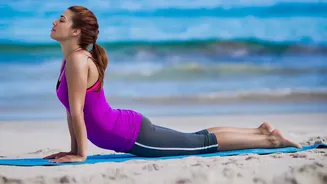
Bhujangasana (Cobra Pose)
Cobra Pose is a foundational backbend that works wonders for posture by strengthening the spine and opening up the chest and shoulders. This pose directly counteracts the hunching motion of looking at a phone. To practice it, lie on your stomach with your forehead on the mat and your legs extended. Place your palms on the floor under your shoulders, keeping your elbows close to your body. On an inhale, press into your hands and slowly lift your head, chest, and shoulders off the floor, using your back muscles. Keep your neck long and your shoulders rolled back and down. Hold for a few breaths, feeling the stretch across your chest, before exhaling and gently lowering back down. A gentle version, Sphinx Pose, involves resting on your forearms instead of your hands.
Gomukhasana (Cow Face Pose)
This seated posture provides one of the deepest stretches for the shoulders, which often become tight and stiff from poor posture. It targets the triceps, deltoids, and rotator cuff muscles, helping to relieve tension. Start in a comfortable seated position. Bend your left knee and place the foot beside your right hip. Then, cross your right leg over the left, stacking the knees. Raise your right arm, bend the elbow, and let your hand drop down your back. Reach your left arm behind your back from below to clasp the fingers of your right hand. Sit tall, keeping your spine straight, and hold for 30 seconds before switching sides. If you can't clasp your hands, hold onto a strap or towel.
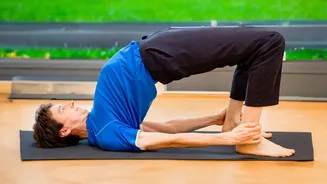
Setu Bandhasana (Bridge Pose)
While the upper back and shoulders take a lot of the strain, the lower back also suffers. Bridge Pose is a gentle inversion that helps strengthen the back muscles, glutes, and hamstrings, providing support for the entire spine. Lie on your back with your knees bent and feet flat on the floor, hip-width apart. Your arms should be alongside your body with your palms down. On an exhale, press your feet and arms into the floor and lift your hips toward the ceiling. Keep your thighs parallel and your chin slightly tucked to lengthen the back of your neck. Hold for 30 seconds to a minute, breathing steadily, then slowly roll your spine back down to the floor.