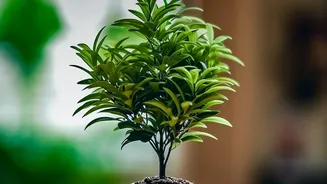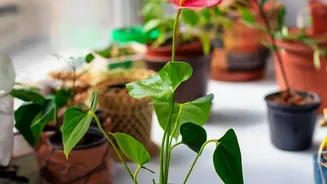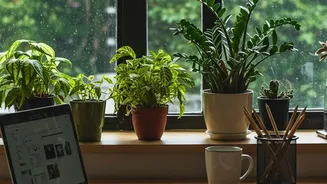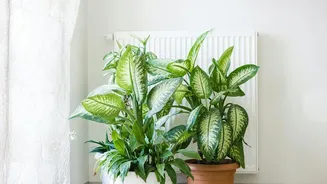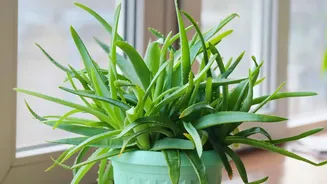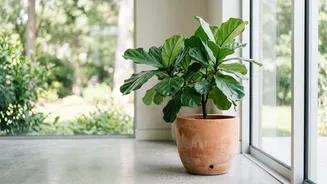






If you have a houseplant, you’ve seen it: that slow, determined lean towards the nearest window, as if it's trying to get a better view. This isn't your plant being difficult; it's a clever survival strategy that you can easily manage.
The Science Behind the Lean
That distinct bend
towards a light source has a scientific name: phototropism. It’s a plant's natural response to light, crucial for its survival. The process is controlled by a group of hormones called auxins, which are produced in the growing tips of stems. Auxins are sensitive to light and accumulate on the shaded side of the stem. This concentration of hormones stimulates the cells on the darker side to grow longer and faster than the cells on the side receiving direct light. This uneven growth causes the stem to physically curve and bend the entire plant towards its energy source, maximising its ability to perform photosynthesis. It’s not a conscious decision but a brilliant, built-in mechanism for seeking out the energy needed to thrive.
Why It’s a Window Thing
Outdoors, plants receive light from multiple angles as the sun moves across the sky, which naturally encourages more balanced, upright growth. Indoors, the situation is completely different. Your plant’s primary light source is usually a single, fixed window. This directional light creates a constant signal for the plant to grow in one direction. Over time, this one-sided stimulation leads to the lopsided, uneven appearance we’re all familiar with. The side facing the window becomes dense and lush, while the side facing the room can become sparse, with weaker stems and fewer leaves. This imbalance is not just an aesthetic issue; it can affect the plant's overall structural integrity.
The Simple Solution: Rotation
The easiest way to counteract phototropism and encourage even, symmetrical growth is to simply rotate your potted plants. By regularly turning your plant, you ensure that all sides receive a fair share of light over time. This practice has several key benefits. First, it promotes stronger, more balanced growth, preventing the plant from becoming structurally weak and lopsided. Second, it encourages fuller foliage all around, as leaves on the previously shaded side are stimulated to grow. Finally, regular rotation improves air circulation around the entire plant, which can help reduce the risk of pests and fungal diseases that thrive in stagnant conditions.
A Practical Rotation Guide
So, how often should you be turning your plants? There’s no single hard-and-fast rule, but a common and easy-to remember guideline is to give your plant a quarter turn every time you water it. This simple habit integrates rotation seamlessly into your care routine. For plants in lower light, you might rotate them every few weeks, while those in very bright spots may need it less often. The key is consistency. Always turn the pot in the same direction to ensure a full rotation over time. This regular movement also gives you a great opportunity to inspect your plant for any signs of pests, dust on the leaves, or other health issues.
Are There Exceptions to the Rule?
While most upright plants benefit from regular rotation, it isn't a universal necessity for every single plant. Trailing and vining plants like pothos or philodendrons, for example, often look best when allowed to cascade naturally towards the light and may not require rotation. Some climbing plants, known as aroids, have a distinct 'front' and 'back' and shouldn't be rotated. Ultimately, the best approach is to observe your specific plant. If it starts to look significantly lopsided, it’s a clear sign that a rotation schedule would be beneficial. For those who want perfectly upright growth without turning, placing a grow light directly above the plant will provide even, overhead light, eliminating the cause of leaning altogether.