




The Moon’s Harsh Welcome
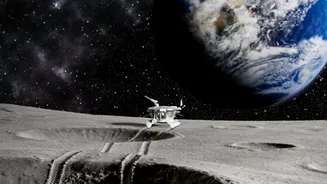
Before we can build lunar cities, we have to face a dangerous reality: the Moon’s surface is a deathtrap. Unlike Earth, it has no significant atmosphere or global magnetic field. This leaves anyone on the surface exposed to constant bombardment. The first
threat is radiation. Unfiltered galactic cosmic rays and intense solar flares can damage DNA and significantly increase the risk of cancer and other illnesses. The second threat comes from above, in the form of micrometeorites that constantly pepper the surface at high speeds. Then there is the temperature. With no atmosphere to mediate heat, the lunar surface swings wildly between a scorching 127°C in sunlight and a frigid -173°C in darkness. Any long-term human habitat would need incredibly heavy and complex shielding to survive these hazards, making surface-level construction a monumental challenge.
Nature’s Lunar Shelters
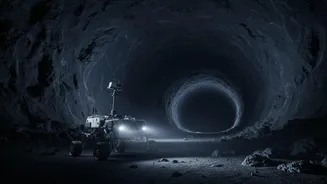
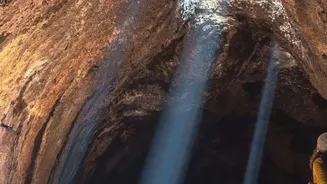
Fortunately, the Moon may have provided its own solution billions of years ago. We are talking about lunar lava tubes. These are vast underground caverns formed by ancient volcanic activity. As rivers of lava flowed, the outer surface cooled and solidified into a hard crust, while the molten rock inside continued to flow. Once the eruption ended and the lava drained away, it left behind a hollow tunnel. Scientists believe these tubes could be enormous, some possibly wide enough to fit a large city and extending for many kilometers. From orbit, we have spotted potential entrances, known as 'skylights', where a section of the tube's roof has collapsed. These natural caverns offer what no surface structure easily can: protection. With a thick roof of solid rock, a lava tube provides excellent shielding from radiation, meteorites, and extreme temperatures, maintaining a stable, albeit cold, environment around -20°C.
The Robotic Spelunkers
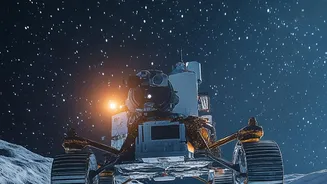
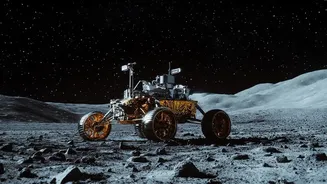
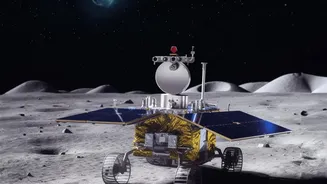
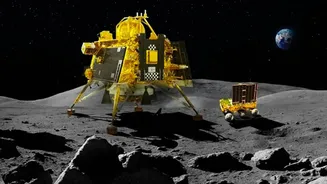
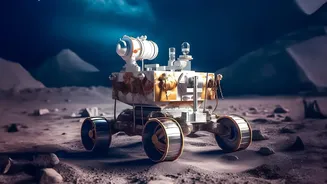
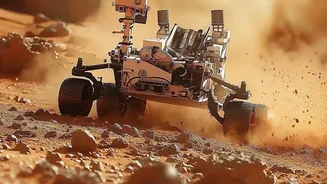
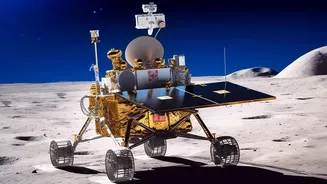
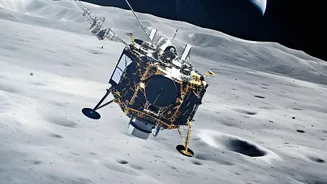
Before we can send human architects, we need to send robotic scouts. Exploring these dark, unknown, and potentially treacherous caves is a perfect job for autonomous robots. Several space agencies and research groups are developing specialized rovers for this exact purpose. These aren't your typical Mars rovers. For instance, the European Space Agency (ESA) has supported concepts like DAEDALUS, a spherical probe designed to be lowered into a pit and map the interior. Another approach involves a team of robots working together. One concept tested in volcanic caves on Earth uses a larger, six-legged rover to anchor itself at a skylight's edge. It then lowers a smaller, tethered scout rover into the cave to explore and create a 3D map. More recent concepts funded by NASA include a laser-powered drone that would hover through the caverns, drawing energy through a fiber-optic cable connected to a surface lander.
From Mapping to Building
The mission for these rovers is twofold. First, they must assess the safety and stability of the tubes. Are they structurally sound? Are there hidden risks? Their sensors will create detailed 3D models of the caverns, giving engineers the data they need to plan. Second, they will look for resources. Some scientists theorize that water ice, a critical resource for a lunar base, could be trapped in the cold, dark recesses of these caves. The robots will be equipped to search for it. Once a tube is mapped and deemed safe, the next phase begins: habitat design. Ideas range from inflatable modules assembled inside the cave to structures built directly from lunar regolith (soil) using 3D-printing technology. Some designs propose sealing the entrance of a tube to pressurize the entire cavern, creating a vast, shirt-sleeve environment for agriculture and living.