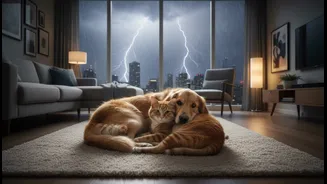









The Sensory Overload
For our pets, the world is a symphony of smells, sounds, and sensations that are far more intense than what we experience. The monsoon amplifies this dramatically. That earthy smell of the first rains that we love? For a dog, it's an overwhelming explosion
of new information. More importantly, pets can be sensitive to changes in barometric pressure, which can make them feel uneasy even before the storm arrives. Then comes the auditory assault: the relentless drumming of rain, the howling wind, and the sudden, booming cracks of thunder. This barrage of startling noises can trigger anxiety and stress, increasing cortisol levels and putting them in a state of high alert.
The Confinement Challenge
Living in an urban apartment means outdoor time is already a precious, planned activity. During the monsoon, this is severely curtailed. Fewer walks and less time at the park mean pets, particularly dogs, don't get the physical exercise and mental stimulation they need. This pent-up energy has nowhere to go and can manifest as restlessness, destructive behaviour like chewing furniture, or excessive barking. For both cats and dogs, the lack of novelty and exploration can lead to profound boredom and even a form of seasonal depression, similar to what humans experience, due to the gloomy weather and lack of sunlight.
Recognising the Signs of Distress
Our pets can't tell us they're feeling anxious, so we have to learn to read their signals. Signs of storm phobia or monsoon-related anxiety are varied. You might notice your pet panting excessively, pacing, whining, or trembling. Many pets will try to hide in small, enclosed spaces like under a bed or in a closet to feel safe. Others might become unusually clingy, refuse to eat, or have accidents in the house. Recognizing these behaviours as signs of distress, not disobedience, is the first step to helping them.
Create a Safe Haven
The most immediate thing you can do is create a secure space for your pet. This could be their crate (if they are crate-trained), a closet, or a quiet corner of a room. Make it comfortable with their favourite blanket and a toy. During a thunderstorm, close the curtains to block out flashes of lightning and play some calming music or white noise to muffle the sound of thunder. Your calm presence is also reassuring, so speaking in a soothing voice can help them understand there is no real danger.
Indoor Enrichment is Key
To combat boredom and release pent-up energy, you need to bring the fun indoors. Mental stimulation can be just as tiring as physical exercise. Invest in puzzle toys or treat-dispensing feeders that make your pet work for their food. Play scent games by hiding treats around the apartment for them to find. For dogs, a game of indoor fetch with a soft toy or a gentle session of tug-of-war can be a great outlet. For cats, engaging them with a feather wand or laser pointer mimics hunting behaviour and provides much-needed stimulation.
Maintain Routine and Health
Pets thrive on predictability, and the monsoon can throw their routines into chaos. As much as possible, stick to regular feeding times, play times, and sleep schedules. Even short, frequent indoor activity breaks can help. Also, pay close attention to their physical health. The high humidity makes pets more susceptible to skin and fungal infections. Always dry your pet thoroughly after any exposure to rain, paying special attention to their paws, ears, and underbelly. Regular grooming and keeping their bedding clean and dry are also crucial.