

A Universe of Ingredients
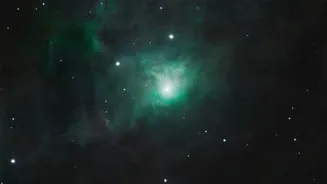
When we look up at the night sky, we see the bright lights of stars and planets. But the space between these celestial bodies, known as the interstellar medium, is far from empty. It is a diffuse and chilly expanse, filled with vast clouds of gas and dust.
For decades, scientists have believed these molecular clouds are not just empty filler but active chemical laboratories. Here, under extreme conditions of low temperature and density, atoms can slowly come together to form molecules. The discovery of increasingly complex molecules in these clouds has fueled a tantalizing idea: that the raw materials for life on Earth may not have started on our planet at all, but were instead delivered from space via meteorites and comets long ago.
A Sweet Discovery Near the Milky Way's Heart
In a significant breakthrough, astronomers recently detected a type of sugar molecule for the very first time in interstellar space. A team of researchers identified the simple sugar, known as erythrulose, within a massive, chemically rich molecular cloud called G+0.693−0.027, located about 27,000 light-years away near the centre of our Milky Way galaxy. While sugars like glucose and ribose have been found in meteorite samples that have landed on Earth, this is the first instance of a true sugar being identified floating freely in the gas and dust between stars. Erythrulose is a four-carbon sugar, and its discovery shows that molecules of this complexity can and do form in the cold, harsh environment of deep space, long before stars and planets are even born.
The Cosmic Chemistry Set
The term 'organic chemistry' simply refers to the chemistry of carbon-based compounds, which form the backbone of all life as we know it. Finding these molecules in space isn't a discovery of alien life, but rather a discovery of the chemical precursors to it. Sugars are vital; on Earth, they form the structural backbone of RNA and DNA, the molecules that carry our genetic information. The detection of erythrulose is exciting because it belongs to the same chemical family as ribose, a key component of RNA. This adds weight to the theory that the essential building blocks for biology are not unique to Earth but are common throughout the cosmos, a concept sometimes known as panspermia, where life's ingredients are distributed across the universe.
How They Found It
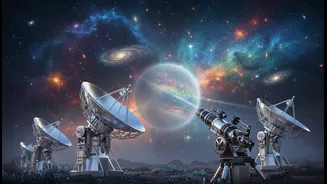
Detecting a specific molecule thousands of light-years away is a remarkable feat of science. Astronomers can't simply scoop up a sample. Instead, they use powerful radio telescopes to listen for the faint signals that molecules emit. Each molecule vibrates and rotates at a specific frequency, creating a unique spectral 'fingerprint'. For the erythrulose discovery, an international team used data from two radio telescopes in Spain. By pointing these sensitive instruments at the molecular cloud, they could pick up the specific radio signature of the sugar molecule, confirming its presence amidst a sea of other cosmic chemicals. This method allows scientists to perform a chemical census of distant regions of our galaxy.
The Building Blocks of Everywhere
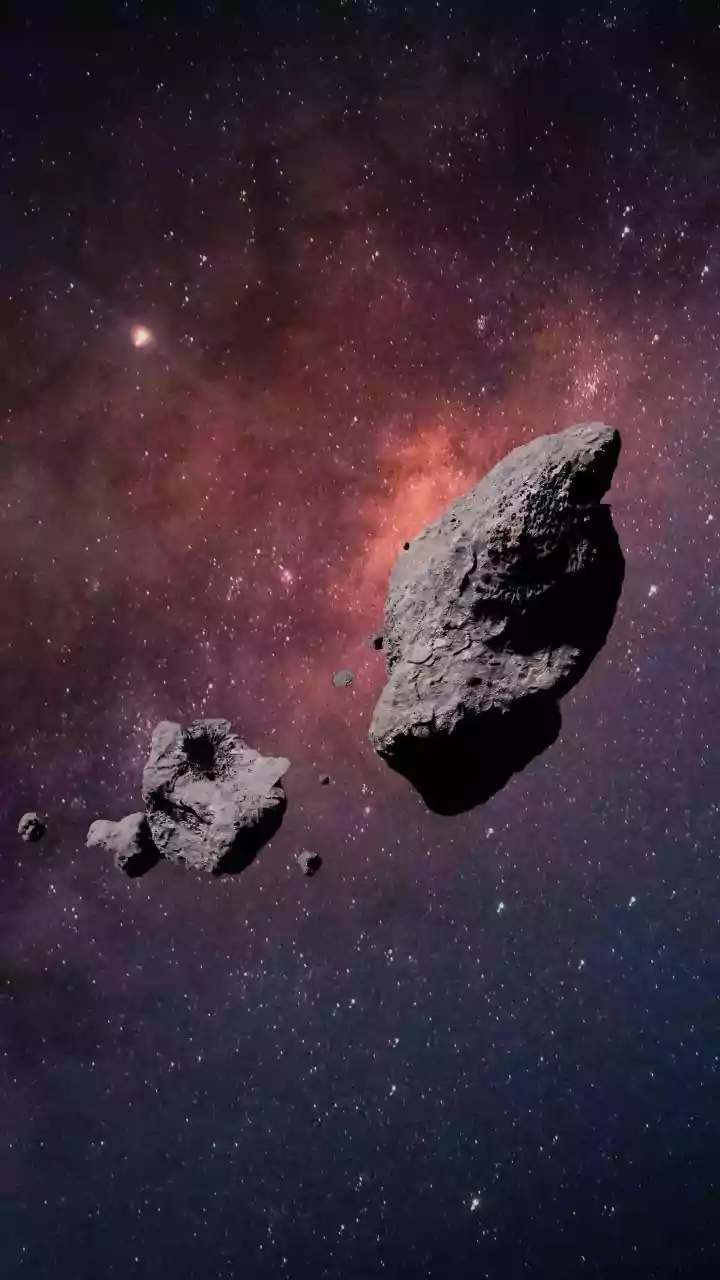
This discovery, alongside recent finds of other complex molecules, paints a new picture of our universe. In recent years, scientists have found the largest sulfur-bearing molecule in space, another key element for life. They have also found molecules that are precursors to amino acids, the units that build proteins. What this all suggests is that the chemical groundwork for life begins long before planets like Earth form. These organic ingredients are cooked up in interstellar clouds, incorporated into the asteroids and comets that form alongside new stars, and are eventually delivered to young planets, potentially seeding them with the necessary components for life to emerge. It reinforces the poetic idea that we are, in a very real sense, made of stardust.