







The Rain-Fed Economy
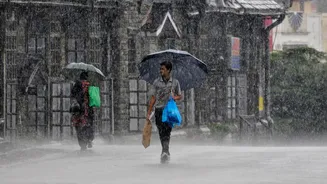
The southwest monsoon, which delivers about 70% of India's annual rainfall, is the lifeblood of the nation's agriculture-dependent economy. A significant portion of the population still relies on farming for their livelihood, and a vast area of cropland
is rain-fed, meaning it lacks access to modern irrigation. A good monsoon leads to bountiful harvests, which in turn boosts rural incomes. This creates a virtuous cycle: when farmers earn more, they spend more. This increased purchasing power in the hands of a massive rural consumer base directly fuels demand for a wide range of goods, from daily staples to discretionary items.
Rural vs. Urban Consumption
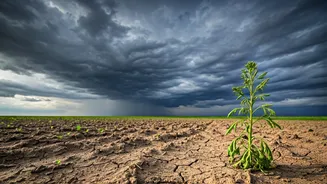
While urban demand tends to be more stable, driven by salaries and diverse economic activities, rural demand is acutely sensitive to the monsoon's performance. A weak or erratic monsoon can lead to crop failures, lower incomes, and a subsequent tightening of household budgets. This immediately impacts sales of fast-moving consumer goods (FMCG). Companies often see a slowdown in demand for products like biscuits, snacks, beverages, and personal care items. Conversely, a strong monsoon can unleash pent-up demand, leading to a surge in sales for these same categories. This urban-rural divide is a critical factor that companies like Hindustan Unilever, Dabur, and Marico monitor closely.
Forecasting and Corporate Strategy
Food and FMCG companies have become adept at reading the rain clouds, both literally and figuratively. They closely track forecasts from the India Meteorological Department (IMD) to anticipate shifts in demand. For 2026, early forecasts have pointed towards a below-normal monsoon, influenced by developing El Niño conditions, which has put companies on alert. In response to anticipated slowdowns, companies employ several strategies. They might increase their focus on urban markets, push smaller, more affordable product packs (sachets) to maintain volume, or adjust their advertising to focus on value. Some also see it as an opportunity to gain market share by maintaining brand investment while competitors pull back.
The 2026 Monsoon Outlook
As of early July 2026, the monsoon's arrival has been delayed in many states and rainfall deficits have been reported, raising concerns about the Kharif sowing season. The IMD has projected below-normal rainfall for the crucial month of July. This has made companies cautious. Executives are watching not just the total rainfall, but its distribution across different agricultural belts. A deficit in a region known for specific crops like oilseeds can drive up raw material costs, squeezing profit margins even before the demand-side impact is felt. Companies are therefore preparing for potential volatility in both input costs and consumer spending for the latter half of the year.
Beyond the Rain Gauge
While the monsoon is a dominant factor, it's not the only one. Government policies, such as minimum support prices (MSP) for crops and rural employment schemes, provide a safety net that can cushion the impact of a poor monsoon. Furthermore, years of investment in irrigation have reduced, though not eliminated, the direct dependency on rainfall for agriculture in some regions. Companies are also getting smarter, using sophisticated data analytics to forecast regional demand more accurately and manage their supply chains more efficiently. However, despite these mitigating factors, the fundamental link remains: a healthy monsoon generally means a healthy rural economy, which is essential for the growth of India's consumer goods giants.