

A Universe of New Rules
For decades, the Indian Space Research Organisation (ISRO) was the beginning and end of India’s space story. But a series of transformative government policies have rewritten the script. The establishment of the Indian National Space Promotion and Authorisation
Centre (IN-SPACe) in 2020 was a pivotal moment. IN-SPACe acts as a single-window agency to facilitate, authorise, and supervise the activities of private companies in the space sector. This was followed by the Indian Space Policy 2023, which formally opened the entire value chain—from building rockets and satellites to owning and operating them—to non-governmental entities. To further fuel this growth, foreign direct investment (FDI) norms were liberalised, allowing up to 100% FDI in manufacturing components and up to 74% via the automatic route for satellite manufacturing and operations. These reforms have created a predictable and supportive regulatory environment, signalling to the world that India is open for space business.
The Launch Pad Pioneers
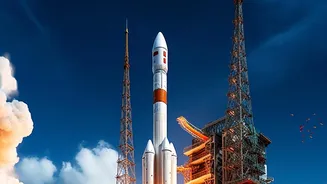
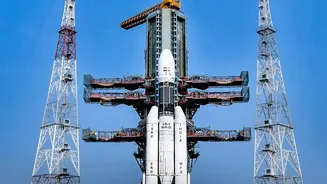
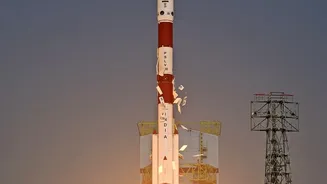
At the forefront of this new wave are startups building launch vehicles, aiming to make space access cheaper and more frequent. Hyderabad-based Skyroot Aerospace made history with the launch of Vikram-1, India’s first privately developed orbital rocket. The company, which has achieved unicorn status, aims to slash launch costs and eventually conduct multiple launches per month. Another key player is Agnikul Cosmos, incubated at IIT Madras. Agnikul is notable for its 3D-printed semi-cryogenic engine and has established its own launchpad and mission control centre with ISRO's support. By focusing on small satellite launch vehicles, these companies are targeting a booming global market for deploying compact satellite constellations, offering on-demand services that were previously unavailable. Their success is a testament to the engineering talent moving from government agencies to the private sector, attracted by higher salaries, equity, and the freedom to innovate rapidly.
More Than Just Rockets: A Full-Fledged Ecosystem
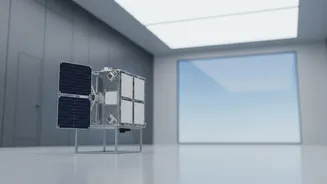
The ecosystem extends far beyond launch vehicles. Bengaluru-based Pixxel is building one of the world's most advanced constellations of hyperspectral imaging satellites. This technology provides incredibly detailed data that has commercial applications in agriculture, climate monitoring, and mining. Similarly, Dhruva Space offers satellite-as-a-service solutions, handling everything from building the satellite to managing its operations in orbit. The boom has also spurred growth in ancillary sectors. Companies are emerging to provide ground station services, data analytics, and critical subsystem manufacturing. This vertical integration is crucial, as it builds a self-reliant domestic industry. ISRO plays a vital role as a mentor, opening its world-class testing facilities and sharing invaluable technical expertise with these nascent firms, significantly lowering their R&D barriers.
The Global Commercial Frontier
The ultimate goal for these startups is to compete on the world stage. The global space economy is projected to soar, with some estimates suggesting it could reach nearly $1.8 trillion by 2035. Indian startups are uniquely positioned to capture a significant share. Their primary competitive advantage is cost-effectiveness, building on ISRO’s legacy of frugal engineering. A launch from India can be significantly cheaper than from the US or Europe, attracting international customers. The number of space startups has skyrocketed from just a handful a few years ago to over 450 in 2026, attracting nearly $390 million in funding in the last three years alone. India's space economy, currently valued at around $8.4 billion, is projected to hit $44 billion by 2033. However, challenges remain. These ventures require immense, patient capital and face stiff competition from established global giants like SpaceX. Access to funding and scaling up manufacturing remain significant hurdles.