




What Exactly Is Galangal?
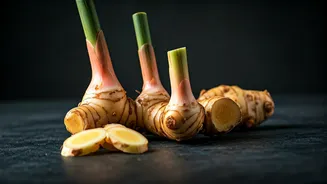
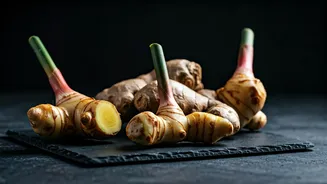
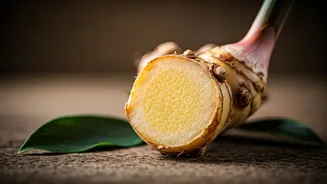
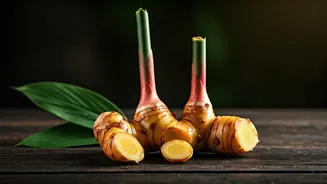
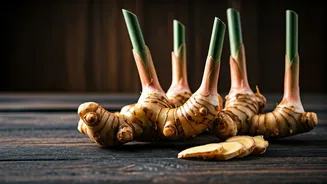
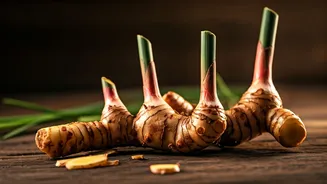
Galangal, known as 'kha' in Thai, is a rhizome, or underground stem, from the same family as ginger and turmeric. Though often called 'Thai ginger', it's a distinct ingredient in its own right, central to Thai, Indonesian, and Malaysian cuisines. It has
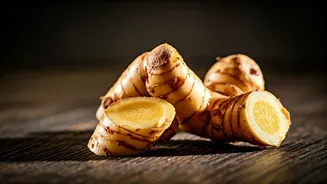
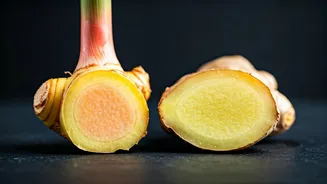
a smooth, pale skin, sometimes with a pinkish hue, and a dense, whitish flesh. Its aroma is where it truly stands apart, offering a complex fragrance that is often described as citrusy, pine-like, and slightly earthy. Unlike its more famous cousin, galangal provides a cooling, refreshing aroma rather than a spicy heat.
The Ginger vs. Galangal Showdown
While they may look similar, galangal and ginger are not interchangeable. Substituting one for the other will fundamentally change a dish. Ginger’s flavour is pungent, spicy, and slightly sweet. Galangal, on the other hand, has a sharper, more peppery, and astringent taste with a clean, pine-like finish. Texturally, galangal is much harder and more fibrous than ginger, which is almost juicy by comparison. You can easily peel ginger with a spoon, but galangal’s tough skin often requires a sharp knife or peeler. This woody texture means that while galangal is perfectly edible, it's often used to infuse flavour and then removed before serving.
Your Guide to Buying and Storing
Fresh galangal is your best bet for capturing its vibrant flavour and can be found in most Asian grocery stores and some larger supermarkets. Look for firm, plump rhizomes with smooth, unblemished skin. It can be stored in the refrigerator for up to two weeks, loosely wrapped. Because it can sometimes be hard to find and doesn't last as long as ginger, freezing is an excellent option. Simply slice the galangal into coins, freeze them in a single layer on a plate, and then transfer them to a freezer bag. You can use the frozen slices directly without thawing. Dried slices and powdered galangal are also available, but they have a different, less aromatic flavour. They can work in a pinch for soups, but fresh or frozen is always superior.
Prepping Galangal Like a Pro
Due to its tough, woody nature, preparing galangal requires a bit more effort than ginger. For infusing soups and broths, use a sharp, sturdy knife to cut the unpeeled root into thin coins. These slices will release their aromatic oils during cooking but are tough to chew, so you may want to inform guests not to eat them or remove them before serving. If the galangal is meant to be eaten as part of the dish, it needs to be broken down. The most common method in Thai cooking is to pound it into a paste using a mortar and pestle, often along with other aromatics like lemongrass and chili to form the base of a curry paste. You can also chop it very finely to be used in salads or dips.
Making Your Dishes Sing
Now for the fun part. Galangal is the foundational flavour in iconic Thai soups like Tom Kha Gai (chicken coconut soup) and Tom Yum. In Tom Kha, the 'kha' literally refers to galangal, where its sharp, citrusy notes cut through the richness of the coconut milk to create a perfectly balanced broth. It's also a non-negotiable ingredient in authentic red, green, and Massaman curry pastes, providing an aromatic depth that ginger simply cannot replicate. To start, try adding a few slices of fresh or frozen galangal to a simple chicken or vegetable broth. Let it simmer for five to ten minutes, and you will immediately notice how it perfumes the entire dish with its unique, captivating fragrance.