



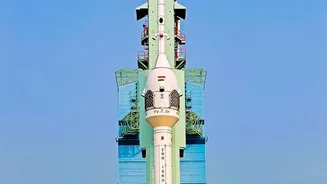
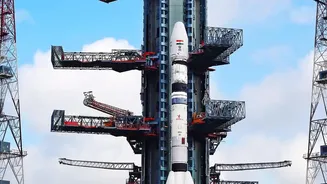
Meet Pushpak, India's Spaceplane
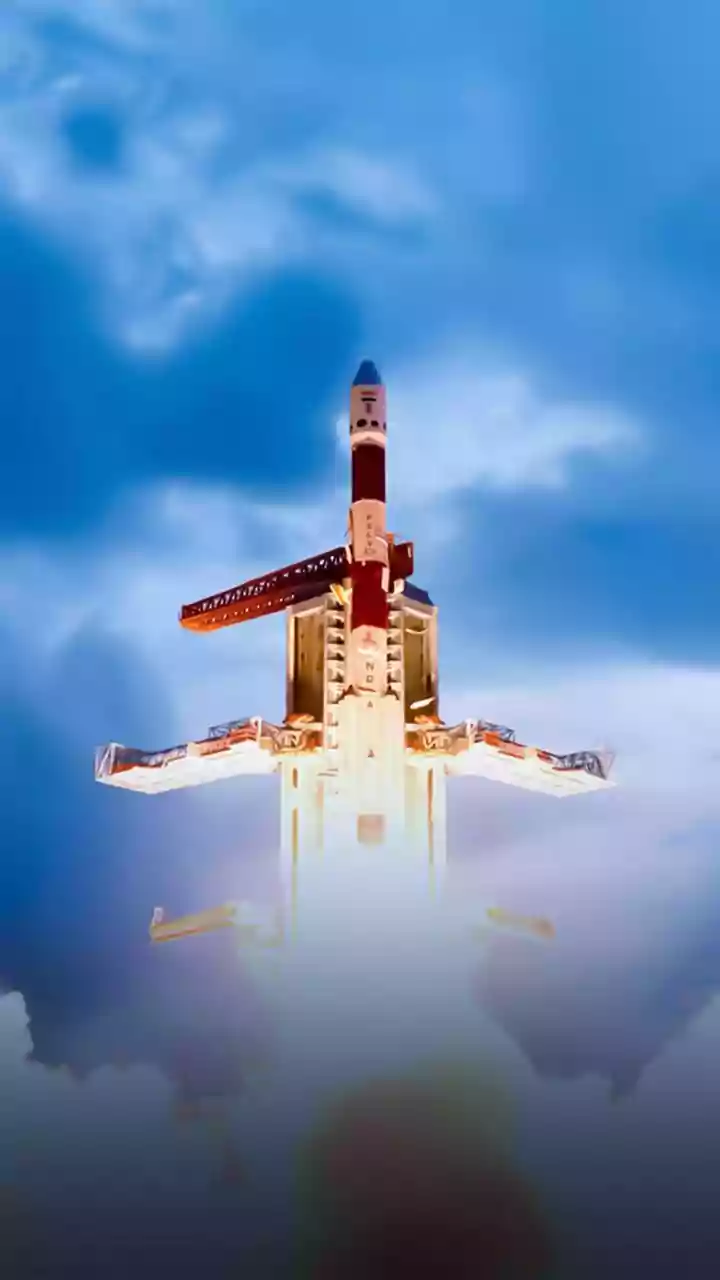
The centerpiece of India's reusable rocket effort is the Reusable Launch Vehicle-Technology Demonstrator (RLV-TD), nicknamed 'Pushpak'. Unlike traditional rockets that are discarded after a single use, Pushpak is designed more like a spaceplane. The vision
is for a future operational vehicle to launch vertically with a payload, release it into orbit, and then fly back to Earth, landing horizontally on a runway just like a commercial aircraft. This ambitious project is ISRO's answer to one of the biggest challenges in space exploration: the prohibitive cost. Currently, the bulk of the expense for any space mission is tied up in the launch vehicle itself, which is typically used only once. By developing a vehicle that can be flown repeatedly, ISRO is aiming to make space travel more sustainable and accessible.
Acing the Ultimate Landing Test
To make a spaceplane reusable, it must first be able to land safely and autonomously from high speed and altitude. ISRO has been conducting a series of Landing Experiments (LEX) to perfect this crucial capability. In the most recent and challenging test, the Pushpak vehicle was lifted by an Indian Air Force Chinook helicopter to an altitude of 4.5 kilometres. It was then released under difficult conditions, including severe winds and a significant distance from the runway, to simulate a return from space. The uncrewed vehicle then used its advanced, on-board navigation and control systems to autonomously guide itself, correct its trajectory, and execute a flawless, high-speed landing on the runway at the Aeronautical Test Range in Chitradurga. This final test in the LEX series successfully validated the autonomous landing technology needed for the vehicle to return from orbit on its own.
The Billion-Dollar Goal: Slashing Costs
The primary driver behind the Pushpak programme is economics. The cost of launching a satellite into Low Earth Orbit can be as high as $20,000 per kilogram. ISRO's stated goal is to use reusability to slash this figure by up to 90 percent, potentially bringing it down to as little as $2,000 per kilogram. Such a dramatic cost reduction would be a game-changer for the global space industry. It would enable India, through its commercial arm NewSpace India Limited (NSIL), to compete far more aggressively in the multi-billion dollar satellite launch market. Cheaper access to space would open the door for more frequent missions, support the deployment of large satellite constellations for communication and data services, and make new scientific and commercial ventures financially viable for clients around the world.
India's Next Leap: From Landing to Orbit
With the successful completion of the landing experiments, ISRO has proven the core technology required for autonomous return. The agency is now setting its sights on the next logical phase: an orbital re-entry mission. This will involve developing a larger Orbital Re-entry Vehicle (ORV) that will be launched into a 400 km orbit. From there, it will perform a series of manoeuvres before making a fiery re-entry through Earth's atmosphere and executing another autonomous runway landing. This next step will test the vehicle's thermal protection systems and its ability to handle the extreme conditions of returning from space. While the full realisation of a two-stage-to-orbit reusable launch vehicle is still years away, the steady progress with Pushpak demonstrates a clear and determined path forward.