


The Challenge of Living off the Land
The dream of a permanent human settlement on the Moon is as old as the space race itself. But turning science fiction into reality involves solving immense practical problems. Chief among them is the staggering cost and difficulty of transporting resources
from Earth. Every kilogram of supplies, from food to fuel, costs thousands of dollars to launch into space. For a long-term base to be sustainable, astronauts must learn to live off the land, a concept known as in-situ resource utilization (ISRU). This means harvesting and using materials found directly on the Moon. While the lunar surface appears barren and lifeless, its soil—a fine, dusty material called regolith—is surprisingly rich in one of life’s most essential elements: oxygen. In fact, about 45% of the regolith by weight is oxygen, but it's chemically locked away inside oxide minerals. Unlocking it is the key to our future in space.
Mining the Moon for Air
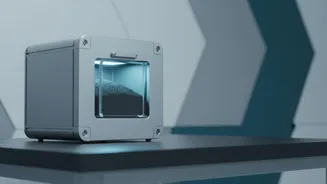
NASA is pioneering several methods to 'mine' this oxygen. One of the most promising is a process called molten oxide electrolysis (MRE). The concept is to heat lunar regolith to extremely high temperatures, around 1,600 degrees Celsius, until it melts into a molten lava-like substance. Once melted, an electric current is passed through it. This electrochemical reaction breaks the strong chemical bonds in the metal oxides, causing pure oxygen to be released at one electrode (the anode), where it can be collected. At the other electrode (the cathode), a mixture of molten metals like iron and silicon is produced as a byproduct. Recent tests on simulated lunar soil in vacuum chambers have successfully proven the concept, marking a major step toward developing a viable oxygen generator for the Moon. Another related project, the Carbothermal Reduction Demonstration (CaRD), uses concentrated solar power to heat the regolith and drive the oxygen-releasing chemical reaction.
More Than Just for Breathing
While providing breathable air for habitats and rovers is the most obvious benefit, the applications for lunar-derived oxygen are much broader. A sustainable lunar presence, as envisioned by NASA's Artemis program, requires a vast amount of rocket propellant. Liquid oxygen is a primary component of most rocket fuels, serving as the oxidizer that allows the fuel to burn. By producing liquid oxygen on the Moon, a future lunar base could effectively become a refueling station for spacecraft. This would dramatically reduce the mass that missions need to launch from Earth, making it cheaper and easier to not only travel between the Earth and Moon but also to launch missions from the Moon to more distant destinations, like Mars. The metallic byproducts from the electrolysis process could also be valuable, potentially being used in 3D printing to manufacture tools, spare parts, or even building materials for the base itself.
The Artemis Program and a Lunar Future
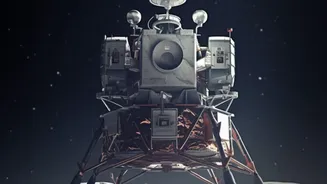
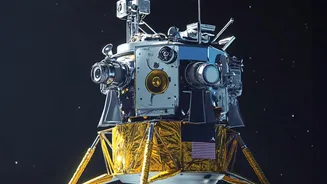
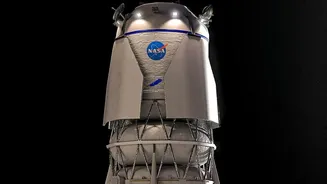
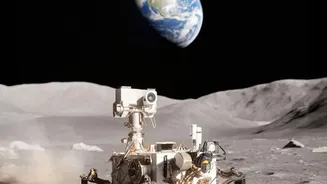
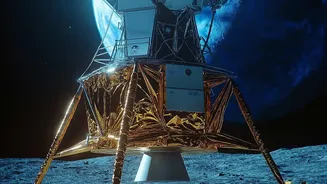
These oxygen extraction experiments are not just theoretical exercises; they are a core component of NASA's long-term strategy for lunar exploration under the Artemis program. The goal of Artemis is not just to repeat the Apollo landings, but to establish a permanent, sustainable human foothold on the Moon, specifically a 'base camp' at the lunar South Pole. To achieve this, technologies that enable self-sufficiency are non-negotiable. NASA and its commercial partners are actively developing and testing prototypes of these oxygen-producing reactors. The plan is to send robotic missions and technology demonstrators to the lunar surface to test these systems in the actual lunar environment. Success would pave the way for an entire industrial ecosystem, including oxygen pipelines to transport the gas from production sites to storage plants near the main habitat. It represents a fundamental shift from visiting the Moon to truly living there.