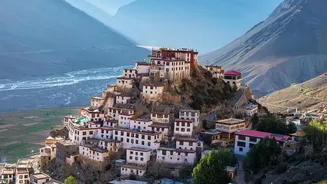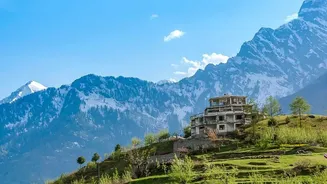






The Breathtaking Allure of Kinnaur
Sangla, also known as Baspa Valley, and the nearby village of Kalpa are jewels in Kinnaur district, attracting travellers with their serene beauty. From the famous Kinnaur Kailash peak visible from Kalpa to the quaint charm of Chitkul, the last village on
the Indo-Tibetan border road, the region is a photographer's dream and a haven for those seeking peace away from crowded tourist spots. The journey itself, along the Sutlej River, is a significant part of the experience, offering dramatic landscapes and a sense of true Himalayan adventure.
A Beautiful but Treacherous Lifeline
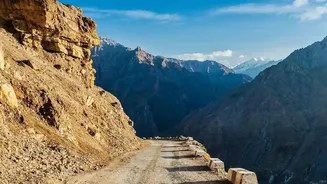
The primary route to Sangla and Kalpa is National Highway 5 (NH-5), often called the Hindustan-Tibet road. While scenic, this road is famously perilous. Carved into sheer rock cliffs, it features narrow stretches, blind turns, and terrifying vertical drops to the river below, often with no guardrails. The stretch from Karcham to Sangla is particularly notorious for being narrow and demanding. A common hazard is 'shooting stones'—falling rocks that can range from small pebbles to large boulders, posing a significant risk to vehicles and travellers.
The Unpredictable Himalayan Weather
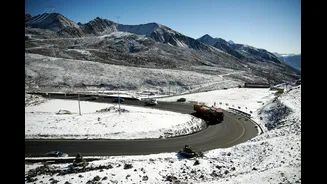
Weather is the single most critical factor affecting travel in Kinnaur. The region experiences extreme conditions that can change rapidly. The monsoon season, typically from July to early September, brings heavy rains that trigger frequent landslides and flash floods, leading to road blockages that can last for hours or even days. Recent reports from early July 2026 noted that flash floods blocked NH-5 near Cholling and washed away parts of local link roads. Conversely, heavy winter snowfall from December to February often renders higher-altitude areas, especially the road to Chitkul, completely inaccessible.
The Constant Risk of Landslides
Landslides are a year-round threat on NH-5 and connecting roads. The fragile geology of the young Himalayas, combined with weather events, means that mudflow and rockfalls can occur without warning. Stretches near Nathpa, Tranda Dhank, and Maling Nala are particularly vulnerable. In late September 2026, for instance, shooting stones and mudflow blocked NH-5 near Tapri and Maling Nala. Such incidents can leave travellers stranded, disrupting itineraries and posing safety risks. Local authorities frequently issue advisories urging people to avoid unnecessary travel and stay away from landslide-prone areas during periods of heavy rain.
How to Stay Informed Before You Travel
Given the dynamic conditions, checking the road status is not just a recommendation; it's a necessity. Before starting your journey and each morning of your trip, consult reliable sources. The Himachal Pradesh Police, particularly the Kinnaur district police and the state's Traffic, Tourist & Railways Police, often post real-time updates on their websites and social media pages (like Facebook and Twitter). Local travel forums and groups can also provide recent traveller experiences. Another crucial step is to call your hotel or homestay in Sangla or Kalpa a day before you travel. Local hosts have the most current, on-ground information about the conditions of smaller link roads, which might not be covered in broader state-level advisories.
Planning Your Trip for a Safer Journey
The best times to visit Sangla and Kalpa are generally considered to be the spring months of April and May, and the post-monsoon autumn period from mid-September to October. During these windows, the weather is typically more stable, and the roads are at their most reliable. However, as a rule, always build buffer days into your itinerary. A week-long trip can easily be derailed by a two-day road closure. Being flexible allows you to wait out a blockage without stress. Also, respect the advice of local drivers; if they say a stretch is unsafe to stop on, listen to them. For self-drivers, a vehicle with high ground clearance is recommended, and experience in mountain driving is essential.