



The Final Sweet Offering: Bappa’s Favourite
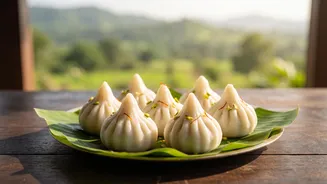
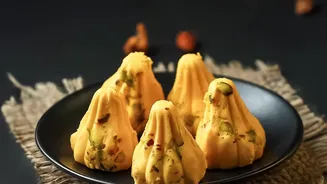
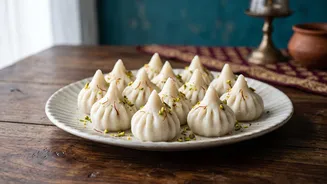
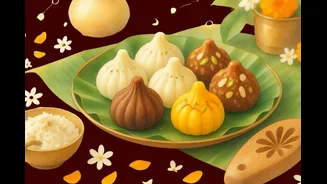
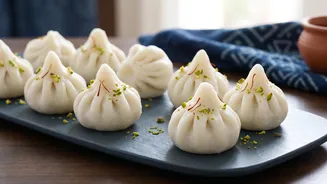
Central to the entire festival, and especially the farewell, is the modak. This sweet dumpling, with its pleated rice-flour shell and a rich filling of jaggery and coconut, is considered Lord Ganesha’s absolute favourite. Offering modaks on the final
day is a symbolic gesture of love and gratitude, a final sweet treat for the beloved deity before his journey home. While the steamed 'Ukadiche Modak' is the most traditional version, especially in Maharashtra, many families also prepare fried modaks, which have a crispier shell, or modern variations with fillings like chocolate, mawa, or even dried fruits. Alongside modaks, other sweets like motichoor ladoo and puran poli, a sweet flatbread stuffed with lentils and jaggery, are also common offerings. These sweets, once offered as 'prasad', are distributed among family and friends, carrying the blessings of the deity.
The Comfort Meal After the Procession
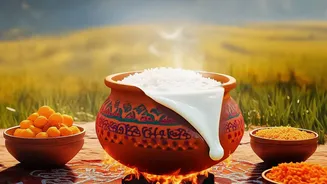
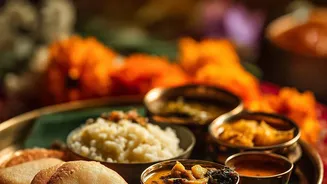
Ganesh Visarjan often involves long, energetic processions to a nearby river or sea for the immersion ritual. After hours of dancing, chanting, and navigating crowds, families return home tired but spiritually fulfilled. The meal that awaits them is thoughtfully prepared to be simple, nourishing, and comforting. A quintessential post-visarjan meal in many Maharashtrian households is Varan Bhaat. This is a simple dish of steamed rice (bhaat) served with plain, mildly seasoned dal (varan), often topped with a generous dollop of ghee. It’s easy on the digestive system and provides immediate sustenance. Another popular choice is Masale Bhaat, a one-pot spiced rice dish cooked with vegetables and a special 'goda masala' spice blend, which is perfect for feeding large families returning together.
Savoury Dishes that Complete the Feast
While sweets are the highlight of the 'naivedyam' (offering), the festive meal is balanced with a variety of savoury preparations. Batata Vangi Rassa, a curry made with potatoes and eggplant in a coconut-based gravy, is a common accompaniment. Simple vegetable preparations, known as 'bhajis', are also key. Batatyachi Sukhi Bhaji, a dry potato dish, is a favourite because it can be prepared in advance and served with puris (fried bread). These dishes are typically 'sattvic', meaning they are cooked without onion or garlic, adhering to the purity required for festive foods offered to the deity. The goal is to create a meal that is delicious and celebratory, yet pure and light.
A Sweet and Cooling Conclusion
No festive meal is truly complete without a final dessert to signify the lingering joy of the occasion. After the energy and heat of the visarjan procession, a cooling dessert is particularly welcome. Shrikhand, a creamy and dense dessert made from hung curd and flavoured with saffron, cardamom, and nuts, is a popular choice. Because it is prepared in advance and served chilled, it provides instant relief and a rich, satisfying end to the ten-day celebration. Other desserts like kheer, a creamy rice pudding, or various types of ladoos also make an appearance, ensuring the festival concludes on a sweet and memorable note for everyone.