



First, Let’s Define a Year
Before we dive into Venus’s strange timekeeping, let's get our basics straight. A year on any planet is simply the time it takes to complete one full orbit around its star. For us on Earth, that’s roughly 365 days. Our celestial neighbour Venus, which
is closer to the Sun, moves faster in its orbit. It completes one full trip around the Sun in about 225 Earth days. So, a Venusian year is significantly shorter than an Earth year. If you were living on Venus, you'd celebrate your birthday every 225 days. Simple enough, right? This part of planetary science is straightforward. The complexity—and the fun—begins when we start talking about what constitutes a 'day'.
The Two Meanings of a 'Day'
Here's where the confusion often lies. When we say 'day', we could be talking about two different things. The first is a 'sidereal day', which is the time it takes for a planet to complete one full 360-degree rotation on its axis relative to the distant stars. The second is a 'solar day', which is the time it takes for the Sun to appear in the same position in the sky—for example, from one sunrise to the next. On Earth, these two are very similar: our sidereal day is 23 hours and 56 minutes, and our solar day is 24 hours. That small difference is caused by our movement around the Sun. But on Venus, the difference between these two types of days is not small; it's gigantic and is the key to this entire cosmic puzzle.
Venus and Its Extremely Slow Spin
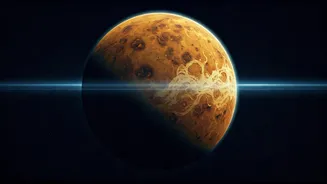
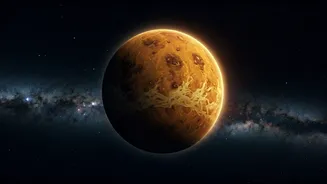
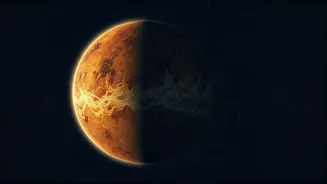
Venus is the non-conformist of our solar system. While most planets, including Earth, spin in a counter-clockwise direction on their axis (prograde motion), Venus spins clockwise (retrograde motion). On top of that, its rotation is excruciatingly slow. It takes Venus approximately 243 Earth days to complete just one sidereal rotation. Think about that: it spins so slowly that one full turn on its axis takes longer than its entire journey around the Sun. This is the heart of the headline's claim. A single sidereal day on Venus (243 Earth days) is indeed longer than a Venusian year (225 Earth days). You would finish a year on Venus before the planet itself has even completed one full spin.
So What’s a Sunrise Like?
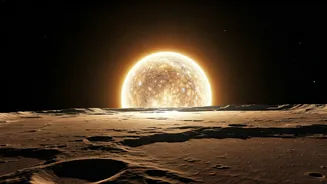
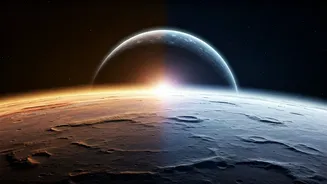
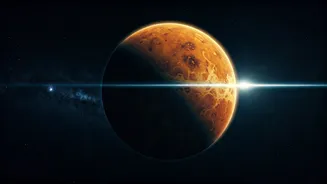
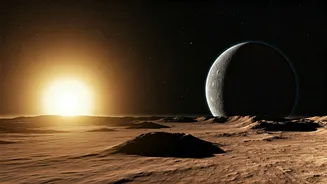
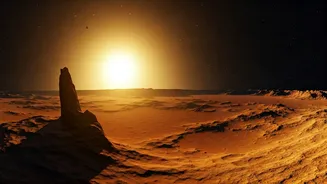
This is where it gets even weirder. Because Venus rotates backwards while orbiting the Sun, the length of its solar day (from one sunrise to the next) is different from its sidereal day. The slow backward spin works against its orbital motion. The result? The Sun rises in the west and sets in the east, and it does so much more frequently than the planet’s full rotation would suggest. A solar day on Venus lasts about 117 Earth days. So, you’d experience one sunrise and one sunset roughly every four months. This means you'd have about two 'solar days' in every Venusian 'year'. You’d have daylight for nearly two straight months, followed by two months of darkness.
Why Is Venus So Weird?
Scientists don't have a definitive answer, but the leading theory is a story of ancient cosmic violence. One strong hypothesis suggests that billions of years ago, a massive object—perhaps a planet-sized body—collided with Venus. This cataclysmic impact could have been so powerful that it not only slowed Venus's original rotation to a crawl but actually reversed its direction. Another theory points to the planet's thick, heavy atmosphere. Over billions of years, powerful atmospheric tides, driven by the Sun's immense gravity, could have acted as a brake, gradually slowing its spin and eventually causing it to reverse. Whatever the cause, Venus stands as a testament to the chaotic and unpredictable history of our solar system.