


A Tale of Two Moons
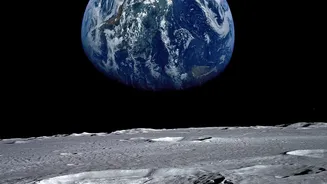
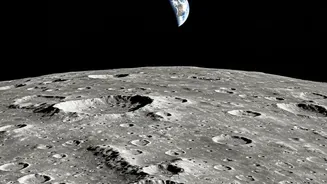
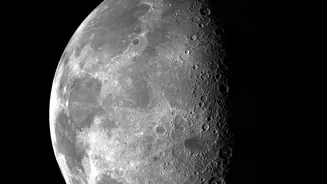
Anyone with a telescope, or even just a keen eye, knows the face of the Moon: a patchwork of dark, smooth plains (known as 'maria' or seas) and bright, cratered highlands. For centuries, this was the only Moon humanity knew. Then, in 1959, a Soviet probe
revealed the far side for the first time, and it was shockingly different. The far side is almost entirely devoid of the dark volcanic plains, dominated instead by a pale, heavily cratered, and significantly thicker crust. This stark difference has been one of lunar science’s most enduring puzzles. Why would one celestial body have two such dramatically different faces? For decades, scientists have debated theories involving giant impacts or unusual cooling patterns, but without rock samples from the far side, these were just educated guesses.
Whispers from the Far Side
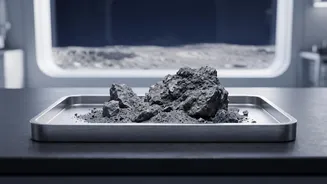
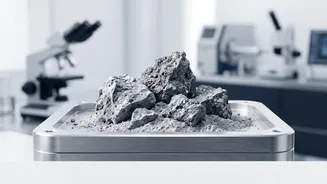
The game changed with China's Chang'e-6 mission, which in 2024 successfully returned the first-ever physical samples from the Moon's hidden hemisphere. For the first time, scientists could directly compare rocks from both the near and far sides, moving from remote observation to hands-on chemical analysis. A team led by researchers at Nanjing University did just that, analyzing the precious grains of rock and dust. They were looking for the chemical fingerprints left behind when the Moon was a young, molten world, a period when its ultimate fate was being forged.
The Earth's Heavy Hand
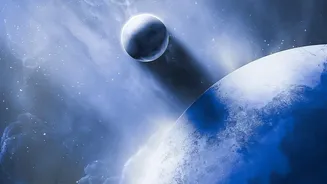
The new analysis, published in National Science Review, points to a powerful culprit in this cosmic mystery: a young, much closer Earth. Billions of years ago, the Moon was so close to Earth that its rotation was quickly locked by gravity, forcing it to keep one face perpetually pointed toward our planet. The study proposes that Earth's immense gravitational pull created intense tidal forces, effectively kneading the young Moon like dough. This process generated more heat on the side facing Earth. This uneven heating, the researchers suggest, created massive currents in the Moon's global ocean of molten rock. The analysis of the Chang'e-6 samples revealed that while the deep mantle of the Moon appears chemically similar on both sides, the crust is a different story. The far-side crustal rocks were found to be richer in magnesium.
A Planetary Conveyor Belt
According to the team's model, the tidal heating driven by Earth's gravity created a planetary-scale convection system. This system essentially pushed lighter, early-forming crustal materials, like those rich in magnesium, toward the far side. Meanwhile, the remaining molten material, rich in elements like potassium and phosphorus that are common on the near side's volcanic plains, was concentrated on the Earth-facing hemisphere. In essence, Earth’s gravity acted like a cosmic sculptor, driving a process that piled up crust on one side of the Moon and left the other side thinner and ripe for volcanic activity. This explains how the same basic mantle material could produce two wildly different surfaces.
Why This Cosmic History Matters
Solving the riddle of the Moon’s two faces does more than just satisfy our curiosity. It fundamentally refines our understanding of how planets and moons form and evolve together. The Earth and Moon share a history, born from a theorized giant impact with a Mars-sized object named Theia. Because Earth's own ancient surface has been erased by billions of years of tectonics and erosion, the Moon acts as a time capsule, preserving a record of the early solar system. Understanding the intense gravitational dance between early Earth and the Moon helps us picture the extreme conditions that existed when life was first emerging on our own planet, a world with a much closer, larger Moon in its sky, creating tides and climatic forces we can only imagine.