




The Persistent Weed Problem
Cotton, known as 'White Gold', is a cornerstone of the Indian economy, but its slow initial growth makes it highly vulnerable to weeds. These aggressive plants compete for water, nutrients, and sunlight, often choking the young cotton saplings. Weeds
can reduce crop yields by anywhere from 10% to as high as 90% if left unchecked during the critical early growth stages. For generations, farmers have relied on two main strategies: manual weeding, which is labour-intensive and increasingly expensive due to labour shortages, and blanket-spraying herbicides. While herbicides are effective, their widespread use has drawbacks. It leads to rising costs, potential environmental contamination, and the emergence of herbicide-resistant weeds, creating a vicious cycle for farmers.
Enter the Smart Robots
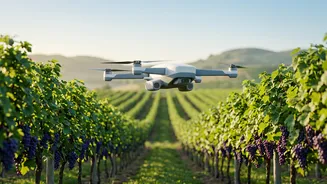
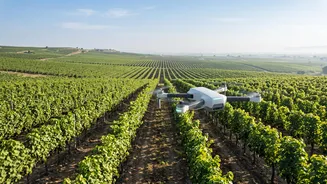
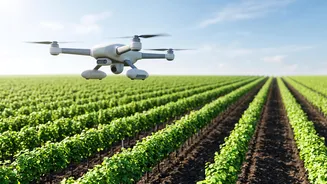
The next wave of agricultural technology, or AgriTech, offers a more precise and sustainable solution. This comes in the form of autonomous robots designed to navigate cotton fields and tackle weeds intelligently. Unlike large, heavy machinery that can compact soil, these are often smaller, battery-powered rovers. The real magic, however, lies in how they think. Instead of being controlled remotely or relying on a constant cloud connection, these robots use 'edge processing'. This means all the crucial data analysis happens directly on the machine itself, in real-time. This capability is essential for working in rural areas where internet connectivity might be unreliable.
How On-Robot Edge Processing Works
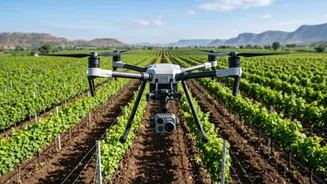
The process can be broken down into a simple 'See, Think, Act' model. First, the 'See' component involves high-resolution cameras mounted on the robot. As the machine moves through the crop rows, these cameras capture a constant stream of images. The 'Think' part is where edge processing comes in. A powerful, compact computer on the robot uses artificial intelligence (AI) and machine learning to analyse these images instantly. It has been trained on vast datasets of images to differentiate between a cotton plant and various types of weeds, like Palmer amaranth. Once the AI positively identifies a weed, the 'Act' phase is triggered. The robot's end-effector—be it a precision nozzle, a mechanical tool, or even a laser—is activated to eliminate the weed without harming the nearby cotton plant. This entire cycle happens in a fraction of a second, allowing the robot to work efficiently.
Tangible Benefits for Farmers
The most immediate benefit is a dramatic reduction in chemical usage. Instead of spraying an entire field, the robot only targets the weeds. Studies and real-world use have shown this 'see and spray' technology can cut herbicide use by over 70%. This translates directly into significant cost savings for farmers, with some Indian farmers reporting pesticide cost reductions of 50-60%. Beyond savings, this targeted approach is much better for the environment and soil health. It reduces chemical runoff into waterways and helps prevent the buildup of herbicide resistance. Furthermore, by effectively managing weed competition, the cotton plants have better access to nutrients and water, which can lead to improved crop health and higher yields.
The Road to Adoption in India
Despite the clear advantages, the path to widespread adoption in India has its hurdles. The high upfront cost of robotic equipment is a major barrier for the country's many small and marginal farmers. A single weeding robot can cost several lakhs of rupees. To overcome this, innovative business models like Robotics-as-a-Service (RaaS) are emerging. Companies like Niqo Robotics offer precision spraying on a per-acre basis, removing the need for capital investment from the farmer. Government subsidies and increasing local manufacturing of AgriTech hardware are also helping to make these solutions more accessible. As awareness grows and the technology becomes more affordable, these intelligent machines are set to become an indispensable tool for modern, sustainable cotton farming.