
Bougainvillea: The Hardy Superstar
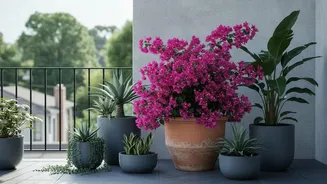
There's a reason Bougainvillea is a common sight across India—it is incredibly tough and loves the sun. This vibrant climber thrives on neglect and actually produces more of its colourful bracts when slightly water-stressed. For a balcony, choose a dwarf
variety in a large pot with excellent drainage. Place it in a spot that receives at least six to eight hours of direct sunlight. Water it deeply, but only when the top few inches of soil are completely dry. Too much water leads to lush green leaves but fewer flowers, so letting it dry out is the secret to a spectacular display. Its resilience against heat and drought makes it a top performer in the August balcony test.
Vinca (Sadabahar): The All-Season Bloomer
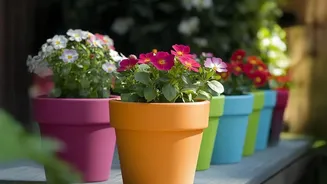
Vinca, popularly known as Sadabahar or Periwinkle, translates to 'evergreen,' and it lives up to its name by blooming almost all year round, even in peak summer heat. These plants are low-maintenance and come in shades of pink, white, and purple, adding a delicate touch to your garden. They are tolerant of most soil types, as long as the drainage is good. Vinca performs best with more sunlight but can get by with partial shade. One of its biggest advantages is its tolerance for heat and humidity, continuing to produce glossy leaves and cheerful flowers when other plants struggle. Be careful not to overwater, as this is one of the few things that can harm this otherwise hardy plant.
Portulaca (Moss Rose): A Carpet of Colour
Often called Moss Rose or the '9 o'clock flower' because its blooms open in the morning sun, Portulaca is a sun-loving succulent that is perfect for hot, dry balcony spots. This low-growing plant creates a dense mat of colourful, rose-like flowers in vibrant shades of pink, yellow, orange, and red. Being a succulent, it stores water in its fleshy leaves and stems, making it exceptionally drought-tolerant. It demands at least six hours of direct, intense sunlight to bloom profusely—the more sun, the better. The soil should be well-draining, and you should only water when the soil is completely dry to the touch to avoid root rot. Its ability to thrive on neglect makes it a winner for busy gardeners.
Lantana: The Tough Butterfly Magnet
Lantana is renowned for being almost indestructible, barely flinching at the August heat and humidity. It produces beautiful clusters of small, often multi-coloured flowers that are a magnet for butterflies, adding life and movement to your balcony. This plant thrives in poor soil and needs very little water once it's established. While it can spread aggressively in a garden bed, its growth is more contained in a pot, making it suitable for balconies. It loves full sun and will reward you with continuous blooms through the hottest, most humid parts of the year with minimal fuss.
Hibiscus: The Tropical Mainstay
No Indian garden feels complete without the iconic Hibiscus, or Gudhal. This plant is a true tropical beauty that loves warmth and produces large, stunning flowers almost year-round in the right conditions. It thrives in full sun and requires consistent moisture, especially when in a pot, but the soil must still drain well to prevent waterlogging. During the humid August weather, natural rainfall might reduce your watering duties, but always check the soil's moisture level. Regular, light feeding during its growing season will encourage a steady supply of its trademark showy blooms, ensuring your balcony remains a vibrant oasis.
ZZ Plant: The Indestructible Indoor-Outdoor Option
For corners of the balcony that don't get blistering direct sun but are still hot and humid, the ZZ Plant (Zamioculcas zamiifolia) is an excellent choice. Known for being able to survive neglect, it is extremely tolerant of heat, low light, and dry conditions. Its wide, dark green leaves are waxy, which helps the plant retain water. While it's often considered an indoor plant, it does wonderfully in a shaded or semi-shaded balcony spot. It requires infrequent watering—only when the soil is completely dry. Its hardy nature makes it a perfect, low-effort green addition that will easily pass the August endurance test without direct sun.