





When the cold weather arrives, finding the motivation for fitness can be a challenge. Step-ups offer a simple, powerful, and indoor-friendly solution to keep you active, build lower-body strength, and specifically target your quadriceps.
Your Perfect Indoor Winter Workout
One of the biggest
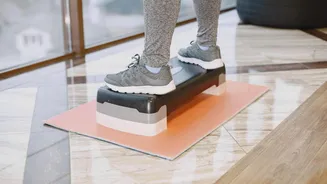
hurdles to winter fitness is the weather. Icy paths and frigid temperatures can make outdoor activities difficult and unappealing. This is where the step-up shines. It's an incredibly effective lower-body exercise that requires minimal equipment—all you need is a sturdy box, a staircase step, or a stable bench. This convenience makes it easy to stay consistent with your fitness goals from the warmth of your home. Beyond convenience, step-ups are a low-impact movement that boosts cardiovascular health, enhances balance and coordination by working one leg at a time, and keeps your joints mobile during a season when stiffness can become an issue.
Why Step-Ups Powerfully Engage Your Quads
The quadriceps, the large group of four muscles at the front of your thigh, are essential for everything from walking and climbing stairs to maintaining knee stability. Step-ups are a compound exercise that directly targets these muscles. The primary motion involves straightening your knee to lift your body's weight, a function dominated by the quads. Research using EMG to measure muscle activation has shown that the quadriceps, specifically the muscles on the outer and inner thigh, fire intensely during this movement. By focusing on proper form, you ensure that the load is placed directly on the working leg's quad, turning a simple motion into a potent strength-builder.
Mastering the Perfect Step-Up Form
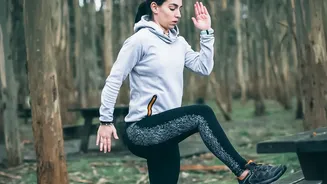
Proper technique is crucial to maximize quad engagement and prevent injury. Start by standing in front of your chosen platform. Choose a height that allows your knee to form roughly a 90-degree angle when your foot is on top; a lower step is better when you're starting out. Place your entire lead foot flat on the surface—not just the toes. Keep your chest lifted and your core engaged. Drive your weight through the heel of your lead foot to push your body upward until you are standing tall on the platform. The key is to make the front leg do all the work. Lower yourself back down slowly and with control. You can either complete all repetitions on one side before switching or alternate legs.
Common Mistakes to Avoid
To get the most out of your step_ups, watch out for a few common errors. The most frequent mistake is pushing off with the back foot. This uses momentum and takes the work away from your lead quad. To fix this, think about 'pulling' yourself up with the front leg and keep the back foot as passive as possible. Another issue is using a step that is too high, which can force you to lean too far forward or strain your back. If you can't maintain an upright posture, lower the step height. Also, ensure your knee on the working leg tracks in line with your toes and doesn't collapse inward, as this can strain the joint.
Progressing Your Step_Up Routine
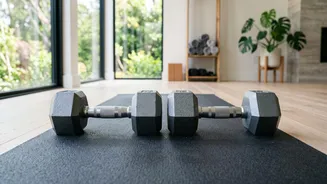
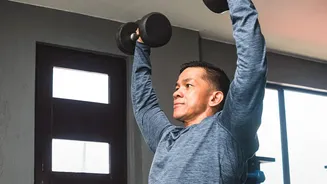
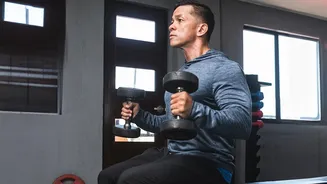
Once you have mastered the bodyweight step_up, there are several ways to increase the challenge. The simplest progression is to increase the height of the step, which places a greater demand on both the quads and glutes. You can also add weight by holding dumbbells in each hand or a single kettlebell at your chest. Be sure not to add weight before your form is perfect. For a more advanced, explosive variation, you can perform a plyometric step_up by driving up with enough power to hop off the box at the top of the movement, focusing on a soft landing. These progressions ensure that the exercise continues to challenge you as your strength improves.