




A New Kind of Space Real Estate
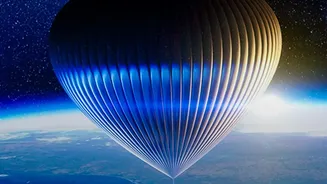
Forget the rigid metal cans we associate with space habitats. The future of living and working in orbit might be soft. Inflatable modules are advanced, flexible structures that launch in a compressed state, neatly packed into a standard rocket fairing.
Once in orbit, they expand to their full size, creating voluminous environments for astronauts. The concept isn't entirely new—NASA tinkered with the idea as early as the 1960s—but modern materials and a surge in commercial space ambitions have brought it to the forefront. Companies like Sierra Space are now aggressively testing these modules, which are constructed from multiple interwoven layers of high-strength fabrics like Vectran—a material five times stronger than steel. These layers are designed to provide structural integrity, retain a breathable atmosphere, and protect against the hazards of space.
The Advantages: Bigger, Lighter, Cheaper
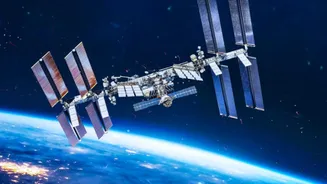
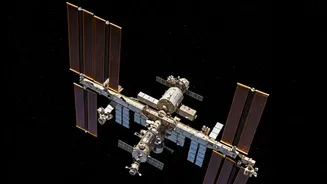
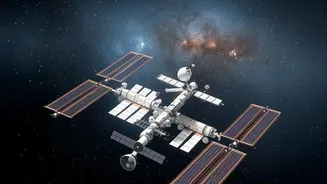
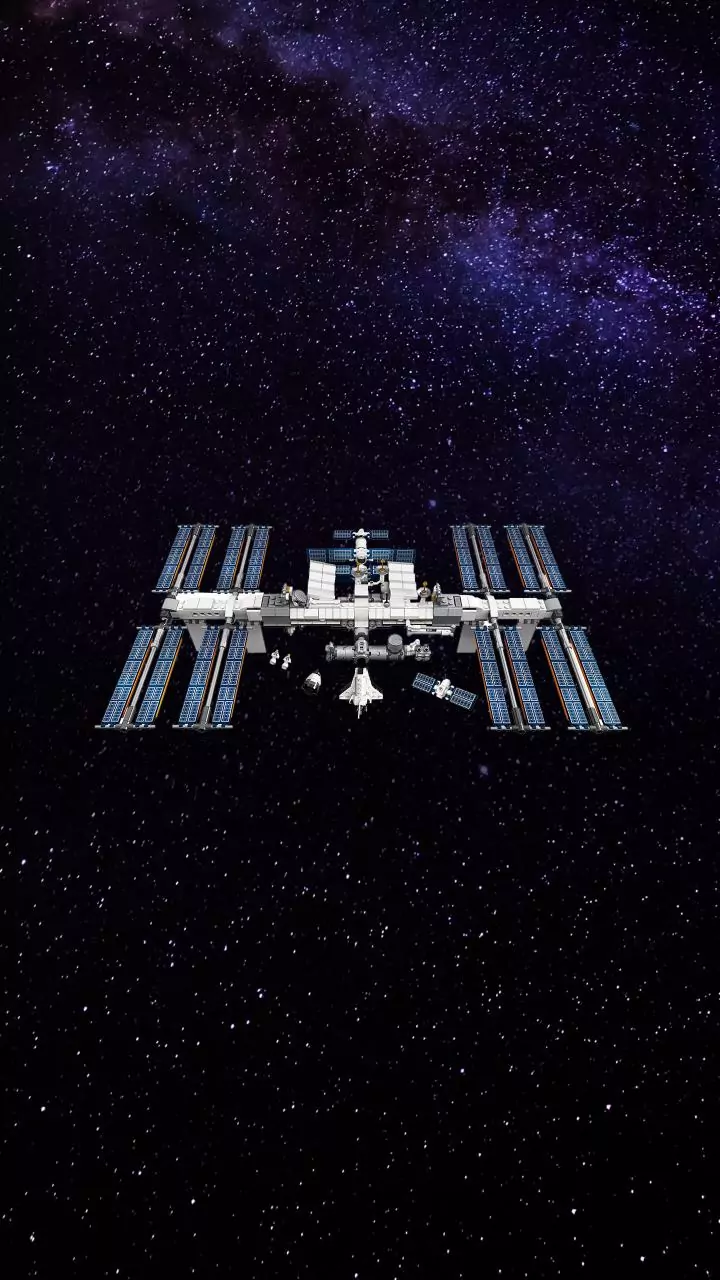
The primary driver for inflatable technology is economics. Launch costs are a function of mass and volume. By launching a habitat that is both lightweight and compact, companies can significantly reduce expenses. Once inflated, these modules offer a far greater internal volume for their mass than traditional metallic structures. A single inflatable module from Sierra Space, called the Large Integrated Flexible Environment (LIFE) habitat, could offer a living and working space equivalent to a three-story apartment building. The company even suggests that one day, a single launch could deploy habitable volume equal to the entire International Space Station. This scale is crucial for building commercially viable space stations, which aim to serve as orbital research parks, manufacturing hubs, and even tourist destinations.
The Commercial Pioneers
Several companies are vying to become leaders in this new market, with Sierra Space emerging as a prominent player. The company, in partnership with Blue Origin, is developing the Orbital Reef space station, which will heavily feature its LIFE habitats. To prove the technology's readiness, Sierra Space has conducted a series of dramatic ground tests, deliberately pressurizing full-scale modules until they burst. In recent tests at NASA's Marshall Space Flight Center, the modules have consistently exceeded NASA's safety requirements by significant margins, demonstrating their structural soundness. Other companies like Lockheed Martin and the startup Max Space are also developing their own inflatable habitat designs, signalling a broad industry shift toward this expandable architecture. The technology has already seen a proof-of-concept in orbit with the Bigelow Expandable Activity Module (BEAM), which was attached to the ISS in 2016 and remains there today.
A Laboratory in the Stars
The vast, open spaces inside these inflatable stations are ideal for conducting next-generation scientific experiments in microgravity. The absence of gravity allows for research that is difficult or impossible to perform on Earth. In biotechnology and pharmaceuticals, scientists can grow more perfect protein crystals, leading to new drug designs. In materials science, they can create flawless alloys and semiconductors without the defects introduced by gravity-driven convection. The environment is also ideal for fluid physics research and advanced manufacturing, like the 3D printing of complex biological tissues. These commercial stations will serve as national labs in orbit, opening up access to this unique research environment for a wider range of companies and academic institutions.
Overcoming Cosmic Hurdles
Despite the promise, building a home out of fabric in space comes with challenges. A key concern is protection from micrometeoroids and orbital debris (MMOD). To address this, companies are conducting hypervelocity impact tests, firing projectiles at the habitat's material layers at extreme speeds to ensure they can withstand the constant threat of tiny, high-speed particles. Another challenge is radiation shielding. While some designs offer protection equivalent to or better than the ISS, ensuring the long-term health of astronauts on extended missions remains a priority. Before any astronaut floats inside, these modules must undergo a rigorous NASA certification process that involves years of testing everything from material durability to life support system integration. The successful burst and impact tests are critical steps in this long-term validation process.