



Your All-in-One Pocket Planetarium
For beginners who want a comprehensive tool, apps like Star Walk 2 are an excellent starting point. These apps function like a digital map of the cosmos. Using your phone's built-in GPS and compass, they determine your exact location and what's in the sky
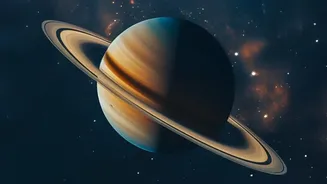
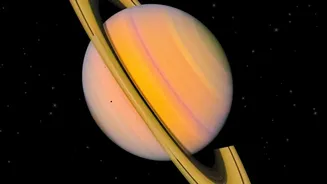
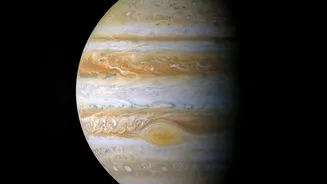
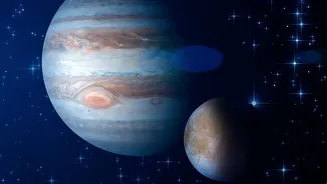
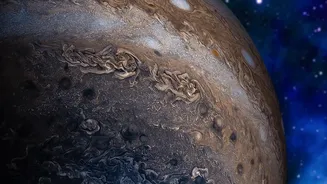
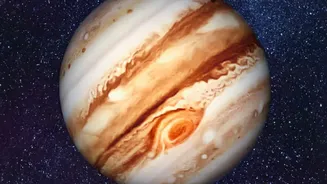
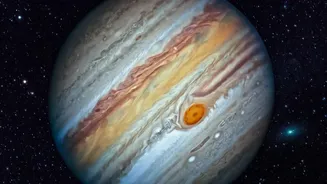
above you. To find a planet, you simply hold your phone up to the sky. The app overlays star maps, constellation lines, and object names onto your view. You can search for "Jupiter" or "Saturn," and an arrow will guide you to its position, even if it's below the horizon. As of late August 2026, Saturn is a brilliant target, rising in the evening and visible throughout the night. Jupiter is a bit more challenging, appearing low in the sky just before sunrise, but these apps will show you exactly where and when to look.
Augmented Reality Brings The Stars To You
If you want an even more immersive experience, look for apps with a strong augmented reality (AR) feature, like SkyView Lite or Night Sky. These apps use your phone's camera to create a live, interactive view. As you pan your phone across the night, the app identifies everything you're seeing in real-time. You'll see the names of stars, planets, and constellations appear right on your screen, perfectly aligned with the objects themselves. This feature is particularly magical for beginners, as it removes all the guesswork. Following the path of Saturn across the ecliptic or spotting Mars becomes as easy as taking a photo. Many of these apps work day or night, so you can even learn about the celestial objects that are currently hidden by the sun's glare.
For The Dedicated ISS Hunter
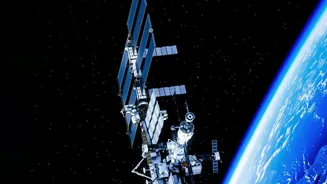
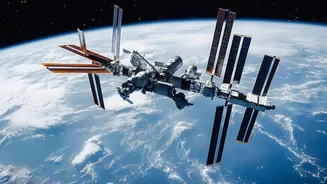
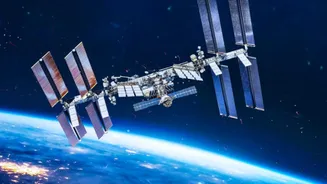
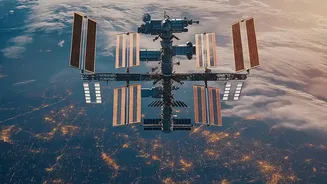
While general stargazing apps can track the International Space Station (ISS), dedicated apps offer a more focused and feature-rich experience. Apps like ISS Detector and NASA's own Spot The Station are designed specifically for this purpose. The ISS orbits Earth at about 400 kilometres up, moving faster than an aeroplane. These trackers provide precise alerts, notifying you minutes before the station is due to pass over your location. They will tell you where to look, how long the pass will last, and how bright it will be. Seeing the ISS—a bright, steady light gliding silently across the stars—is a truly memorable sight. These apps not only predict passes but often provide a real-time map showing the station's current position over the Earth.
Going Deeper with Realistic Sky Maps
For those who want to move beyond just pointing and identifying, Stellarium Mobile is a fantastic option. Praised for its realistic depictions of the night sky, it provides a wealth of information that can grow with your hobby. While it has the same point-to-find functionality as other apps, its massive database of stars, nebulae, and galaxies is impressive. You can simulate the view from any location on Earth, at any point in time. This is useful for planning. For instance, knowing that Saturn will be at its best for observation in the weeks around its opposition on October 4, 2026, you can use Stellarium to see exactly how it will travel across your local sky on a clear night. It bridges the gap between a casual sky guide and a serious amateur astronomy tool.