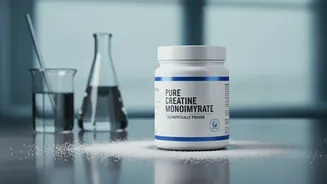







The Myth of Creatine and Fat Gain
One of the most stubborn myths about creatine is that it makes you fat. It's a common concern: you start taking a supplement to improve your body composition, only to see the number on the scale creep up. However, this increase is not due to fat. Creatine
itself contains no calories. Fat gain only occurs from a consistent calorie surplus—consuming more calories than you burn. The initial weight increase seen with creatine supplementation is due to water retention. Creatine is an osmotically active compound, meaning it draws water into your muscle cells. This is known as intracellular water retention. This process is actually beneficial, as it helps muscles look fuller and can support performance.
Water Weight vs. Fat: What's Really Happening
The weight gain from creatine is almost entirely from water being pulled into the muscles, not an increase in fat mass. Studies show this is a short-term effect, often occurring during an initial "loading phase" where higher doses are taken to saturate the muscles. This can result in a temporary gain of 1-3 pounds. This is different from the puffiness or bloating you might associate with a high-sodium meal, which is subcutaneous water retention (under the skin). The water creatine pulls in is stored inside the muscle, contributing to a more muscular appearance, not a softer one. Over the long term, any sustained weight gain is typically from an increase in lean muscle mass, which is a desirable outcome for most people seeking to improve their fitness and strength.
A Proven Powerhouse for Muscle and Strength
Creatine's primary and most well-documented benefit is its ability to enhance strength, power output, and muscle growth when combined with resistance training. It works by helping your body regenerate its main energy currency, adenosine triphosphate (ATP), more quickly during short, intense bursts of effort. This allows you to perform better during activities like weightlifting and sprinting. By being able to lift heavier weights or complete more repetitions, you create a greater stimulus for muscle growth over time. Decades of research support creatine monohydrate as one of the most effective nutritional supplements for increasing lean muscle mass and improving exercise performance.
More Than Muscle: A Boost for Your Brain
While famous for its physical benefits, emerging research shows creatine also plays a vital role in brain health. Your brain is an energy-intensive organ that, like your muscles, relies on ATP to function optimally. Supplementing with creatine can increase creatine stores in the brain, helping to support cognitive processes. Studies suggest that creatine may improve aspects of memory and processing speed. Some evidence also points to its ability to reduce mental fatigue, particularly in situations of stress or sleep deprivation. While this area of research is still growing, the potential for creatine to enhance focus and mental resilience adds another compelling dimension to its benefits.
How to Use Creatine Effectively
Creatine monohydrate is the most studied and effective form of creatine. The standard, science-backed approach involves a daily maintenance dose of 3-5 grams. While some people opt for an initial loading phase (taking around 20 grams per day, split into four 5-gram servings, for 5-7 days) to saturate muscle stores more quickly, it isn't necessary. A consistent daily dose of 3-5 grams will achieve the same muscle saturation over a few weeks. Taking the supplement consistently is key to maintaining its benefits for both muscle and cognitive function. Long-term studies have shown daily supplementation to be safe for healthy individuals, with some research extending up to five years without significant adverse effects.