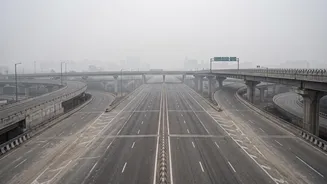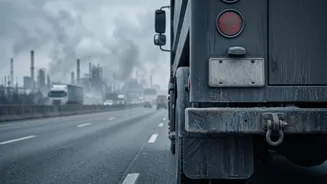




The Core Of The Restriction
The primary rule targets older, more polluting vehicles based on their emission standards, commonly known as Bharat Stage (BS) norms. The Graded Response Action Plan (GRAP), a set of emergency measures to fight air pollution, includes specific vehicle restrictions
that are activated as the Air Quality Index (AQI) worsens. As of late October 2026, Delhi's AQI has entered the 'Poor' category, leading to the implementation of GRAP Stage I measures. While this initial stage doesn't ban most private cars, stricter stages, which are often invoked as pollution levels rise, do. Under GRAP Stage III, the plying of BS-III petrol and BS-IV diesel light motor vehicles (four-wheelers) is restricted in Delhi and several NCR cities like Gurugram, Faridabad, Ghaziabad, and Gautam Buddh Nagar.
Focus on Outstation Vehicles
While Delhi has long-standing rules against its own registered diesel vehicles older than 10 years and petrol vehicles older than 15, recent orders have a sharp focus on vehicles from outside the capital. The Commission for Air Quality Management (CAQM) has directed that inter-state buses must be electric, CNG, or BS-VI diesel to operate in Delhi-NCR. Furthermore, a broader ban is set to take effect from November 1, 2026, which will restrict the entry of commercial vehicles, including many tourist buses and goods carriers, that are not BS-VI compliant. This is an effort to prevent vehicles that don't meet the latest emission standards from adding to the city's pollution load during the critical winter months. Vehicles powered by CNG or electricity are generally exempt from these restrictions.
Understanding the GRAP Framework
The Graded Response Action Plan (GRAP) is the backbone of these restrictions. It's not a static ban but a dynamic system with four stages tied to the city's air quality. Stage I ('Poor' AQI: 201-300) involves basic measures like enforcing pollution-under-control (PUC) certificates and acting against visibly polluting vehicles. Stage II ('Very Poor' AQI: 301-400) might bring higher parking fees to discourage private vehicle use. Stage III ('Severe' AQI: 401-450) is when the ban on BS-III petrol and BS-IV diesel cars kicks in. The most stringent, Stage IV ('Severe+' AQI: above 450), can lead to even tougher measures, such as banning the entry of trucks into Delhi. These actions are cumulative, meaning when Stage III is active, all the rules from Stages I and II also apply. Commuters should monitor the daily AQI and GRAP status, which is announced by the CAQM.
Exemptions and Essential Services
Not all vehicles are taken off the road. The orders consistently provide exemptions for vehicles used for essential and emergency services. This includes ambulances, fire brigades, and vehicles involved in the supply of essential commodities. Furthermore, the restrictions on BS-III petrol and BS-IV diesel cars during GRAP Stage III do not apply to BS-VI vehicles, CNG-powered cars, or electric vehicles. There is also a specific exemption for persons with disabilities, who are permitted to use specially adapted BS-III petrol or BS-IV diesel cars for personal use.
Enforcement and Stiff Penalties
Violating these clean air orders can be costly. Driving a vehicle banned under the GRAP framework can attract a hefty fine of ₹20,000. Enforcement is carried out by transport department teams and traffic police, who conduct checks across the city and at its borders. Beyond the GRAP-specific bans, authorities are also strictly enforcing other existing rules. Driving without a valid Pollution Under Control (PUC) certificate can lead to a fine of ₹10,000 and may soon result in being denied fuel at pumps under the 'No PUC, No Fuel' rule. The long-standing ban on Delhi-registered petrol vehicles over 15 years old and diesel vehicles over 10 years old remains firmly in place, with such vehicles being impounded.