



An Ambitious Two-Part Launch
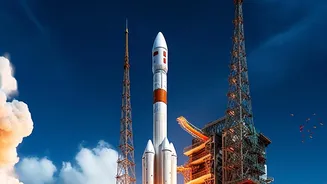
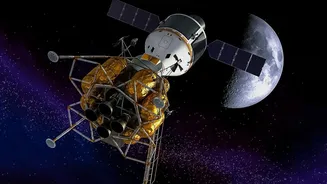
Unlike its predecessors, Chandrayaan-4 is so complex and heavy that it cannot be launched by a single rocket. The mission will involve five separate modules that must work in perfect harmony. To get everything into space, the Indian Space Research Organisation
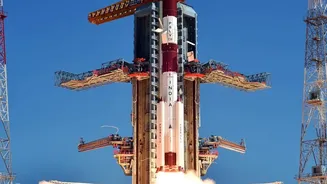
(ISRO) will use two of its powerful LVM3 rockets. The first rocket will carry the Descender Module (the lander) and the Ascender Module (the vehicle that will lift off from the Moon). The second rocket will launch the Propulsion, Transfer, and Re-entry modules, which are essential for the journey to the Moon and back. These two stacks will then perform a crucial docking manoeuvre in Earth's orbit, assembling the complete Chandrayaan-4 spacecraft before it begins its journey.
Landing and Collecting Lunar Secrets
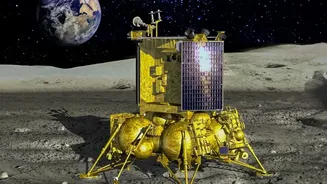
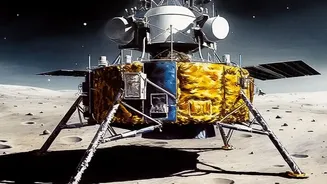
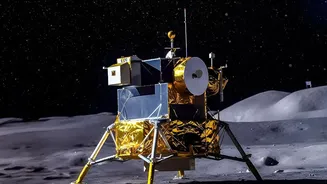
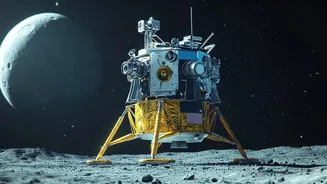
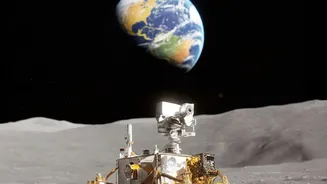
After travelling to lunar orbit, the Descender and Ascender modules will separate and perform a powered soft landing near the Moon's south pole, a region of immense scientific interest. Once safely on the surface, the mission's primary science phase begins. A robotic arm on the lander will scoop up to three kilograms of lunar soil, known as regolith, from the surrounding area. In addition to surface samples, a drilling mechanism will collect material from beneath the surface. This is vital because subsurface soil is protected from the harsh space environment and could hold clues about the Moon's history and the presence of water ice.
Lifting Off from the Moon
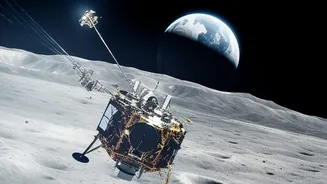
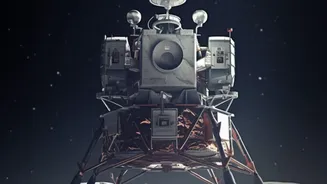
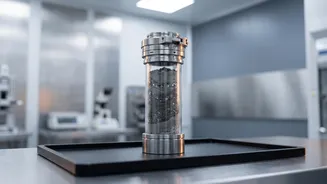
The collected samples will be carefully transferred into vacuum-sealed containers inside the Ascender Module to prevent any contamination. Then comes one of the most challenging parts of the entire mission: lifting off from the Moon. The Ascender Module will use the lander as a launchpad, firing its engines to blast off the lunar surface and into orbit. This will be a monumental achievement for India, demonstrating a capability only a handful of nations have mastered. The Ascender, now carrying its precious cargo, will be alone in lunar orbit, waiting for its ride home.
A Rendezvous in Lunar Orbit
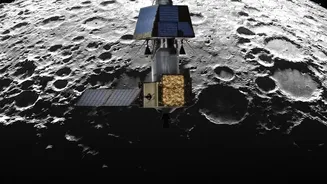
While the lander and ascender were on the surface, the Transfer and Re-entry modules will have been patiently waiting in lunar orbit. The Ascender Module must now perform a delicate and precise orbital rendezvous, meeting and docking with the Transfer Module. This automated docking in deep space is a critical technology ISRO is developing, as it is essential for complex future missions, including sending Indian astronauts to the Moon. Once docked, the sample containers will be robotically transferred from the Ascender to the Re-entry Module for the final leg of the journey.
The Fiery Return to Earth
With the samples secured, the Ascender and Transfer modules will be left behind in lunar orbit. The Transfer Module will fire its engine to push the Re-entry Module onto a trajectory back towards Earth. As it approaches our planet at high speed, the Re-entry Module, designed to withstand extreme temperatures, will separate and plunge through the atmosphere. It will perform a ballistic re-entry before deploying parachutes to slow its descent, finally landing safely on Indian soil. These pristine samples will then be transported to a specialized curation facility, ready for scientists across the country to analyse.