





Beyond the Automation Hype
For years, the narrative surrounding the future of work has been dominated by one theme: automation. The prevailing fear is that artificial intelligence will methodically eliminate jobs, from data entry to complex analysis. While it's true that AI is transforming
the workplace at an unprecedented pace, the story is far more nuanced than simple replacement. Instead of making human workers obsolete, technology is primarily taking over repetitive, rule-based tasks. This shift allows employees to move away from routine work and focus on higher-value activities that machines can't replicate. Think of it less as a replacement and more as a redefinition of roles, where AI acts as a powerful assistant, handling the background work and freeing up human potential.
The New 'Power Skills' in Demand
As automation handles the 'what' of many jobs, employers are placing a much higher premium on the 'how'. Research consistently shows that companies are increasingly seeking employees with strong “soft skills,” which are better described as durable human skills. A recent study found that 92% of companies believe these human capabilities are as important, or even more so, than technical skills. The most sought-after abilities are those that are uniquely human: critical thinking, creativity, complex problem-solving, and emotional intelligence. These are the skills that allow us to navigate complex social dynamics, innovate beyond existing patterns, and make sound judgments in ambiguous situations—areas where AI still struggles.
Why Machines Need Human Partners
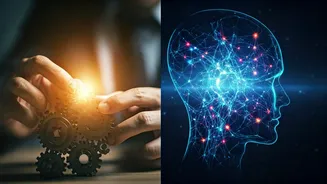
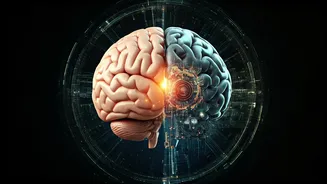
The most effective organisations are not just layering AI onto old processes; they are redesigning workflows around human-AI collaboration. This model, sometimes called augmented intelligence, focuses on using AI to enhance human capabilities, not replace them. In this partnership, AI provides the data, analysis, and processing power at a scale humans cannot match. However, it is the human partner who provides context, ethical oversight, and creative intuition. For example, AI can analyse millions of medical images to detect patterns, but a doctor provides the final diagnosis and patient care. An AI can draft code, but a developer provides the architectural vision and strategic design. This collaborative approach is where the true value lies, with some organisations seeing significant gains in productivity and innovation by optimising how people and AI work together.
The Rise of the Empathy Economy
One of the most irreplaceable human skills is emotional intelligence (EQ)—the ability to understand and manage emotions in ourselves and others. As routine tasks become automated, the value of human connection skyrockets. This is critical in leadership, sales, customer service, and team management, where building relationships and trust are paramount. Machines can simulate conversation, but they cannot replicate genuine empathy, build rapport, or inspire a team. A recent report from the World Economic Forum highlighted that as jobs evolve, skills related to working with others, leadership, and social influence will become increasingly critical. This signals a shift toward an economy that rewards those who can connect, persuade, and collaborate effectively—deeply human endeavours.
How to Future-Proof Your Career
In this evolving landscape, staying relevant is less about competing with AI and more about complementing it. The key is to embrace continuous learning and intentionally develop the skills that technology can't easily replicate. This means focusing on adaptability, a willingness to learn new systems, and a mindset that sees AI as a tool for growth, not a threat. Professionals can future-proof their careers by actively seeking roles and responsibilities that require critical judgment, creativity, and strategic thinking. Rather than fearing that AI will take over your job, consider how you can use it to automate the mundane parts, freeing you up to become a better strategist, a more creative problem-solver, and a more empathetic leader. The future doesn't belong to the machines, but to the people who learn how to work with them.