


A Sweet Discovery in Deep Space
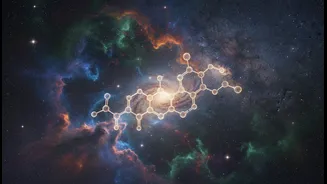
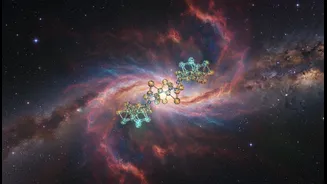
For the first time, scientists have definitively detected a true sugar molecule floating in the interstellar medium, the seemingly empty space between stars. An international team using radio telescopes in Spain identified the chemical signature of erythrulose,
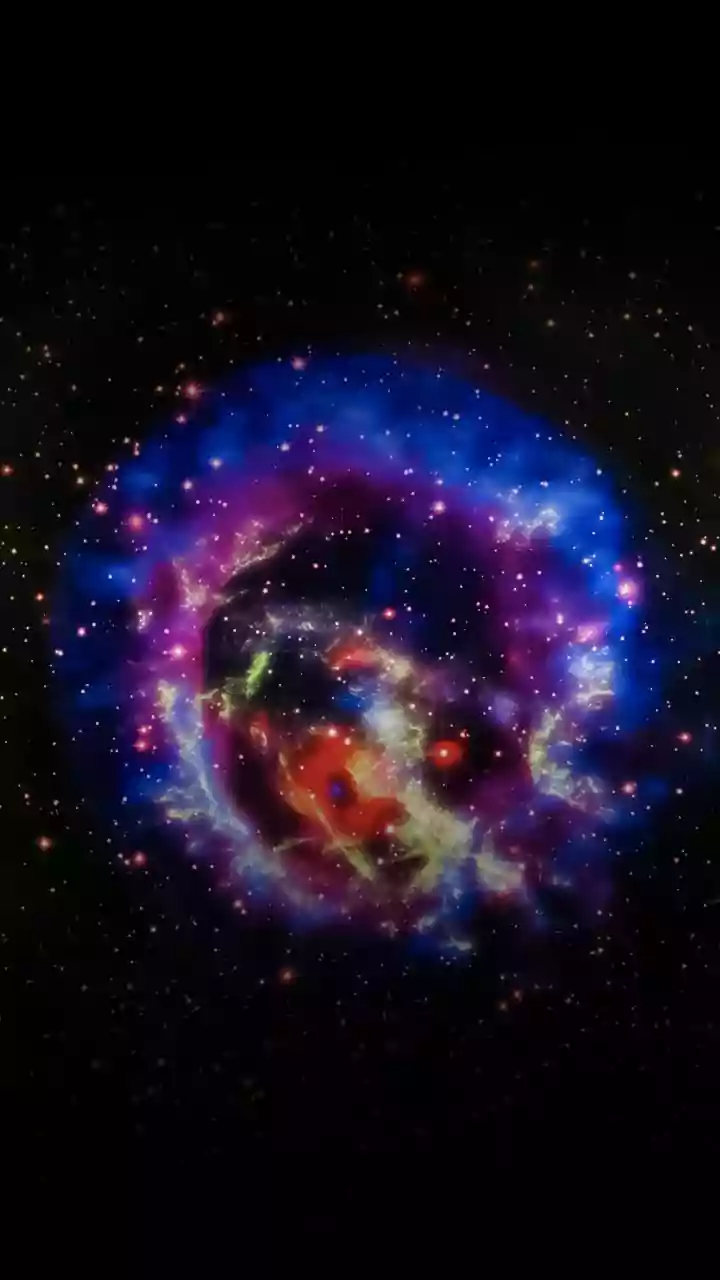
a four-carbon sugar, in a molecular cloud named G+0.693-0.027. This enormous cloud of gas and dust, located roughly 27,000 light-years away near the galactic centre, is a known hotspot for complex chemistry. While simpler organic molecules and even sugar-related compounds have been found on asteroids and meteorites before, this is the first time a sugar has been spotted in the cosmic nursery where stars and planets are born. On Earth, erythrulose is found in small amounts in raspberries and is also used in sunless tanning products. Its discovery in space is a major leap forward in astrochemistry.
The Cosmic Chemistry Lab
The interstellar medium is an extreme environment, with temperatures hovering near absolute zero. Yet, it acts as a colossal chemical factory. Scientists believe that simple molecules like glycolaldehyde and ethylene glycol, which are abundant in space, can combine on the surfaces of icy dust grains. Despite the intense cold, these reactions can slowly build larger, more complex structures over millions of years. The detection of erythrulose was made by pointing the Yebes 40-m and IRAM 30-m radio telescopes toward the Sagittarius B2 region, a well-known repository of complex molecules. By analysing the radio frequencies emitted from the cloud, astronomers found 12 distinct spectral lines that perfectly matched the unique 'fingerprint' of erythrulose, which had been previously measured in a lab. This confirmed its presence with high certainty.
A Stepping Stone to Life
Sugars are fundamental to life as we know it. They serve as energy sources and, most importantly, form the structural backbone of our genetic material. RNA (ribonucleic acid), thought by many scientists to be a precursor to DNA, is built around a five-carbon sugar called ribose. While erythrulose is a four-carbon sugar and not directly used in our genetics, it is a crucial intermediate step. Its presence suggests that the chemical pathways to create larger, biologically vital sugars like ribose are viable in interstellar space. In fact, under aqueous conditions, erythrulose can transform into other molecules that are considered possible precursors to RNA. The discovery is exciting because it shows that the universe is capable of producing not just simple organic molecules, but also the more intricate ones required for prebiotic chemistry.
From Stardust to Planets
One of the central questions in the origin of life is how Earth obtained its supply of essential organic compounds. Laboratory experiments simulating early Earth conditions have struggled to produce sugars in sufficient quantities. This has led to the 'exogenous origin' theory: that the building blocks of life were delivered to Earth from space. The discovery of sugars on meteorites and asteroid samples, like from the Bennu asteroid, strongly supported this idea. Finding erythrulose in an interstellar cloud takes this theory a step further. It means these complex molecules aren't just forming on space rocks; they are being created in the vast clouds that eventually collapse to form new stars and planetary systems. These molecules can then be incorporated into comets and asteroids, which later bombard young planets, potentially seeding them with the ingredients for life. Researchers estimate millions of tonnes of erythrulose may have been delivered to Earth during the Late Heavy Bombardment about 4 billion years ago.