






Meet Your New Desk Companion: Trailing Jade
Before we begin, let’s get acquainted with our star plant. While the name ‘Trailing Jade’ can refer to a few different succulents, for this project, we’re focusing on the popular and easy-to-care-for *Peperomia prostrata*, also known as 'String of Turtles'.
This delightful plant features tiny, round leaves with patterns resembling a turtle’s shell, all strung along delicate, trailing vines. Its small scale and cascading nature make it perfect for a desktop display. It’s non-toxic to pets, relatively low-maintenance, and, most importantly, incredibly easy to propagate in water, making it the ideal candidate for our apothecary vial setup.
Gather Your Simple Materials
You don’t need a green thumb or a full gardening shed for this project. The beauty is in its simplicity. Here’s what you’ll need to assemble: * A Healthy Trailing Jade Plant: You’ll need a 'mother plant' from which to take cuttings. Choose one that is well-established, with several healthy vines at least 10-15 cm long. * Apothecary Vials or Small Glass Bottles: These are the key to the aesthetic. Look for small glass vials with narrow necks, which will help hold the delicate stems upright. You can find them at craft stores, online, or even reuse small glass spice or extract bottles. Clear glass is ideal for watching the roots grow. * Clean, Sharp Scissors or Pruning Shears: A clean cut is crucial for the health of both the mother plant and the cutting. Sterilise your blades with rubbing alcohol to prevent any potential infection. * Water: Room temperature tap water that has been left to sit out for 24 hours (to allow chlorine to dissipate) is perfect. Filtered or distilled water also works well.
The Art of the Perfect Cutting
Taking a cutting might feel daunting, but it's a simple process. Identify a healthy, mature vine on your mother plant. You’re looking for a segment that has several leaves. Using your sharp, clean scissors, snip off a 7-10 cm section of the vine. The ideal cut is just below a leaf node (the point where a leaf attaches to the stem), as this is where new roots are most likely to sprout. Once you have your cutting, gently remove the bottom one or two leaves. This is a vital step. You want to ensure that only the bare stem is submerged in water, as submerged leaves will rot and spoil the water, potentially killing your cutting. You should be left with a few inches of bare stem at the bottom and a few leaves at the top.
Propagation in Vials: The Waiting Game
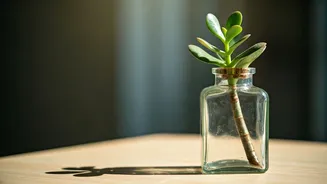
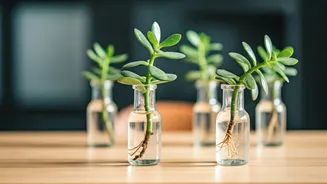
Now for the magic. Fill your apothecary vials with your prepared water, leaving a little space at the top. Carefully insert one or two cuttings into each vial. Ensure the bare part of the stem is submerged in the water, but the remaining leaves are well above the waterline, resting in the air. The narrow neck of the apothecary vial is perfect for providing this support. Place your vials in a location that receives bright, indirect light. A spot on your desk that isn't in the direct path of a harsh sunbeam is ideal. Direct sun can be too intense for a new cutting and may encourage algae growth in the water. Now, all that's left to do is wait. Within two to four weeks, you should start to see delicate, white roots emerging from the submerged stem. It's a fascinating process to watch.
Curate Your Green Deskscape
While you wait for roots, you can enjoy your new green decor. The arrangement is entirely up to you. A single vial can make a minimalist, elegant statement. A cluster of three or five vials of varying heights can create a more dynamic and lush 'propagation station'. You can line them up neatly or group them together near a lamp or a stack of books. This isn't just a plant; it's a living art piece. As the vines grow, you can gently guide them around other desk objects. The combination of vintage glass, fresh greenery, and the scientific curiosity of watching roots form provides a unique and calming focal point for your workspace.
Long-Term Care and Next Steps
Your water-propagated cuttings can live happily in their vials for several months. To keep them healthy, change the water every week or so to replenish oxygen and prevent it from becoming stagnant. Simply tip out the old water and refill with fresh, room-temperature water. Once a healthy root system has developed (about 2-3 cm long), you have a choice. You can keep the cuttings in the water as a semi-permanent display, or you can pot them in soil to grow a brand new Trailing Jade plant. This process allows you to create an endless supply of new plants to expand your collection or share with friends.