







Heavier Fines for Common Offences
Starting in July 2026, Indian Railways has implemented stricter penalties for a range of common offences under the Jan Vishwas (Amendment of Provisions) Act. The minimum fine for ticketless travel has doubled from ₹250 to ₹500, plus the cost of the fare.
Other significant fines include up to ₹2,500 for male passengers found in a women's reserved coach and on-the-spot penalties of ₹2,000 for smoking on trains or railway premises. Unauthorised hawking and begging will also attract a ₹2,000 fine. These changes aim to improve discipline and safety by replacing slower criminal proceedings with immediate financial consequences.
Changes to Ticket Booking Rules
In a major shift to curb ticket hoarding and improve availability, the advance reservation period (ARP) for booking tickets has been reduced from 120 days to 60 days. The Ministry of Railways noted that a significant percentage of tickets booked far in advance were being cancelled, prompting the change. This new 60-day window is now in effect, though bookings made before the rule change remain valid. However, the 365-day advance booking limit for foreign tourists is unchanged, and certain short-distance daytime trains like the Taj Express will continue to have their own specific lower time limits for reservations.
The Dawn of the Vande Bharat Sleeper
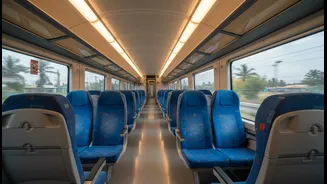
Long-distance overnight travel is getting a major upgrade with the introduction of Vande Bharat Sleeper trains. The first service was launched in January 2026 on the Howrah-Kamakhya route, offering a premium alternative to existing overnight trains. A second Vande Bharat Sleeper has already arrived in Bengaluru for trials, slated to run between Bengaluru and Mumbai. These 16-coach trains feature modern amenities, ergonomically designed berths, and enhanced ride comfort, with a passenger capacity of 823. With several other high-demand routes like Delhi-Mumbai and Delhi-Chennai under consideration, travellers can expect a significant expansion of these semi-high-speed overnight services.
A Focus on Safety with 'Kavach'
Indian Railways is accelerating the deployment of its indigenous Automatic Train Protection (ATP) system, 'Kavach'. Designed to prevent collisions by automatically applying brakes if a driver misses a signal, the system is a critical safety upgrade. The latest version, Kavach 4.0, has been commissioned on 1,452 km of the busy Delhi-Mumbai and Delhi-Howrah corridors. Rollouts are also underway across other zones, with South Western Railway recently commissioning the system in Karnataka and Central Railway activating it on the Solapur-Wadi section. This technology is key to reducing accidents and works by enabling real-time communication between locomotives and trackside equipment.
Updates for Student Travellers
While many rules are changing, the concessions available to students remain largely the same, though the process is still offline. Indian Railways offers significant discounts—up to 75% for certain categories—for students travelling between their hometown and institution, or for educational tours and exams. These concessions typically apply to Second Class and Sleeper Class fares on Mail/Express trains but are not available on premium trains like Vande Bharat, Rajdhani, or Shatabdi. A key point for students to remember is that concession tickets cannot be booked online via IRCTC or the UTS app; they must be availed at a physical ticket counter by presenting a valid certificate from their institution.
Modernisation of Stations Nationwide
The travel experience is being upgraded even before you board the train, thanks to the Amrit Bharat Station Scheme. This nationwide initiative aims to redevelop over 1,300 stations with modern facilities. Recently, upgraded stations in Kerala and Tamil Nadu are nearing completion, featuring amenities like lifts, escalators, improved waiting halls, Wi-Fi, and better accessibility. In Punjab, the 110-year-old Jalandhar Cantt station was redeveloped at a cost of ₹125 crore and is expected to be inaugurated in mid-July 2026. The scheme focuses on creating comfortable, modern transit hubs with a long-term vision for better connectivity.