




A Treasure Map for Lunar Water
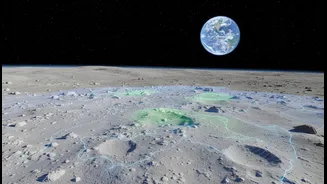
Scientists from the Physical Research Laboratory (PRL) in Ahmedabad have used data from the Chandrayaan-2 orbiter to identify significant deposits of potential subsurface ice near the Moon's south pole. The findings pinpoint specific locations within
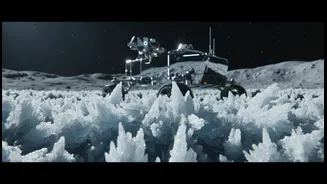
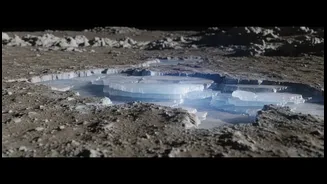
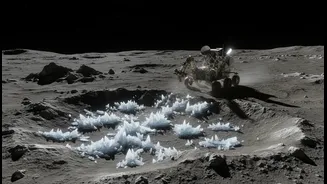
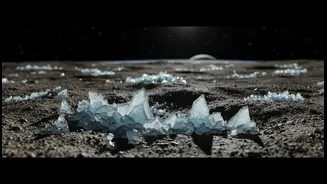
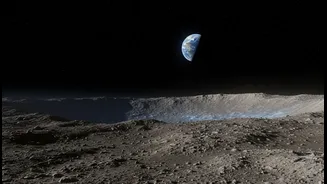
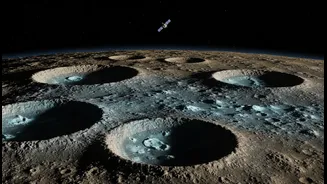
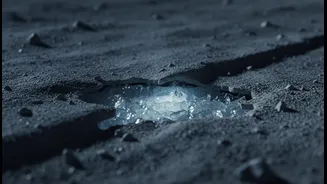
some of the most mysterious and coldest places in our solar system: Permanently Shadowed Regions (PSRs). These are craters and depressions near the lunar poles where direct sunlight never reaches. Within these, the study focused on even more secluded "doubly shadowed craters," which are protected from both direct and reflected sunlight. In these incredibly cold traps, where temperatures can plummet to around minus 248 degrees Celsius, water ice can remain frozen and stable for billions of years. The new data has identified four such craters as having strong signatures consistent with buried ice.
How Radar Peeled Back the Layers
Finding something you can't see in total darkness requires a different kind of vision. This is where Chandrayaan-2's advanced instrumentation shines. The orbiter is equipped with a Dual-Frequency Synthetic Aperture Radar (DFSAR), the first of its kind to study the Moon. Unlike a camera, which needs light, the DFSAR instrument sends microwave signals down to the lunar surface and meticulously analyses how they bounce back. Rock, dust, and ice all scatter these radar waves in distinct ways. For a long time, it was difficult to tell the difference between signals scattered by rough, rocky terrain and those from ice. However, by developing a refined method that analyses both the signal's strength and its polarization—how the wave is oriented after it bounces back—scientists can now more confidently distinguish between the two. This technique allowed them to effectively peer beneath the dusty surface to detect the volumetric scattering patterns associated with buried ice.
The Orbiter's Enduring Legacy
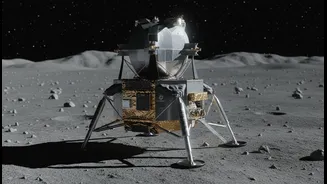
While the Chandrayaan-2 mission is often remembered for the unfortunate hard landing of its Vikram lander in 2019, the mission's orbiter has proven to be a resounding and ongoing success. Continuously circling the Moon for years, its suite of scientific instruments has been relentlessly gathering high-quality data, contributing immensely to our understanding of Earth's natural satellite. This discovery of potential subsurface ice is a powerful testament to the long-term value and resilience of the mission. It demonstrates how the Indian Space Research Organisation (ISRO) is playing a crucial role in global space exploration, providing foundational data that will guide future missions from multiple nations. The orbiter's work has effectively transformed the Chandrayaan-2 mission into a story of long-term scientific triumph.
Why Finding Buried Ice Matters
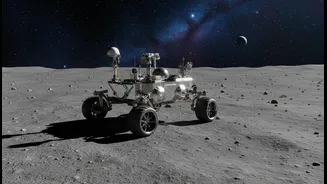
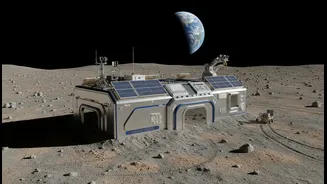
This discovery is more than just a scientific curiosity; it's a critical piece of the puzzle for humanity's future on the Moon and beyond. Water is considered the most valuable resource in space. It can be used for drinking water and life support for astronauts, but it can also be split into its components, hydrogen and oxygen, to create breathable air and, crucially, rocket fuel. The ability to source water directly from the Moon—a concept known as in-situ resource utilization (ISRU)—would drastically reduce the cost and complexity of future long-duration missions. Instead of launching everything from Earth, lunar bases could 'live off the land.' This new map of potential ice deposits provides crucial intelligence for planning future robotic and human missions, including NASA's Artemis program and India's own ambitious plans, by identifying the most promising locations to land, drill, and explore.