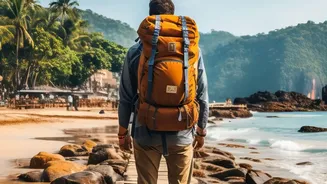



Start with a Dedicated Dry Bag
This isn't a shortcut, but it's the most important foundation for keeping gear safe. A 'dry bag' is a flexible, waterproof sack with a roll-top closure that creates a watertight seal. They are an affordable and essential investment for any serious traveller.
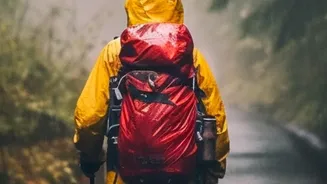
Instead of relying solely on a backpack's rain cover, which can still let water seep in from the back panel, use a dry bag as an internal liner for your main luggage. Place all your electronics inside this bag for a reliable first line of defence against downpours.
The Double-Bagging Method
For a simple, low-cost solution, embrace the power of zip-top plastic bags. Don't just use one; the 'double-bagging' method provides an extra layer of security. Place your phone, power bank, or camera in one bag, squeeze out all the air, and seal it. Then, place that sealed bag inside a second, larger one. For added protection, you can place a folded paper towel inside the outer bag to absorb any condensation that might form in humid conditions. It’s a cheap but surprisingly effective trick.
Harness the Power of Silica Gel
Those little white packets that come in new shoeboxes and electronics packaging are incredibly useful. They are filled with silica gel, a desiccant that absorbs moisture from its surroundings. Start collecting these packets and toss a few into every bag and container where you store electronics. They combat the ambient humidity that can slowly cause damage, even when your gadgets aren't directly exposed to rain. This is a passive but powerful way to protect sensitive circuits from moisture you can't even see.
Compartmentalise Everything
Don't just throw all your electronics into one large waterproof pouch. A single point of failure could lead to disaster for everything at once. Use smaller, individual waterproof pouches or zip-top bags for each device and its accessories—one for your phone, one for your camera, one for your chargers and cables, and another for your power bank. This strategy isolates any potential leak, ensuring that a single faulty seal doesn't compromise all your valuable gear. Organiser pouches designed for electronics are perfect for this.
Repurpose Hotel Room Amenities
Caught in a sudden shower without your gear properly stored? Your hotel room might hold the solution. A simple bathroom shower cap is an excellent, if temporary, waterproof cover for a camera or a small bag. Its elasticated edge creates a snug fit, offering quick protection while you run for cover. It’s a brilliant zero-cost hack for unexpected downpours when you’re out exploring and just need a few minutes of protection.
Create a Dry Zone in Your Luggage
Think of your suitcase or backpack as having different climate zones. Designate one specific compartment as your 'dry zone'. You can enhance its water resistance by lining it with a simple, inexpensive material like a heavy-duty plastic bag or a cut-open poncho. This creates an internal barrier, so even if the outer layer of your luggage gets damp, the contents of your dry zone remain protected. This is where your most sensitive items, packed in their individual pouches, should live for the duration of the trip.
Prepare an Emergency 'First Aid' Kit
Accidents happen. Be prepared by packing a small, sealed bag containing a cup of uncooked rice or a large collection of silica gel packets. If a device does get wet, the first steps are critical: power it off immediately, remove the battery if possible, and take out the SIM card. Pat the exterior dry, then submerge the device in your emergency bag of rice or silica gel. Leave it there for at least 24 to 48 hours to draw out as much internal moisture as possible before you even think about turning it on.