






What Exactly is 'Cloud Skin'?
Forget the ultra-shiny 'glass skin' or the wet-look 'dolphin skin' of past seasons. 'Cloud skin' is their sophisticated, weather-appropriate cousin. Coined by a celebrity makeup artist, the look is all about achieving a soft-matte, diffused, and dimensional
finish that looks like you’re walking through a dreamy haze. Think of the way clouds look on a bright day—mostly matte, but with a luminous light that seems to come from within. It’s not flat or cakey; it’s an ethereal glow that blurs imperfections and controls shine without sacrificing radiance. This makes it the perfect antidote to the high humidity and sudden downpours of the Indian monsoon.
Why It’s Perfect for Monsoon Weather
The genius of the cloud skin trend lies in its technique, which is tailor-made for humid conditions. The core idea is strategic powdering over a luminous base. While dewy looks rely on cream and liquid products that can slip and slide in humidity, cloud skin locks everything in place. It controls oil in the T-zone (forehead, nose, and chin) where we tend to get the shiniest, while allowing a subtle glow to peek through on the high points of the face, like the cheekbones. The result is a fresh, polished look that lasts much longer, won’t feel heavy or sticky, and prevents your face from becoming an oil slick by 3 p.m.
Step 1: Prep for a Luminous Base
The magic starts with skincare. You want a hydrated, plump canvas, but without the grease. Begin with a lightweight, gel-based moisturiser or a hydrating serum containing hyaluronic acid. This provides moisture without heavy oils. The next step is crucial: a good primer. Opt for a blurring or pore-minimising primer with a satin or natural matte finish. Apply it to your T-zone and any other areas where you tend to get oily. This creates a smooth surface and acts as a barrier between your skin and makeup, giving it something to grip onto.
Step 2: Less is More with Foundation
Heavy, full-coverage foundation is the enemy of this look (and of monsoon makeup in general). Instead, choose a lightweight liquid foundation, a skin tint, or even just a concealer applied strategically. Use your fingers or a damp sponge to apply a thin layer, focusing on evening out your skin tone rather than masking it completely. The goal is to let your natural skin show through. If you’re using concealer, dot it only where you need it—under the eyes, around the nose, and on any blemishes.
Step 3: The Art of Strategic Powdering
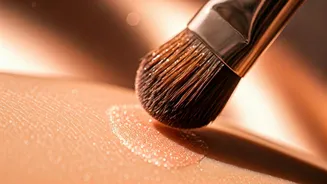
This is the defining step of the cloud skin technique. Instead of dusting powder all over your face, you’ll be very intentional. Use a finely milled, translucent setting powder and a fluffy brush. Tap off any excess powder before applying. Gently press and roll the brush onto the areas that produce the most oil: the centre of your forehead, the sides of your nose, and your chin. Avoid the high points of your face, like the tops of your cheekbones and the bridge of your nose. This selective application mattifies the shine-prone areas while preserving a natural luminosity elsewhere.
Step 4: Add Back Soft Dimension
To prevent the look from appearing flat, you need to add back some colour and dimension. The key is to use powder formulas for blush, bronzer, and highlighter, as they blend seamlessly into the powdered base. Choose soft, muted shades—think dusty rose for blush and subtle taupe for bronzer. Apply them with a light hand. For highlighter, skip the intense glitter and opt for a powder with a gentle, pearlescent sheen. Apply it very sparingly to the tops of your cheekbones and just under the arch of your brow for that 'lit-from-within' effect.
Final Touches for All-Day Wear
To complete your monsoon-proof look, focus on waterproof formulas for your eyes. A good waterproof mascara and a smudge-proof eyeliner are non-negotiable. For brows, a clear or tinted waterproof brow gel will keep them in place. Finally, lock in all your hard work with a few spritzes of a setting spray. Look for one with a matte or natural finish to reinforce the cloud skin effect and provide an extra layer of protection against humidity and rain.