
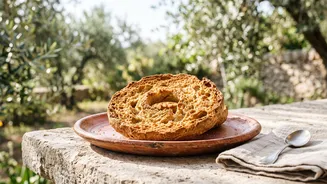
What is a Frisella?
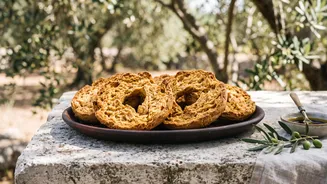
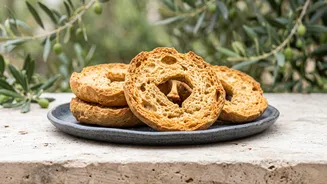
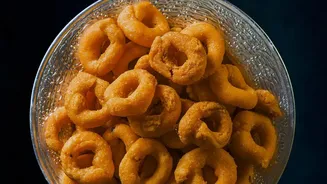
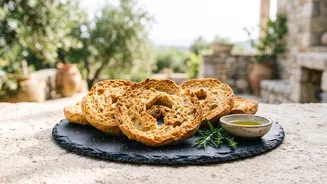
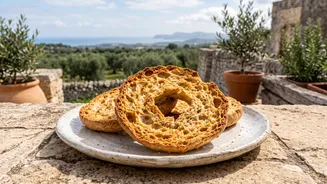
At first glance, a frisella might look like a stale, oversized bagel. Made from durum wheat or barley flour, water, salt, and yeast, this ring-shaped bread is intentionally baked twice until it achieves a jaw-breaking hardness. This process, known as 'biscottato'
(twice-cooked), removes nearly all moisture, resulting in a bread that can be stored for months without spoiling. The outside is smooth, while the inside, where the bread is split horizontally between bakes, is rough and porous, perfectly designed to soak up liquids. Found across Southern Italy, it is most famously associated with Puglia, the heel of Italy's boot, but is also a staple in Campania and Calabria.
From Sea Rations to Kitchen Staple
The history of the frisella is rooted in pure practicality. Its origins date back centuries, with some tracing it to the 10th century or even earlier. It was the ideal food for those who undertook long journeys, especially sailors and merchants. The bread's incredible shelf life made it an essential provision on long sea voyages, where it could be softened with a quick dip in seawater and dressed with olive oil. Its ring shape was also functional, allowing dozens to be strung together on a rope for easy transport and storage on ships. It was also known as 'Crusader bread' for sustaining troops travelling to the Holy Land. Over time, what began as a survival food for sailors, farmers, and soldiers transitioned into a cherished element of home cooking.
The Ritual of Preparation
Eating a frisella is a ritual in itself. Because it is so hard, it is never eaten dry. The essential first step is the 'sponzatura', or wetting. This involves a quick dip in cold water—just a few seconds—to soften the bread without turning it into a soggy mess. The goal is to reawaken it, not drown it. Once softened, the rough, porous side faces up, ready for toppings. The most classic preparation is exquisitely simple: chopped ripe tomatoes, a generous drizzle of high-quality extra virgin olive oil, a sprinkle of salt, and a pinch of oregano. The juices from the tomato soak into the bread, mingling with the olive oil to create a dish that embodies the fresh, vibrant philosophy of Southern Italian cooking.
Why This Humble Bread Endures
In an age of convenience foods, the enduring popularity of the frisella speaks volumes. It represents a connection to 'cucina povera' or peasant cooking, a philosophy of creating delicious, satisfying meals from simple, inexpensive ingredients. Its longevity makes it a model of food sustainability, minimising waste in a way that modern foods rarely do. For many, preparing friselle is a taste of summer, a quick and refreshing meal on a hot day that requires no cooking. It’s a symbol of resourcefulness and tradition, a food that has remained unchanged for centuries because it is, in its own way, perfect. It’s a connection to the past, a reminder of a simpler, more resourceful way of life that still holds a place in the modern Italian kitchen.
More Than Just a Tomato Topping
While the classic tomato topping is iconic, the frisella is a versatile canvas for countless other flavours. Some rub the surface with a clove of garlic before wetting it for an extra layer of pungent flavour. Other popular toppings include creamy burrata cheese, salty anchovies, tuna, olives, and various grilled or raw vegetables. In Campania, it might be topped with a 'caponata' of vegetables. It can also be broken into pieces and used as the base for a rustic bread salad, similar to a Tuscan panzanella. From a simple snack to a gourmet appetiser, its use is limited only by imagination, proving its adaptability and lasting appeal.