






The Universe's Coolest Experiment
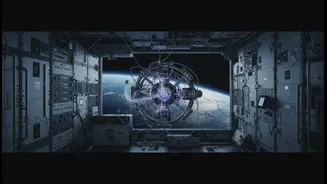
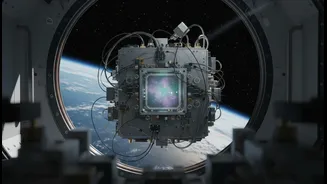
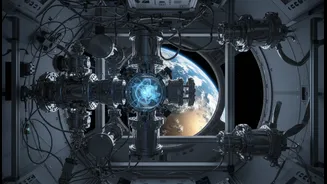
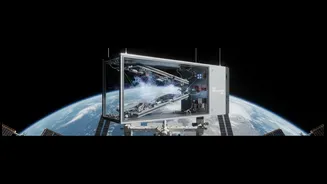
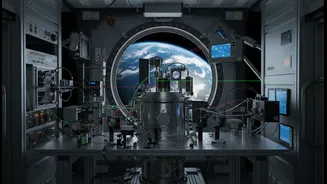
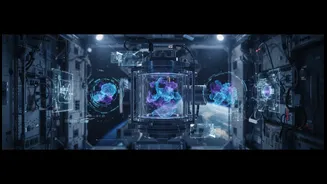
Orbiting 400 kilometres above Earth is a mini-fridge-sized box with an extraordinary purpose: to get colder than any other known place in the universe. NASA's Cold Atom Lab (CAL), installed on the ISS in 2018, uses lasers and magnetic fields to chill
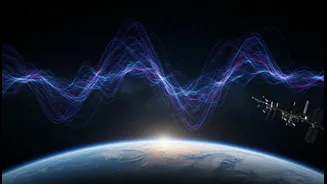
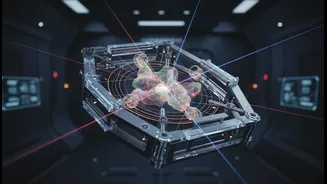
clouds of atoms to just a fraction of a degree above absolute zero (–273.15 degrees Celsius). At these extreme temperatures, atoms slow to a crawl and enter a bizarre fifth state of matter called a Bose-Einstein Condensate (BEC). In this state, the atoms lose their individual identities and behave like a single, massive quantum wave, allowing scientists to observe quantum phenomena on a macroscopic scale.
Why Space is the Best Place to be Cold
Creating a Bose-Einstein Condensate is possible on Earth, but gravity is a major spoiler. Once the magnetic trap holding the atoms is released for observation, gravity quickly pulls the condensate apart, giving researchers only fractions of a second to conduct experiments. The persistent microgravity of the space station changes the game entirely. In this free-fall environment, a BEC can be observed for much longer periods—up to ten seconds or more—and can expand and cool to temperatures even lower than what's achievable on the ground. This extended observation time is crucial for making the ultra-precise measurements needed to test fundamental physics.
What the New Upgrade Does
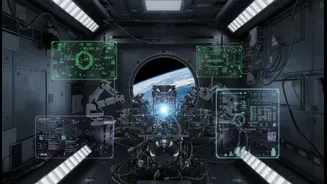
The latest upgrade, installed by astronauts, gives scientists an unprecedented level of control. The key improvements include a redesigned magnetic trap and improved atom sources. Previously, scientists could create and observe these quantum gases. Now, they can actively manipulate their shape. This new capability allows them to squeeze the atom clouds into flat pancakes or stretch them into thin lines, fundamentally changing how the atoms interact and behave. It's a shift from passively observing the quantum world to actively steering it, a leap that some scientists are calling "Quantum 2.0". The upgrade also enables the use of a tool called an atom interferometer.
A New Tool to Test Einstein
An atom interferometer uses the wave-like nature of atoms to measure forces with incredible precision. Think of it like watching ripples from two pebbles in a pond; by studying how the ripples interfere, you can learn about the water. Atom interferometers do something similar with matter waves. This technology is so sensitive it can be used to test some of the biggest ideas in physics, like Einstein’s principle of equivalence, which states that all objects should fall at the same rate in a gravitational field. By performing these tests with different types of atoms in a BEC, scientists can hunt for tiny deviations that might point to new physics beyond the Standard Model or offer clues about mysterious forces like dark energy.
From Fundamental Physics to Future Tech
While the primary goal of the Cold Atom Lab is fundamental research, the technology being developed could have profound future applications. The extreme sensitivity of atom interferometers could lead to next-generation quantum sensors for a wide variety of uses. Future spacecraft could navigate deep space with unparalleled accuracy using ultra-precise gyroscopes built on these principles. Similar sensors could be used in orbit to monitor Earth’s gravitational field, tracking the movement of water and changes in ice sheets with incredible detail. The work being done on the ISS is not just about exploring the quantum realm; it's about building the tools for the future of space exploration and Earth science.