



The Satellite Revolution
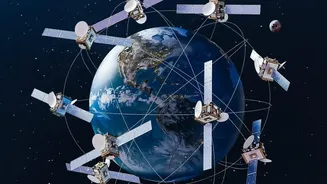
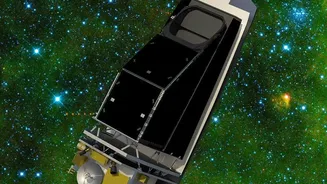
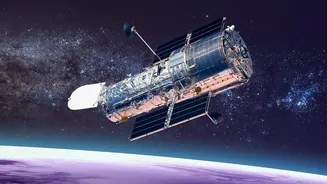
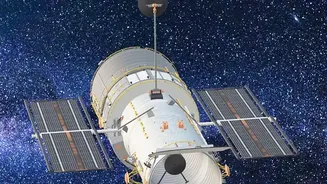
A new generation of advanced satellites is fundamentally reshaping the landscape of environmental monitoring. Organizations like the Environmental Defense Fund, with its MethaneSAT, and the non-profit Carbon Mapper are deploying orbital technology capable
of detecting and quantifying methane emissions with unprecedented precision. These systems can scan vast regions like the Permian Basin, which spans West Texas and New Mexico, and pinpoint emissions from individual facilities. Unlike previous ground-based monitoring or estimation methods, this technology provides comprehensive, independent, and publicly available data, effectively pulling back the curtain on the industry's real-time pollution footprint. The data from these satellites is so granular it can identify large plumes, trace them to their sources, and measure their volume, creating a powerful new tool for researchers, regulators, and the public.
Methane's Outsized Climate Impact
Methane is the primary component of natural gas, but when it escapes into the atmosphere unburned, it becomes a climate super-pollutant. Over a 20-year period, it is more than 80 times more potent at trapping heat than carbon dioxide, making it responsible for roughly 30% of global warming to date. Because methane has a shorter lifespan in the atmosphere than CO2—about a decade—reducing its emissions is one of the fastest ways to slow the rate of planetary warming. Leaked methane is not just an environmental issue; it is also a significant economic waste. The same gas that is vented or leaked from wells, pipelines, and processing facilities is a valuable commodity that could have been sold on the market.
The Permian Basin Under the Lens
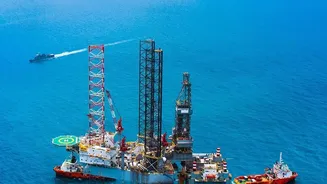
Recent data has put the Permian Basin, the highest-producing oilfield in the United States, in the spotlight. Analysis from MethaneSAT covering a period into mid-2025 found that methane emissions in the basin were approximately four times higher than the figures companies reported to the Environmental Protection Agency's (EPA) Greenhouse Gas Inventory. One study observed emissions totaling over 400 metric tons per hour across the region. The data also revealed a stark difference between neighboring states. In the Delaware sub-basin, the methane intensity—the amount emitted relative to gas produced—was found to be significantly lower in New Mexico (around 1.2%) compared to Texas (around 3.1%). Researchers attribute this difference to stronger regulations implemented by New Mexico in 2021, suggesting that policy measures can have a direct and measurable impact on emissions.
A New Era of Accountability
The availability of this detailed, independent data has triggered a new wave of scrutiny. In March 2026, U.S. Senator Sheldon Whitehouse launched an investigation, demanding answers from eight of the largest operators in the Permian—including giants like ExxonMobil and Chevron—about the massive discrepancy between their reported emissions and the satellite findings. This political pressure is compounded by growing demands from investors, who are increasingly using environmental, social, and governance (ESG) criteria to guide their decisions. With their emissions now visible from space, companies face heightened reputational risk and pressure to prove they are managing their operations responsibly. In response, many operators are accelerating investment in their own monitoring technologies, such as optical gas imaging and AI-powered leak detection, to get ahead of the problem.
An Uncertain Regulatory Future
While technology provides transparency, the regulatory response remains a moving target. The Biden administration had introduced rules to curb methane, including a super-emitter response program, but the Trump administration has since moved to roll back or weaken many of these regulations. In April 2026, the EPA finalized technical reconsiderations of its 2024 methane rule, which are estimated to save the industry money but are seen by environmental groups as a step backward. Further, the EPA has eased rules on gas flaring and is reportedly preparing to weaken restrictions on older, leak-prone "stripper wells," which account for a disproportionate share of methane pollution. This creates a complex environment where companies are caught between the hard evidence from satellites and a shifting federal regulatory landscape, leaving state-level rules and market pressures as key drivers of change.