


A Panoramic Window on the Universe
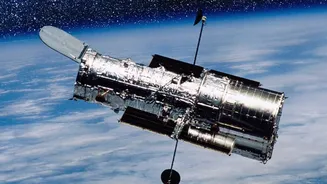
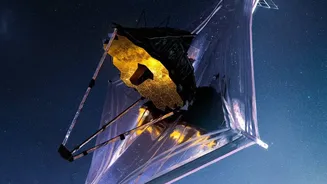
Imagine trying to create a mural of a sprawling city by taking photos through a keyhole. That’s been one of the challenges for telescopes like Hubble and James Webb (JWST). They provide incredibly sharp, deep views of tiny patches of the sky. The Nancy
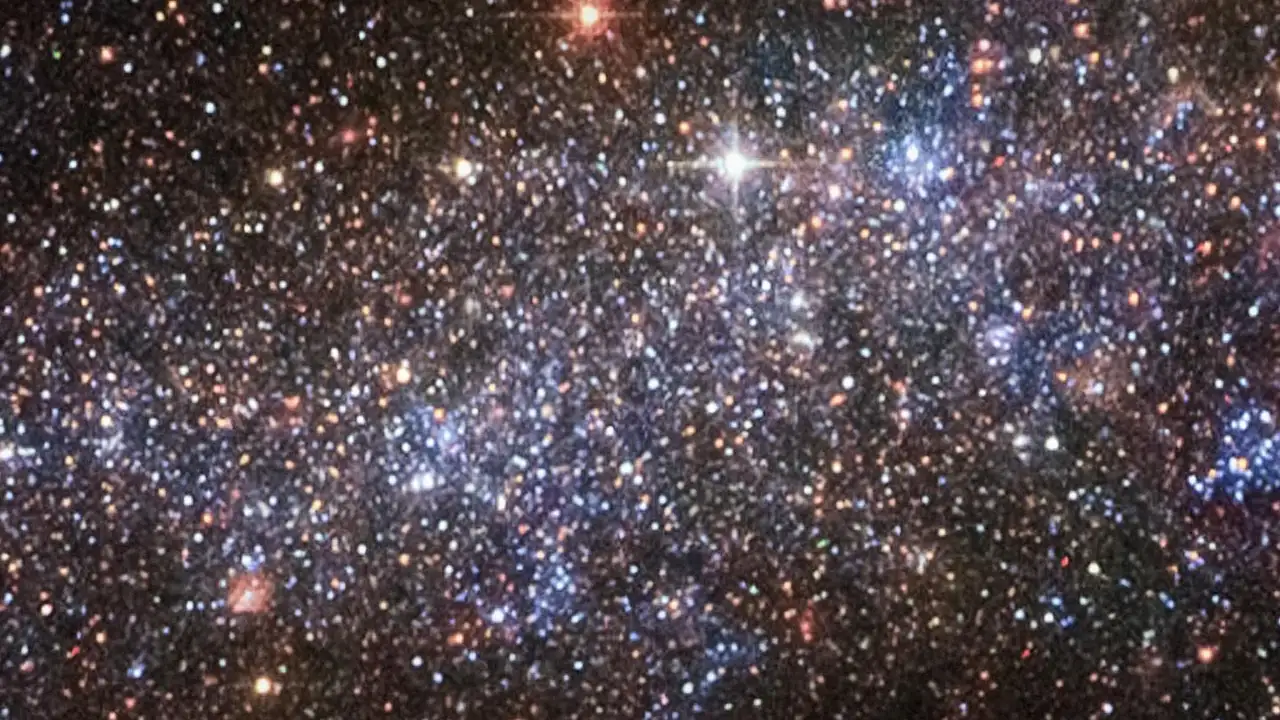
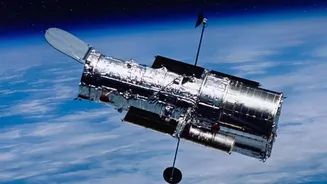
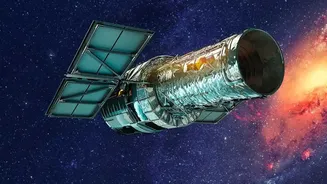
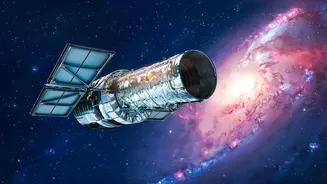
Grace Roman Space Telescope, scheduled for launch on August 30, 2026, is built to do the opposite. While it has the same size primary mirror as Hubble (2.4 meters), its Wide Field Instrument will capture an area of the sky over 100 times larger in a single snapshot. This incredible efficiency means that where Hubble might spend weeks creating a mosaic of a nearby galaxy, Roman could capture it in just a couple of images. This survey power will allow scientists to map vast stretches of the cosmos with Hubble-like sharpness, creating unprecedented 3D images of the universe.
Hunting for Thousands of New Worlds
One of Roman’s primary missions is to dramatically expand our catalogue of exoplanets—worlds orbiting other stars. While previous methods like the transit technique have found thousands of planets, they are best at spotting large planets orbiting very close to their stars. Roman will primarily use a different technique called gravitational microlensing. This method, predicted by Einstein, occurs when a star with a planet passes in front of a more distant star. The gravity of the foreground star and its planet acts like a natural magnifying glass, briefly making the background star appear brighter. The planet causes a tell-tale secondary blip in that brightness spike. From its stable orbit 1.5 million kilometers from Earth, Roman will stare at the dense star fields in the center of our galaxy, searching for these fleeting events. This will enable it to find thousands of new planets, including worlds farther from their stars—similar to our own solar system—and even rogue planets that drift through space without a parent star.
Tackling the Universe's Dark Side
About 95% of the universe is made of mysterious substances we can't see: dark matter and dark energy. Roman is specifically designed to investigate these phenomena. Dark energy is the name given to the unknown force causing the expansion of the universe to accelerate. By mapping the precise locations and distances of over a billion galaxies, Roman will trace how the universe's structure has evolved over cosmic time. This will help scientists understand how dark energy has influenced this growth. Roman will also study dark matter—the invisible scaffolding upon which galaxies are built—by observing how its gravity bends and distorts the light from distant galaxies, a technique called weak gravitational lensing. These large-scale surveys will provide a tenfold improvement in the precision of our dark energy measurements.
A New Tool, Not a Replacement
Roman is not a successor to Hubble or JWST but a powerful complement to them. Think of it this way: Roman is the wide-angle lens, designed for massive surveys to find interesting targets and map the cosmic web. JWST is the telephoto lens, built for deep, narrow, highly sensitive observations of specific objects Roman might identify. Hubble offers a unique perspective in different light wavelengths. For example, Roman's High-Latitude Time-Domain Survey will scan a patch of sky repeatedly, looking for things that change or flare up, like exploding stars (supernovae) or stars being torn apart by black holes. When it finds these transient events, JWST and other telescopes can be pointed at them for detailed follow-up studies. This synergy will allow astronomers to both discover and deeply characterize cosmic phenomena more efficiently than ever before.